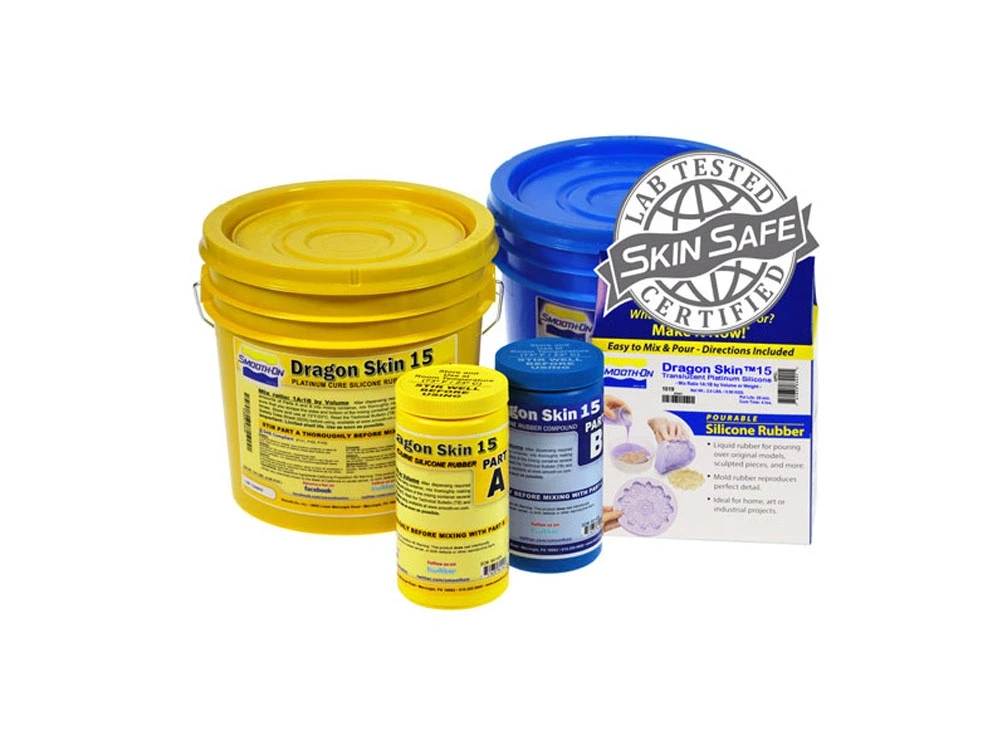
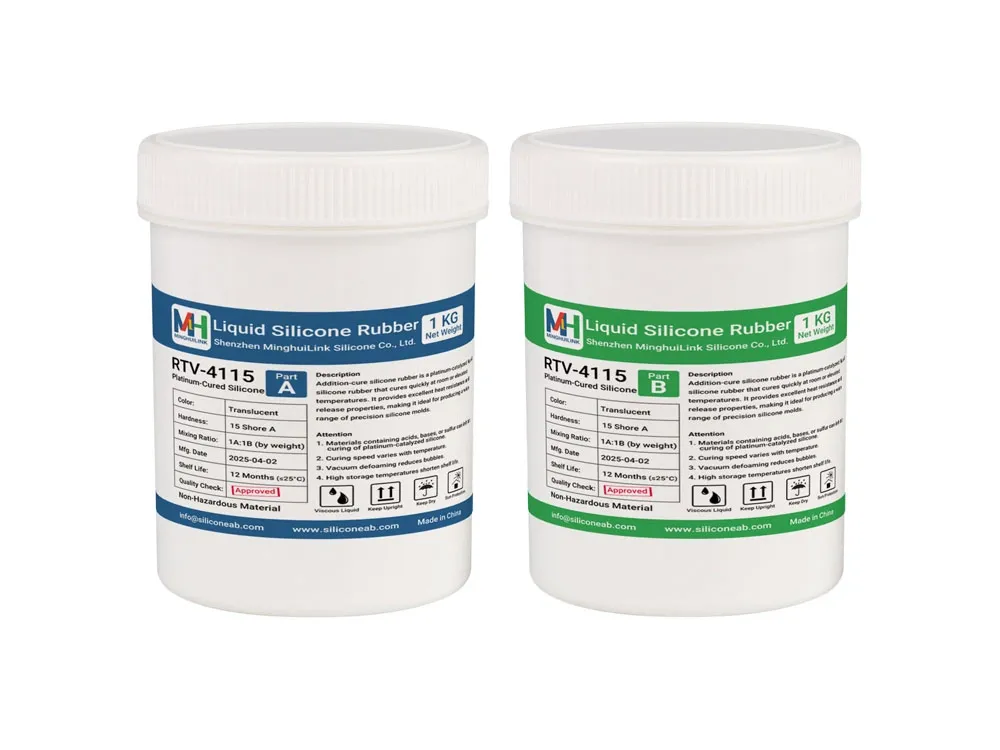
Dragon Skin™ 15 and RTV-4115 are both Shore A15 platinum-cure silicones, offering a balance between softness and mold body. Compared with very soft 10A materials, an A15 silicone can provide more resistance to deformation during handling and casting while remaining flexible enough for many undercuts and complex shapes. This makes the Shore A15 range relevant to both flexible molds and silicone parts that need some additional structural stability.
Elasticity is one of the more important differences between these materials. Smooth-On reports 771% elongation for Dragon Skin™ 15, compared with 450% for RTV-4115, indicating greater published stretch capability for Dragon Skin™ 15. RTV-4115, however, reports higher published tensile strength and tear strength. For molds that will be stretched repeatedly during demolding, the combination of elongation, tear strength and actual mold geometry should therefore be considered together rather than using a single mechanical property as the deciding factor.
Processing requirements also matter in practical mold making. Dragon Skin™ 15 has a published 40-minute pot life, compared with a 35-minute working time for RTV-4115, so the difference in working window is relatively small. The more noticeable difference is cure time: Smooth-On lists approximately 7 hours for Dragon Skin™ 15, while MinghuiLink lists approximately 5 hours for RTV-4115 under the respective stated conditions. Users choosing between the two should therefore consider whether they value the longer working window or a shorter mold turnaround cycle.
Air management is another practical consideration, particularly when making detailed molds. Smooth-On recommends vacuum degassing Dragon Skin™ 15 to minimize entrapped air, while the material's published mixed viscosity of 21,000 cps also makes careful mixing and pouring important. MinghuiLink reports approximately 4,000 mPa·s for Part A of RTV-4115. Because the manufacturers report viscosity at different measurement points, these values should not be treated as a direct like-for-like comparison; actual flow and air-release behavior should be evaluated with the intended mold design and pouring process.
For production molds, prosthetic applications, flexible components and detailed casting work, Shore A15 can be a useful compromise when a 10A silicone is considered too soft but a harder silicone could make demolding more difficult. The final choice should consider the required stretch, resistance to tearing, mold thickness, undercuts, expected number of casting cycles, cure schedule and compatibility of the master pattern and casting material.