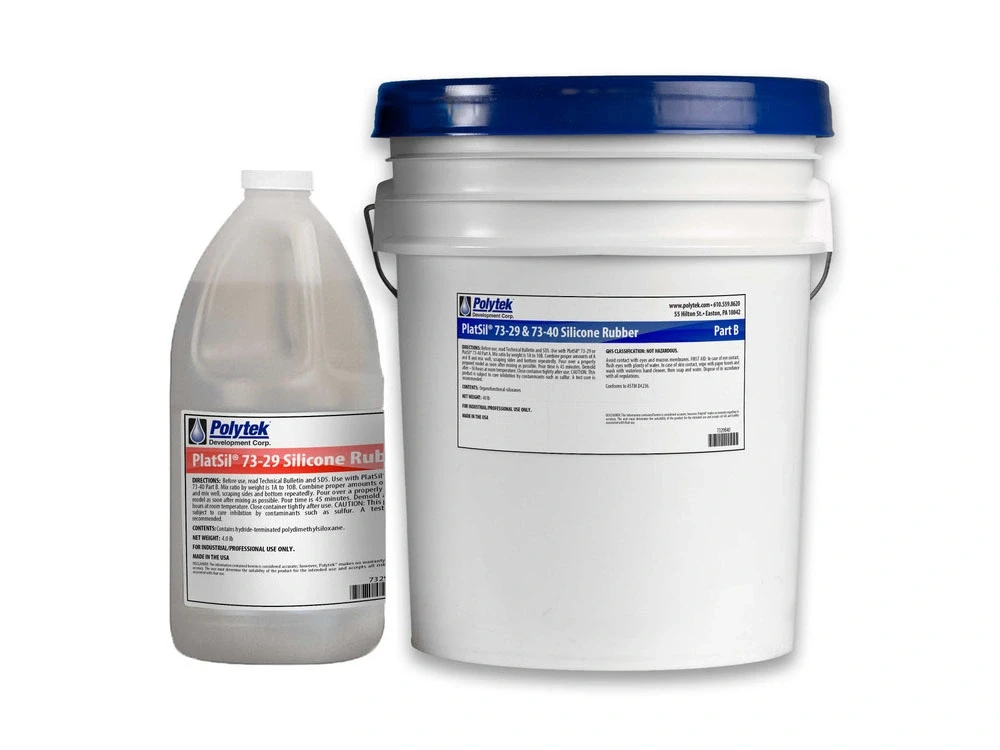
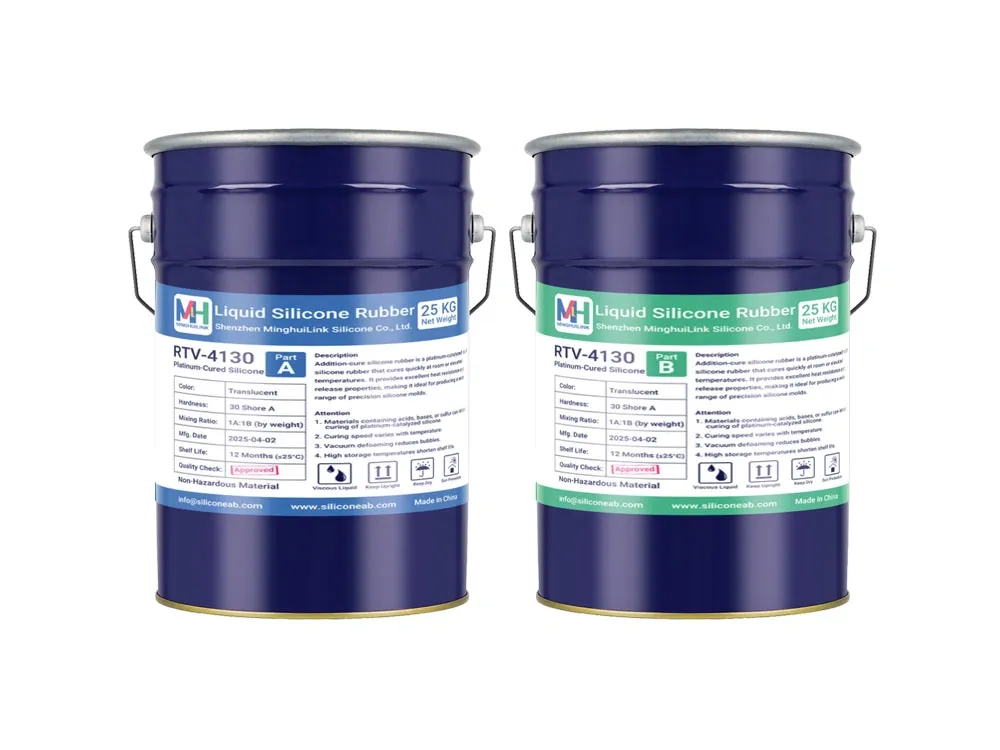
PlatSil® 73-29 and RTV-4130 are both Shore A30 platinum-cure silicones, placing them in a medium-hardness range for reusable mold making. This hardness provides more mold body and resistance to deformation than softer A10 or A15 grades while retaining useful flexibility for demolding. Actual mold performance still depends on mold thickness, geometry and casting material.
The component ratio is one of the clearest differences between the two systems. Polytek specifies a 1A:10B ratio by weight for PlatSil® 73-29, so accurate weighing is important, particularly for smaller batches. RTV-4130 uses a 1:1 ratio by weight or volume, which simplifies component measurement and creates a different batch-preparation workflow. The two ratios should therefore be viewed primarily as a processing difference rather than as an indicator of cured performance.
Viscosity is also different in the published specifications. Polytek reports approximately 15,000 cP for mixed PlatSil® 73-29, while MinghuiLink reports approximately 4,400±200 mPa·s for Part A of RTV-4130. Because these values are reported for different material states and measurement points, they should not be treated as a strict like-for-like laboratory comparison. The published data indicate different processing characteristics, but the appropriate mixing, pouring and air-removal procedures should be evaluated according to the respective technical documentation.
The published working windows are relatively close but not identical. PlatSil® 73-29 has a 45-minute pour time, compared with a 30–40-minute working time for RTV-4130. The more significant difference is the stated demold or cure time: approximately 16 hours for PlatSil® 73-29 versus approximately 4–5 hours for RTV-4130. This difference may be important when shorter mold turnaround is required.
The published mechanical data show a different balance between elongation and resistance to loading. PlatSil® 73-29 reports 531% elongation, approximately 542 psi tensile strength and 90 pli Die B tear strength. RTV-4130 reports 400±50% elongation, 5.0±0.5 MPa tensile strength and 28±0.5 N/mm tear strength. The published figures indicate higher tensile and tear values for RTV-4130, while PlatSil® 73-29 reports higher elongation. Because the manufacturers use different test methods and data presentation, these values should be treated as published reference figures rather than a direct laboratory ranking.
PlatSil® 73-29 also offers an additional mold-making option because Polytek documents the use of PlatThix Liquid Thickener or fumed silica to increase the material’s viscosity for brush-on applications. This provides an alternative mold-construction method in addition to poured molds.