Mold Star™ 30 vs RTV-4130 Silicone Comparison

Mold Star™ 30 and RTV-4130 are both Shore A30 platinum-cure RTV-2 silicones used for mold making and casting applications. This comparison examines their published technical specifications, processing characteristics and mechanical properties to help manufacturers evaluate RTV-4130 as a potential alternative.

Smooth-On

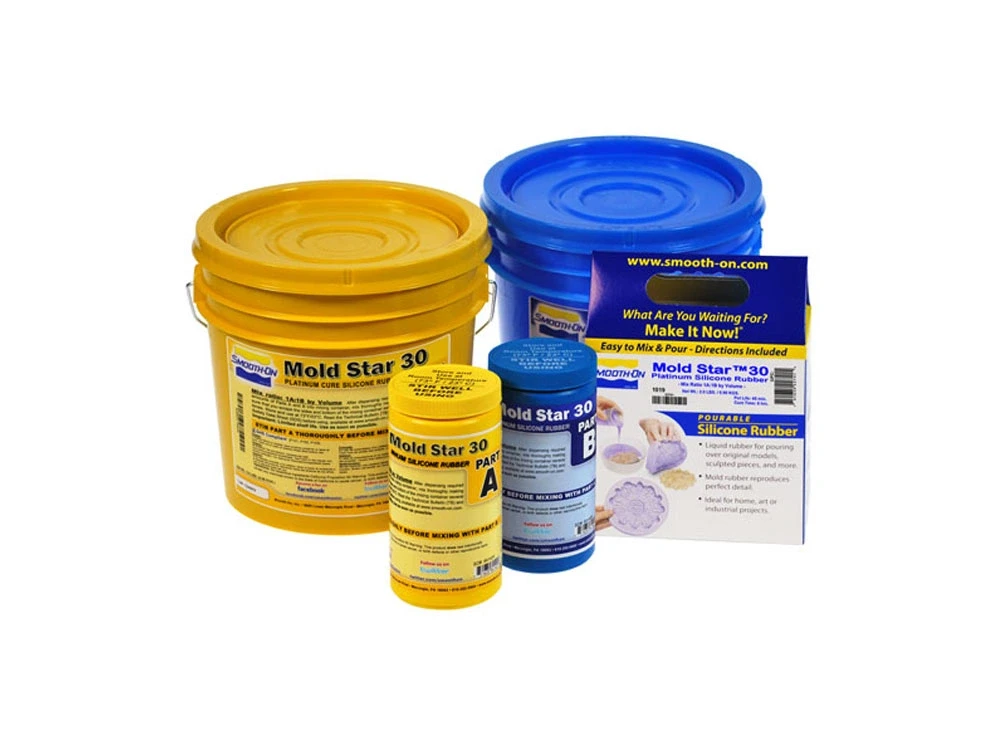
Mold Star™ 30

Platinum-Cure Silicone

Mold Star™ 30 silicone rubber
  • Hardness
    30 Shore A
  • Mix Ratio
    1A:1B
  • Viscosity
    12,500 cps

Visit Product

VS
MinghuiLink

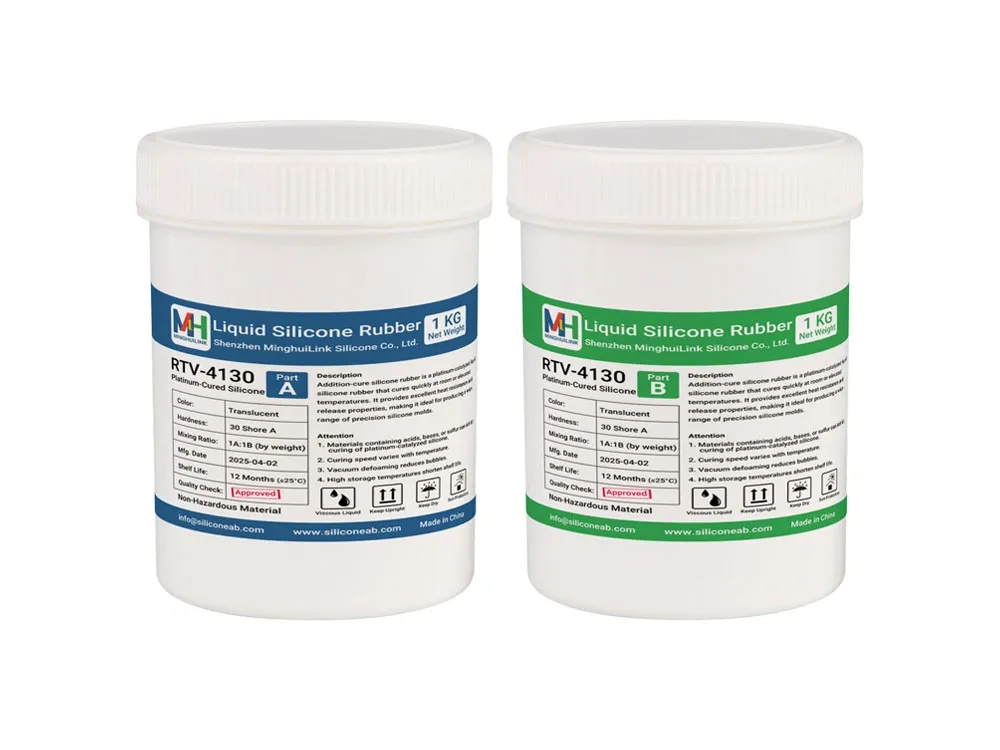
RTV-4130

Platinum-Cure Silicone

MinghuiLink RTV-4130 silicone rubber
  • Hardness
    30 Shore A
  • Mix Ratio
    1:1
  • Viscosity
    4,400 cps

Visit Product

Conclusion

Mold Star™ 30 and RTV-4130 are both Shore A30 platinum-cure silicones and can be considered for many similar mold-making and casting applications, but their published processing characteristics and mechanical data are not identical.

  • Comparable product positioning:
    Both are Shore A30 platinum-cure silicones with a 1:1 mix ratio by volume and are intended for similar mold-making and casting applications.
  • Processing window:
    Mold Star™ 30 has a longer published pot life, while RTV-4130 has a shorter published cure time under the manufacturers' stated conditions.
  • Performance considerations:
    The published tensile strength, tear strength, elongation and heat-resistance values differ between the two products, so selection should be based on the specific requirements of the mold and casting process.

1. Technical Assessment

Mold Star™ 30 and RTV-4130 are both Shore A30 platinum-cure silicones, placing them in a medium-hardness range commonly considered for reusable molds where a balance of flexibility, dimensional stability and mold strength is needed. Their similar hardness and 1:1 mix-by-volume format make them relevant alternatives for many mold-making projects.

For users making larger molds or molds that will be handled and demolded repeatedly, the published mechanical properties are an important point of comparison. RTV-4130 has higher published tensile strength, tear strength and elongation than Mold Star™ 30. These figures may be relevant when the mold needs to withstand repeated demolding, greater handling stress or more demanding mold geometries. Because the manufacturers do not present all testing conditions in exactly the same way, the published values should be used as reference data rather than as a strict laboratory ranking.

Processing behavior is another practical difference. Mold Star™ 30 has a published 45-minute pot life, compared with a 35-minute working time for RTV-4130. This gives Mold Star™ 30 a longer published working window, which may be useful when filling a larger mold or when additional time is needed for careful pouring and air release. RTV-4130, however, has the shorter published cure time at approximately 5 hours compared with 6 hours for Mold Star™ 30.

Viscosity should be interpreted with particular care in this comparison. Smooth-On reports 12,500 cps for mixed Mold Star™ 30, while MinghuiLink reports approximately 4,400 mPa·s for Part A of RTV-4130. Since these values are measured at different points in the mixing process, they should not be treated as a direct like-for-like viscosity test. In practice, users should evaluate actual flow, detail reproduction and air release with their mold design and casting process.

For applications such as resin, gypsum or concrete mold making, neither product should be selected on hardness alone. Mold geometry, required demolding flexibility, expected number of casting cycles, working time, cure schedule and the mechanical demands placed on the finished mold are all relevant when deciding whether RTV-4130 is a suitable alternative to Mold Star™ 30.
2. Technical Comparison

Technical Parameter Smooth-On Mold Star™ 30 MinghuiLink RTV-4130
Silicone Type Platinum-cure silicone Platinum-cure silicone
Color Blue Translucent
Specific Gravity 1.12 g/cc (1.12 g/cm³) 1.06–1.08 g/cm³
Mix Ratio 1A:1B by volume; 100A:96B by weight 1A:1B by weight or volume
Shore Hardness 30 Shore A 30 Shore A
Viscosity 12,500 cps (mixed) 4,400 mPa·s* (Part A)
Working / Pot Life 45 min 35 min
Cure Time 6 hours 5 hours
Tensile Strength 420 psi (~2.90 MPa) 5.0 MPa
Tear Strength 88 pli (~15.4 N/mm) 28.0 N/mm
Elongation 339% 400%
Shrinkage <0.001 in./in. (<0.1%) ≤0.1%
Heat Resistance 232°C / 450°F 250°C / 482°F
Technical Data Sources Mold Star™ 30 RTV-4130

3. Key Differences

Key Factor Smooth-On Mold Star™ 30 MinghuiLink RTV-4130 What It Means
Hardness 30 Shore A 30 Shore A Both target the same medium-hard mold hardness.
Mix Ratio 1A:1B by volume 1A:1B Both use a convenient 1:1 mixing ratio by volume, although Mold Star™ 30 specifies a different ratio by weight.
Viscosity 12,500 cps (mixed) 4,400 mPa·s (Part A) The published values indicate different viscosity levels, but the measurement points are not identical.
Working / Pot Life 45 min 35 min Mold Star™ 30 provides more published working time.
Cure Time 6 hours 5 hours RTV-4130 has the shorter published room-temperature cure time.
Mechanical Properties 420 psi tensile; 88 pli tear; 339% elongation 5.0 MPa tensile; 28.0 N/mm tear; 400% elongation RTV-4130 has higher published tensile strength, tear strength and elongation, subject to differences in test conditions and methods.
Heat Resistance 232°C / 450°F 250°C / 482°F RTV-4130 has the higher published temperature resistance.

4. Application Comparison

Application Mold Star™ 30 RTV-4130 Key Consideration
Resin Casting Suitable Suitable Consider viscosity, mold detail, working time, cure characteristics and the specific resin formulation.
Concrete Mold Making Suitable Suitable Evaluate flexibility, tear resistance, mold geometry and repeated-use requirements.
Gypsum Casting Suitable Suitable Consider mold flexibility, detail reproduction and expected demolding requirements.
Low-Melt Alloy Casting Suitable Suitable Both publish high-temperature resistance, but the maximum published temperature differs.
Prototype Molds Suitable Suitable Working time, cure cycle and mechanical performance may affect production efficiency.
Reusable Production Molds Suitable Suitable Consider tear strength, tensile strength, elongation and the frequency and type of casting cycles.

5. FAQ

Compare Another Silicone

Need Help Choosing?

Tell us your application. We’ll recommend the right RTV-2 silicone and provide a sample for testing.

Request a Sample