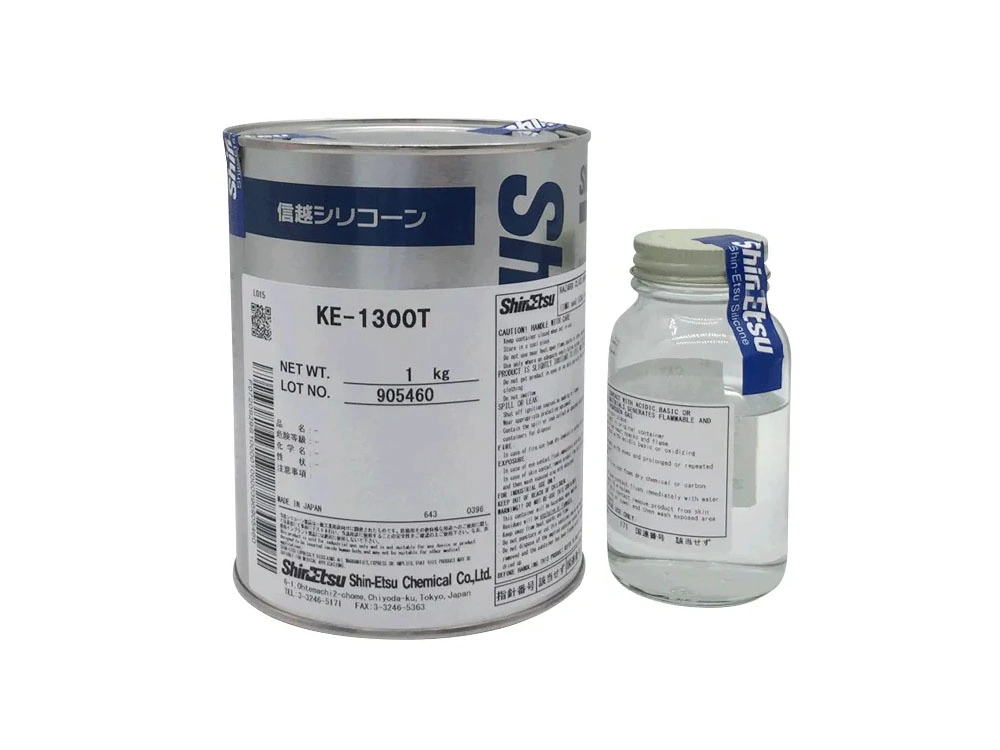
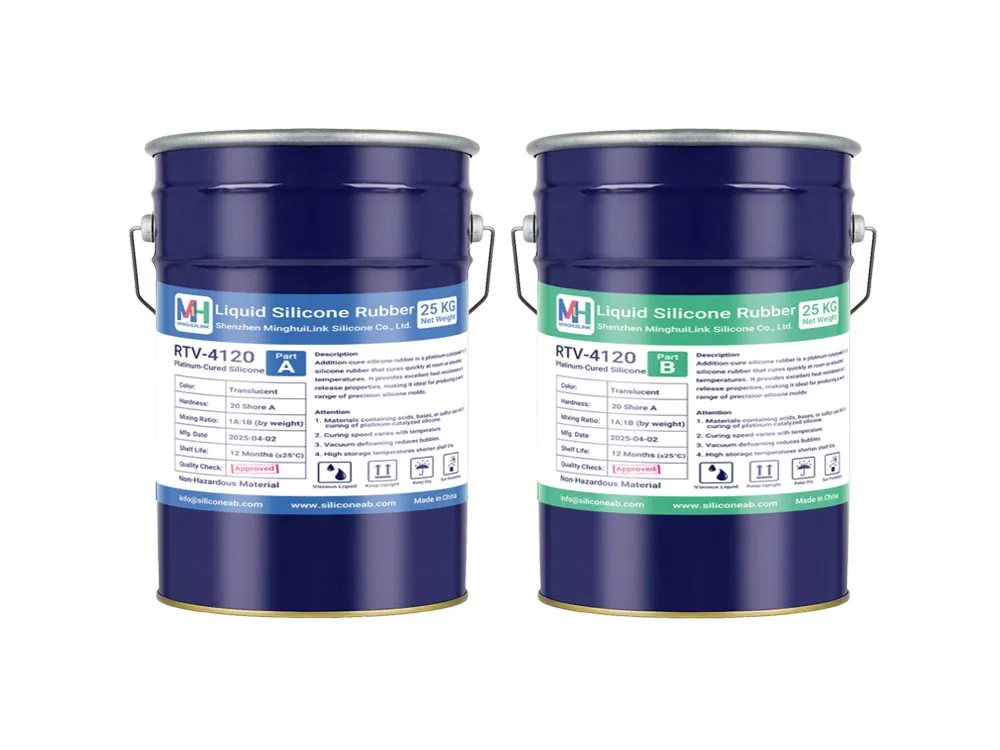
KE-1300T/CAT-1300L-4 and RTV-4120 are both Shore A20 addition-cure silicone systems, so both are intended for soft and flexible mold applications. The main difference is not cured hardness but production workflow. KE-1300T/CAT-1300L-4 combines a 7-hour working window with high-strength, high-modulus positioning, while RTV-4120 focuses on simpler 1:1 processing, lower published component viscosity and faster mold turnaround.
The most distinctive feature of KE-1300T/CAT-1300L-4 is its exceptionally long working time. Shin-Etsu lists approximately 7 hours, giving the operator substantially more time for mixing, vacuum deaeration, positioning and controlled pouring. This can be especially valuable for large molds, complicated mold layouts or processes where the material cannot be handled comfortably within a conventional 30–40 minute working window.
This long processing window should be considered together with KE-1300T/CAT-1300L-4's high-strength and high-modulus positioning. Although the cured hardness is only 20 Shore A, Shin-Etsu specifically describes the material as a high-strength, high-modulus mold-making silicone with high tear resistance. This combination can be useful when a relatively soft mold still needs good structural performance during handling and repeated demolding.
RTV-4120 takes a different processing approach. Its published working time is approximately 30–40 minutes, while the mixing ratio is 1:1 by weight or volume. For routine mold production, this makes batching simpler and reduces the measuring difficulty associated with a 100:10 system such as KE-1300T/CAT-1300L-4. The shorter working window is less suitable for very extended mold preparation, but it can be advantageous when the operator wants the material to move through mixing and curing more quickly.
Viscosity is another important processing difference, although the published values are not directly like-for-like. Shin-Etsu reports approximately 75 Pa·s for the KE-1300T/CAT-1300L-4 base, equivalent to about 75,000 cP, while MinghuiLink reports approximately 4,700±200 mPa·s for Part A of RTV-4120. Because these measurements refer to different material states, they should not be treated as a strict viscosity ranking. The data nevertheless show that KE-1300T/CAT-1300L-4 has a much higher published viscosity on its stated basis, making effective deaeration and controlled pouring particularly important for bubble-sensitive molds.
The published mechanical data also show different strengths rather than a universal winner. KE-1300T/CAT-1300L-4 reports 4.5 MPa tensile strength, 12 kN/m tear strength and 600% elongation, while RTV-4120 reports 5.0±0.5 MPa tensile strength, 27±0.5 N/mm tear strength and 550±50% elongation. RTV-4120 therefore has higher published tensile and tear values, while KE-1300T/CAT-1300L-4 reports higher elongation. These figures should be treated as published reference data rather than a strict laboratory ranking because manufacturers may use different test methods and conditions.
Cure speed further separates the two production approaches. KE-1300T/CAT-1300L-4 lists 24 hours at 23°C followed by 1 hour at 50°C, while RTV-4120 is published with an approximately 4–5 hour cure time. RTV-4120 is therefore better aligned with users who prioritize faster mold turnover, whereas KE-1300T/CAT-1300L-4 is better suited to workflows where the very long working window, high-strength and high-modulus characteristics justify a slower overall production cycle. The practical choice depends mainly on mold size, processing method and production schedule rather than hardness alone.