Smooth-Sil™ 936 vs RTV-4135 Silicone Comparison

Smooth-Sil™ 936 and RTV-4135 are both platinum-cure RTV-2 silicones for mold making and casting, with closely matched hardness at 36 Shore A and 35±1 Shore A respectively. This comparison examines their published technical specifications, processing characteristics and mechanical properties to help manufacturers evaluate RTV-4135 as a potential alternative.

Smooth-On

Smooth-Sil™ 936

Platinum-Cure Silicone
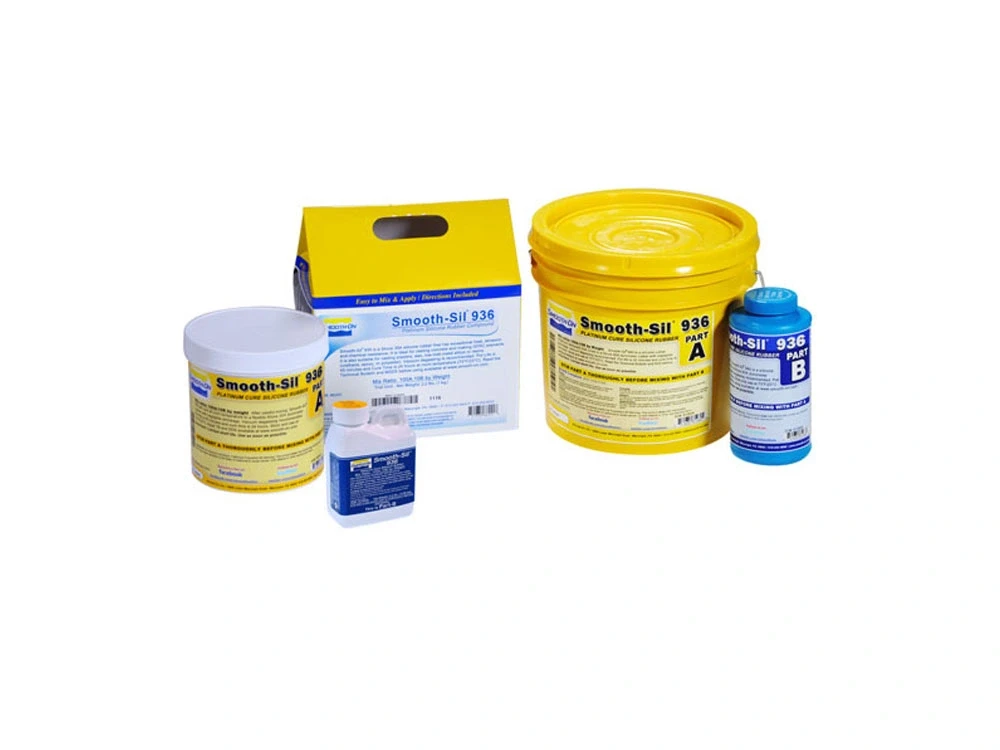
Smooth-Sil™ 936 silicone rubber
  • Hardness
    36 Shore A
  • Mix Ratio
    100A:10B
  • Viscosity
    21,000 cps

Visit Product

VS
MinghuiLink

RTV-4135

Platinum-Cure Silicone
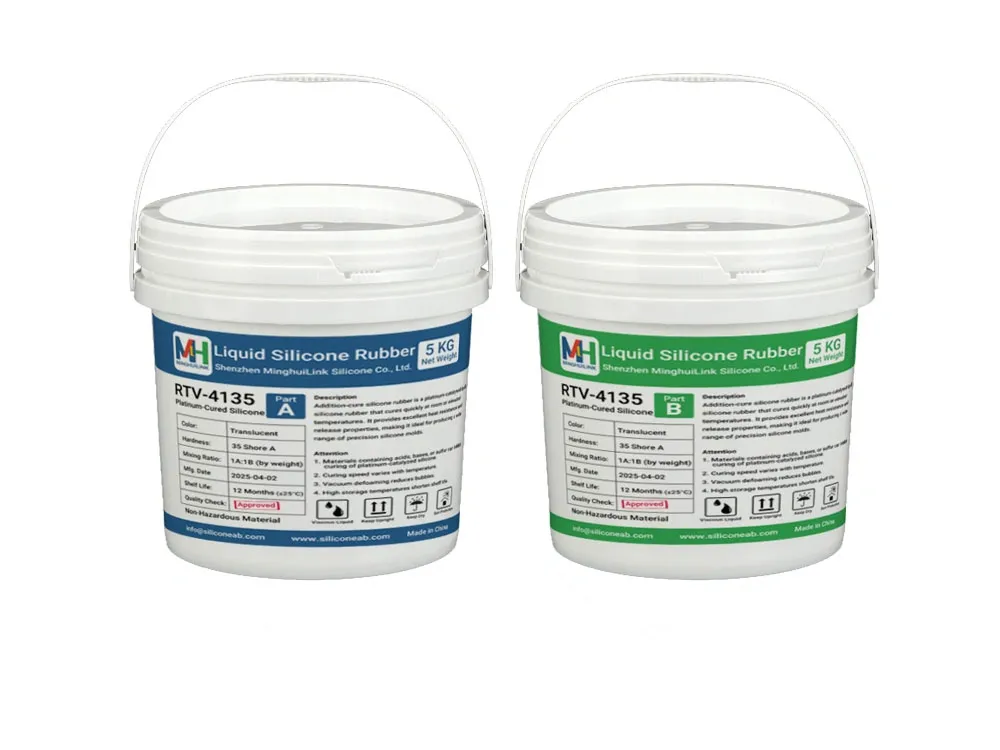
MinghuiLink RTV-4135 silicone rubber
  • Hardness
    35 Shore A
  • Mix Ratio
    1:1
  • Viscosity
    4,500 cps

Visit Product

Conclusion

Smooth-Sil™ 936 and RTV-4135 are closely matched in hardness, but their published mixing, processing and mechanical properties differ significantly.

  • Similar Hardness:
    Both are medium-hardness platinum-cure silicones at 36 Shore A and 35±1 Shore A respectively.
  • Mixing & Processing:
    Smooth-Sil™ 936 uses a 100A:10B mix ratio with a longer working window, while RTV-4135 uses a simpler 1:1 ratio and shorter cure cycle.
  • Performance Profile:
    Published mechanical properties differ, so material selection should consider the mold design, demolding requirements and production workflow.

1. Technical Assessment

Smooth-Sil™ 936 and RTV-4135 have closely matched hardness at 36 Shore A and 35±1 Shore A respectively. Both provide a relatively firm mold profile for applications where more body and dimensional stability are needed than softer silicone grades.

One of the clearest differences is the mixing system. Smooth-Sil™ 936 uses a 100A:10B ratio by weight, while RTV-4135 uses a 1:1 ratio by weight or volume. The 1:1 system can simplify routine batch preparation, while the 100A:10B system requires more precise weighing.

Working and cure times also differ significantly. Smooth-Sil™ 936 has a published 60-minute pot life and approximately 24-hour cure time, while RTV-4135 has a 30–40-minute working time and approximately 4–5-hour cure time. Smooth-Sil™ 936 therefore provides a longer working window, while RTV-4135 offers a substantially shorter published cure cycle.

Viscosity should be interpreted carefully. Smooth-Sil™ 936 is listed at 21,000 cps, while MinghuiLink reports approximately 4,500 mPa·s for Part A of RTV-4135. Because the manufacturers report viscosity at different measurement points, these figures should not be treated as a direct like-for-like comparison. Actual flow, air release and detail reproduction should be evaluated with the intended mold geometry.

The published mechanical data also show different performance profiles. RTV-4135 reports higher published tensile and tear strength, while Smooth-Sil™ 936 reports higher elongation. Because the manufacturers may use different test methods and conditions, these figures should be treated as reference data rather than a strict laboratory ranking.

2. Technical Comparison

Technical Parameter Smooth-On Smooth-Sil™ 936 MinghuiLink RTV-4135
Silicone Type Platinum-cure silicone Platinum-cure silicone
Color Blue Translucent
Specific Gravity 1.21 g/cc (1.21 g/cm³) 1.08–1.10 g/cm³
Mix Ratio 100A:10B by weight 1A:1B by weight or volume
Shore Hardness 36 Shore A 35±1 Shore A
Viscosity 21,000 cps 4,500±200 mPa·s* (Part A)
Working / Pot Life 60 min 30–40 min
Cure Time 24 hours 4–5 hours
Tensile Strength 550 psi (~3.79 MPa) 4.8±0.5 MPa
Tear Strength 110 pli (~19.3 N/mm) 28±0.5 N/mm
Elongation 500% 300±50%
Shrinkage <0.001 in./in. (<0.1%) ≤0.1%
Heat Resistance 232°C / 450°F 250°C / 482°F
Technical Data Sources Smooth-Sil™ 936 RTV-4135

3. Key Differences

Key Factor Smooth-On Smooth-Sil™ 936 MinghuiLink RTV-4135 What It Means
Hardness 36 Shore A 35±1 Shore A Both are medium-hardness silicones in a closely matched Shore A range.
Mixing System 100A:10B by weight 1A:1B by weight or volume RTV-4135 uses a simpler 1:1 mixing system, while Smooth-Sil™ 936 requires more precise component weighing.
Working Window 60 min pot life 30–40 min working time Smooth-Sil™ 936 provides the longer published window for mixing, degassing and pouring.
Turnaround 24 hours cure 4–5 hours cure RTV-4135 has the substantially shorter published cure cycle.
Mechanical Profile 550 psi tensile; 110 pli tear; 500% elongation 4.8±0.5 MPa tensile; 28±0.5 N/mm tear; 300±50% elongation RTV-4135 reports higher published tensile and tear strength, while Smooth-Sil™ 936 reports higher elongation.
Viscosity 21,000 cps 4,500±200 mPa·s (Part A) The published values differ substantially, but the manufacturers report viscosity at different measurement points.

4. Application Comparison

Application Smooth-Sil™ 936 RTV-4135 Key Consideration
Production Molds Suitable Suitable Both are suitable for relatively firm reusable molds; consider mold life, handling, casting material and production cycle.
Resin Casting Suitable Suitable Both can be used for resin molds; viscosity, air release, tear resistance and demolding requirements should be evaluated.
Concrete / Gypsum Molds Suitable Suitable The medium-hardness profile can provide useful mold body, while abrasive casting materials may affect mold life.
3D-Printed Master Molds Suitable Suitable Both platinum systems require compatible master surfaces. Residual UV resin and other contaminants should be controlled and tested before full-scale molding.
Low-Melt Metal Casting Suitable Not specifically listed Smooth-Sil™ 936 is specifically positioned for low-temperature melt metal casting applications. RTV-4135 should be validated separately before metal casting use.
Large / Detailed Molds Suitable Suitable The longer published working time of Smooth-Sil™ 936 may be useful when additional time is needed for mixing, degassing and pouring larger or more detailed molds.

5. FAQ

Compare Another Silicone

Need Help Choosing?

Tell us your application. We’ll recommend the right RTV-2 silicone and provide a sample for testing.

Request a Sample