KE-1311/CAT-1310 vs RTV-4140 Silicone Comparison

KE-1311/CAT-1310 and RTV-4140 are both Shore A40 silicone systems for mold making, but they are designed around different production needs. KE-1311 is specifically positioned for repeated polyurethane casting, with excellent urethane resin resistance and extended mold life, while RTV-4140 emphasizes simpler 1:1 processing, lower published component viscosity and faster mold turnaround. This comparison examines their technical data and practical differences for production molds, precision tooling and resin-casting applications.

Shin-Etsu

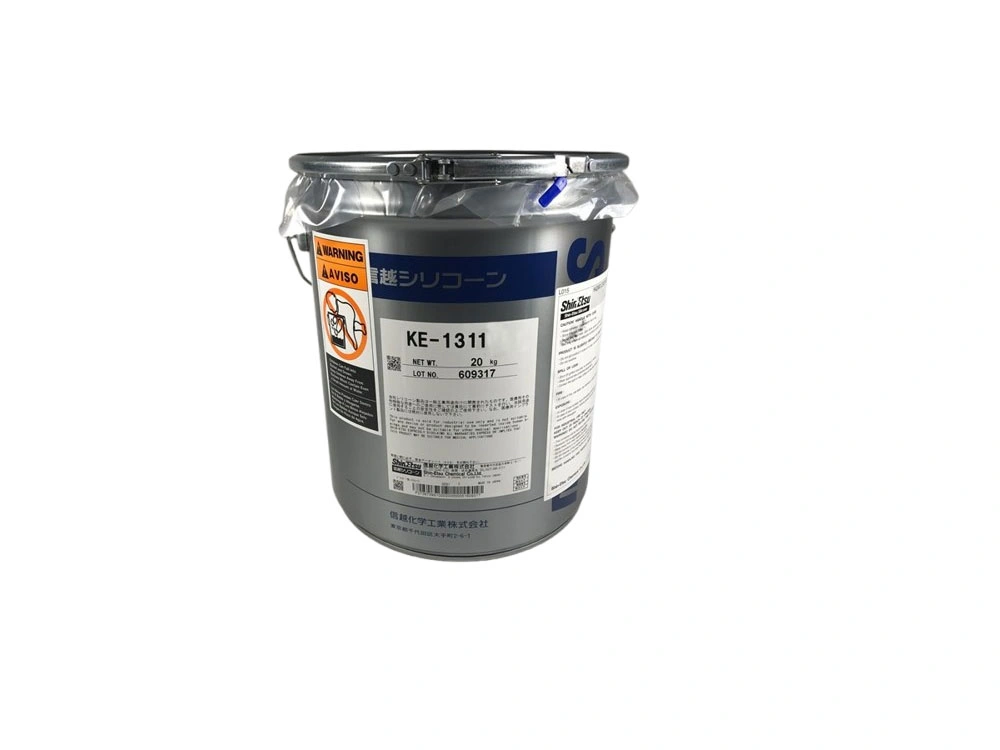
KE-1311/CAT-1310

Addition-Cure Silicone

KE-1311/CAT-1310 silicone rubber
  • Hardness
    40 Shore A
  • Mix Ratio
    10:1
  • Viscosity
    80,000 cps

Visit Product

VS
MinghuiLink

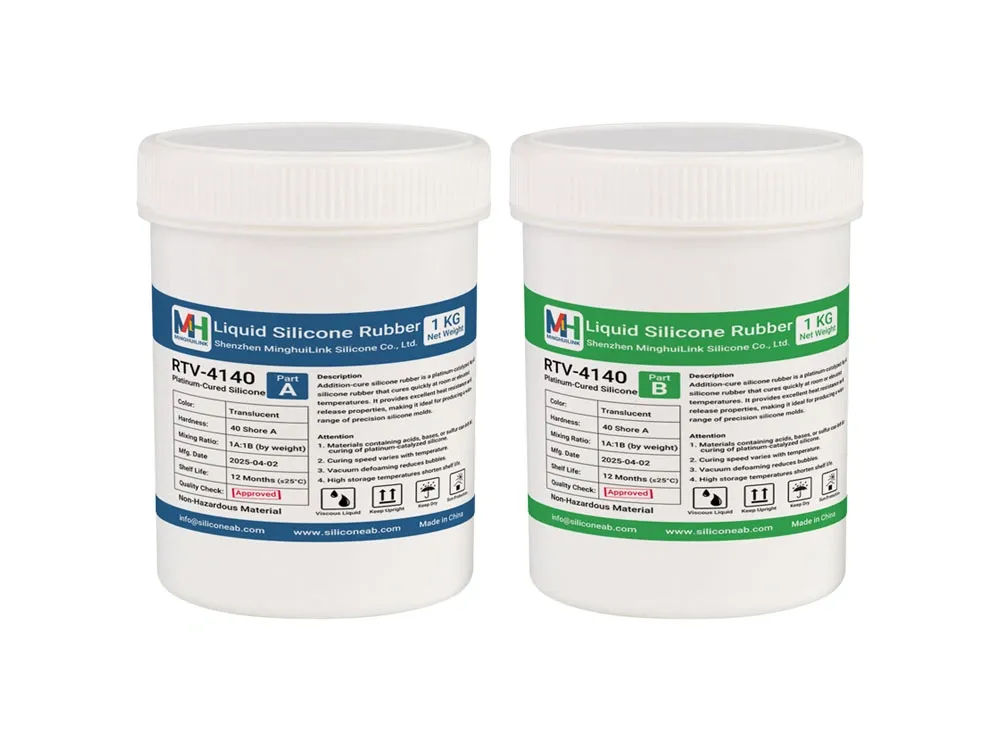
RTV-4140

Platinum-Cure Silicone

MinghuiLink RTV-4140 silicone rubber
  • Hardness
    40 Shore A
  • Mix Ratio
    1:1
  • Viscosity
    4,800 cps

Visit Product

Conclusion

KE-1311/CAT-1310 and RTV-4140 share a similar Shore A40 hardness, but they are aimed at different production priorities. KE-1311 is specifically positioned for repeated polyurethane casting, with excellent urethane resistance and extended mold-life performance, while RTV-4140 focuses on simpler processing and faster mold turnaround.

  • Urethane Resistance:
    KE-1311 is specifically documented for excellent resistance to urethane casting resins, making it particularly relevant when the same mold is exposed to polyurethane repeatedly.
  • Extended Mold Life:
    KE-1311 is positioned for producing multiple polyurethane parts from the same mold while maintaining mold properties and release performance over repeated use.
  • Processing Trade-Off:
    RTV-4140 uses a straightforward 1:1 mixing system, lower published Part A viscosity and a shorter cure cycle, while KE-1311 provides a much longer working window for controlled production and large or complex molds.

1. Technical Assessment

KE-1311/CAT-1310 and RTV-4140 are both Shore A40 addition-cure silicone systems, but they serve different production priorities. KE-1311 is specifically positioned by Shin-Etsu for high-strength mold making with excellent resistance to urethane casting resins and extended mold life, making it particularly relevant to repeated polyurethane production rather than simply general-purpose A40 molding.

The most important difference is therefore the service environment. A silicone may be generally compatible with polyurethane yet still experience changes in surface condition, release performance or physical properties after repeated exposure to reactive casting resins. Shin-Etsu specifically identifies KE-1311 for excellent urethane resistance and applications where multiple polyurethane parts are produced from the same mold. For production users, this makes resin resistance and mold longevity more important selection factors than hardness alone.

The two products also use very different mixing systems. KE-1311/CAT-1310 uses a 100:10 ratio by weight, while RTV-4140 uses a 1:1 ratio by weight or volume. KE-1311 therefore requires more careful component measurement, particularly for small batches, whereas RTV-4140 is simpler to batch for routine manual production. This is primarily a workflow difference rather than a direct indicator of cured performance.

Working time provides another meaningful difference. Shin-Etsu specifies approximately 1.5 hours for KE-1311, compared with approximately 35 minutes for RTV-4140. The longer KE-1311 window can be useful when preparing large molds, performing vacuum deaeration or carefully filling complex cavities. RTV-4140 instead favors a shorter processing cycle and faster progression toward demolding.

Viscosity is also significantly different in the published specifications. Shin-Etsu reports approximately 80,000 cP for the KE-1311 base, while MinghuiLink reports approximately 4,800±200 mPa·s for Part A of RTV-4140. Because these figures refer to different material states, they should not be treated as a strict like-for-like laboratory ranking. The much higher published viscosity of KE-1311 nevertheless means that appropriate mixing, vacuum deaeration and controlled pouring are more important considerations, particularly for detailed molds.

The published mechanical data show a mixed profile rather than a universal winner. KE-1311 reports 850 psi (~5.86 MPa) tensile strength, 22 kN/m tear strength and 350% elongation, while RTV-4140 reports 5.3 MPa tensile strength, 32.0 N/mm tear strength and 220% elongation. KE-1311 therefore reports higher published tensile strength and elongation, while RTV-4140 reports the higher published tear value. Because the manufacturers use different test methods and reporting conditions, these figures should be treated as published reference values rather than a direct laboratory ranking.

For users making polyurethane molds repeatedly, the key advantage of KE-1311 is not simply its Shore A40 hardness or mechanical strength. Its strongest differentiation is the combination of documented urethane resistance and extended mold-life positioning for repeated production. RTV-4140 offers a more straightforward 1:1 mixing system, lower published component viscosity and a shorter cure cycle, making it attractive when easier processing and faster mold turnaround are the main priorities.
2. Technical Comparison

Technical Parameter Shin-Etsu KE-1311/CAT-1310 MinghuiLink RTV-4140
Silicone Type Addition-cure silicone Platinum-cure silicone
Color Translucent Translucent
Specific Gravity 1.08 g/cm³ 1.08–1.10 g/cm³
Mix Ratio 100:10 by weight 1A:1B by weight or volume
Shore Hardness 40 Shore A 40±2 Shore A
Viscosity 80,000 cP (Base) 4,800±200 mPa·s* (Part A)
Working / Pot Life 1.5 hours 35 min
Cure Time 24 hours at 23°C 6 hours
Tensile Strength 850 psi (~5.86 MPa) 5.3 MPa
Tear Strength 22 kN/m (~22 N/mm) 32.0 N/mm
Elongation 350% 220%
Shrinkage Low shrinkage ≤0.1%
Usable Temperature Range −40°C to +175°C 250°C / 482°F heat resistance
Urethane Resistance Excellent urethane resin resistance Suitable for polyurethane casting; no equivalent special resistance claim publicly listed
Mold Life Positioning Designed for extended mold life and repeated urethane casting No equivalent extended urethane mold-life claim publicly listed
Technical Data Sources KE-1311/CAT-1310 RTV-4140

3. Key Differences

Key Factor Shin-Etsu KE-1311/CAT-1310 MinghuiLink RTV-4140 What It Means
Urethane Resistance Excellent urethane resin resistance No equivalent special resistance claim publicly listed KE-1311 is specifically positioned for molds exposed repeatedly to polyurethane casting resins.
Mold Life Positioned for extended mold life No equivalent claim publicly listed KE-1311 is designed for repeated production where maintaining mold performance and release characteristics over multiple cycles is important.
Hardness 40 Shore A 40±2 Shore A Both target the same general A40 mold range.
Mixing System 100:10 by weight 1A:1B by weight or volume RTV-4140 is simpler to batch, while KE-1311 requires accurate catalyst measurement.
Working Window 1.5 hours 35 min KE-1311 provides substantially more time for mixing, deaeration and controlled pouring.
Turnaround 24 h cure 6 h cure RTV-4140 provides the shorter published cure cycle for faster mold turnover.
Published Viscosity 80,000 cP base 4,800±200 mPa·s Part A KE-1311 has a much higher published viscosity, making thorough mixing, deaeration and controlled pouring more important.
Mechanical Profile 850 psi tensile; 22 kN/m tear; 350% elongation 5.3 MPa tensile; 32.0 N/mm tear; 220% elongation KE-1311 reports higher published tensile strength and elongation, while RTV-4140 reports higher published tear strength.

4. Application Comparison

Application KE-1311/CAT-1310 RTV-4140 Key Consideration
Polyurethane Casting Molds Strong candidate Suitable KE-1311 is specifically positioned for excellent urethane resin resistance, making it particularly relevant to repeated polyurethane casting.
Repeated Production Strong candidate Suitable KE-1311 is positioned for extended mold life and repeated production use. Actual service life depends on resin chemistry, mold design and demolding conditions.
Epoxy Casting Molds Suitable Suitable KE-1311 is documented for resistance to common casting resins, while actual compatibility and mold life depend on the specific epoxy formulation and production conditions.
Precision Industrial Molds Suitable Suitable Both provide A40 hardness. KE-1311 emphasizes high-strength mold making and long-term resin exposure, while RTV-4140 offers simpler processing and faster cure.
Vacuum Casting Suitable Suitable KE-1311 provides a long working window, but its high published viscosity makes effective vacuum deaeration and controlled pouring particularly important.
Complex / Detailed Molds Suitable Suitable Both can reproduce detailed geometry. KE-1311 provides more processing time, while mold thickness, venting and demolding design remain important.
Rapid Prototyping Suitable Suitable RTV-4140 has the shorter published cure cycle, while KE-1311 provides a longer working window for detailed preparation.

5. FAQ

Compare Another Silicone

Need Help Choosing?

Tell us your application. We’ll recommend the right RTV-2 silicone and provide a sample for testing.

Request a Sample