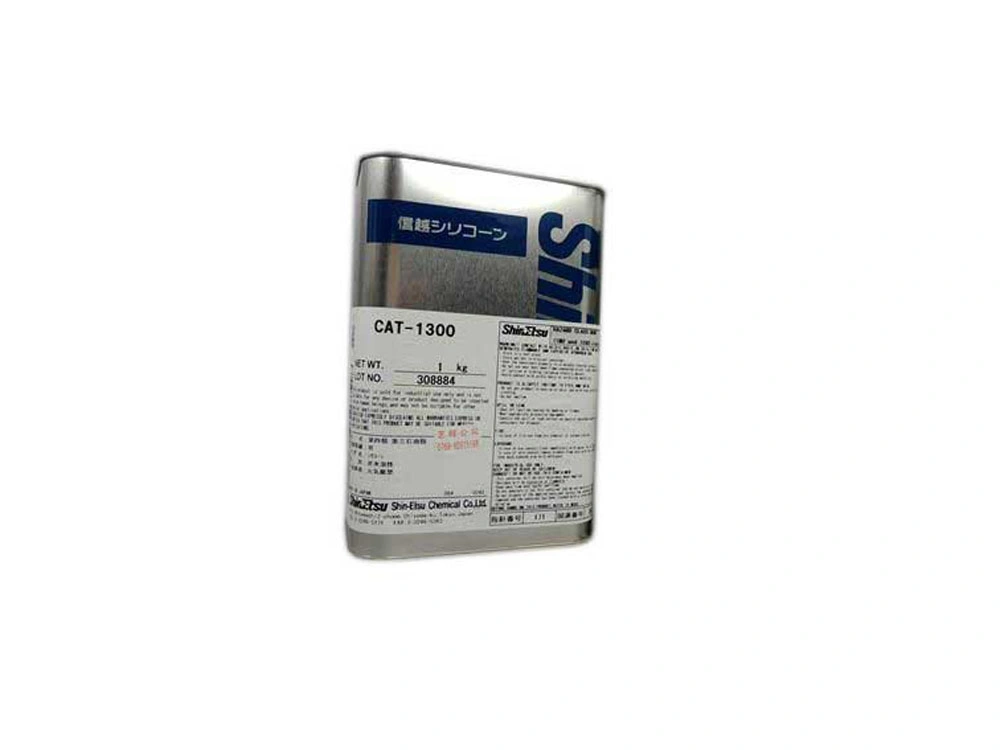
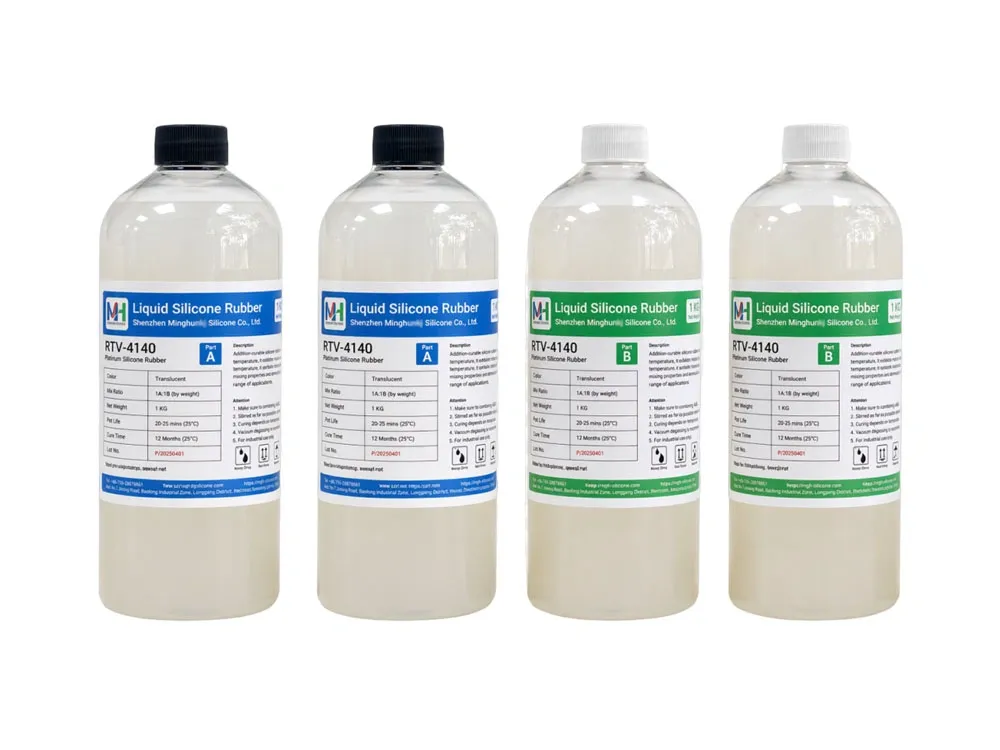
KE-1300 also has documented advantages in demanding casting-resin environments. Shin-Etsu technical literature has described KE-1300/KE-1300T as suitable where resistance to epoxy, polyester and urethane casting resins is important. This is particularly relevant for repeated-production molds exposed to aggressive or reactive casting systems. RTV-4140 can also be used for resin casting, but its current published documentation does not make the same specific resin-resistance claim.
The component systems create one of the clearest differences. KE-1300/CAT-1300 uses a 100:10 ratio by weight, while RTV-4140 uses a 1:1 ratio by weight or volume. The 10:1 KE-1300 system requires more careful component measurement, particularly for small batches, whereas the 1:1 RTV-4140 system simplifies routine batching and manual production work.
Working time also differs substantially. Shin-Etsu specifies approximately 1.5 hours for KE-1300, compared with approximately 35 minutes for RTV-4140. The longer KE-1300 working window can be useful when preparing large molds, performing vacuum deaeration or carefully filling complex cavities. RTV-4140 sacrifices some working time in exchange for a substantially shorter published cure cycle.
Viscosity is one of the most significant processing differences. Shin-Etsu reports a base viscosity of 95 Pa·s, equivalent to approximately 95,000 cP, for KE-1300, while MinghuiLink reports approximately 4,800±200 mPa·s for Part A of RTV-4140. Because the manufacturers report viscosity at different measurement points, these values should not be treated as a strict like-for-like ranking. The much higher published KE-1300 viscosity nevertheless makes controlled mixing, vacuum deaeration and pouring technique particularly important.
The published mechanical data show a mixed result rather than a universal winner. KE-1300 reports 5.0 MPa tensile strength, 15 kN/m tear strength and 400% elongation. RTV-4140 reports 5.3 MPa tensile strength, 32.0 N/mm tear strength and 220% elongation. The tensile values are broadly similar, while RTV-4140 reports the higher published tear-strength value and KE-1300 reports higher elongation. Because manufacturers use different test methods and reporting conditions, these figures should be treated as published reference values rather than a direct laboratory ranking.
For precision mold making, KE-1300 combines high modulus, low shrinkage, high strength and a long working window. Its sandable cured rubber is also used in industrial applications such as rollers and belts where a non-stick silicone surface is required. RTV-4140 instead offers a simpler 1:1 batching process, lower published Part A viscosity and a shorter cure cycle. The final choice should therefore depend on whether the project prioritizes precision-oriented processing and documented resin resistance or simpler handling and faster mold turnover.