ELASTOSIL® RT 625 A/B vs RTV-4125 Silicone Comparison

ELASTOSIL® RT 625 A/B and MinghuiLink RTV-4125 are both 25 Shore A addition-cure mold silicones, but they target different production needs. RT 625 emphasizes mechanical performance, extended working time and composite or vacuum-bag molding, while RTV-4125 offers simpler 1:1 mixing, lower component viscosity and faster routine curing.

WACKER

ELASTOSIL® RT 625 A/B

Addition-Cure Silicone
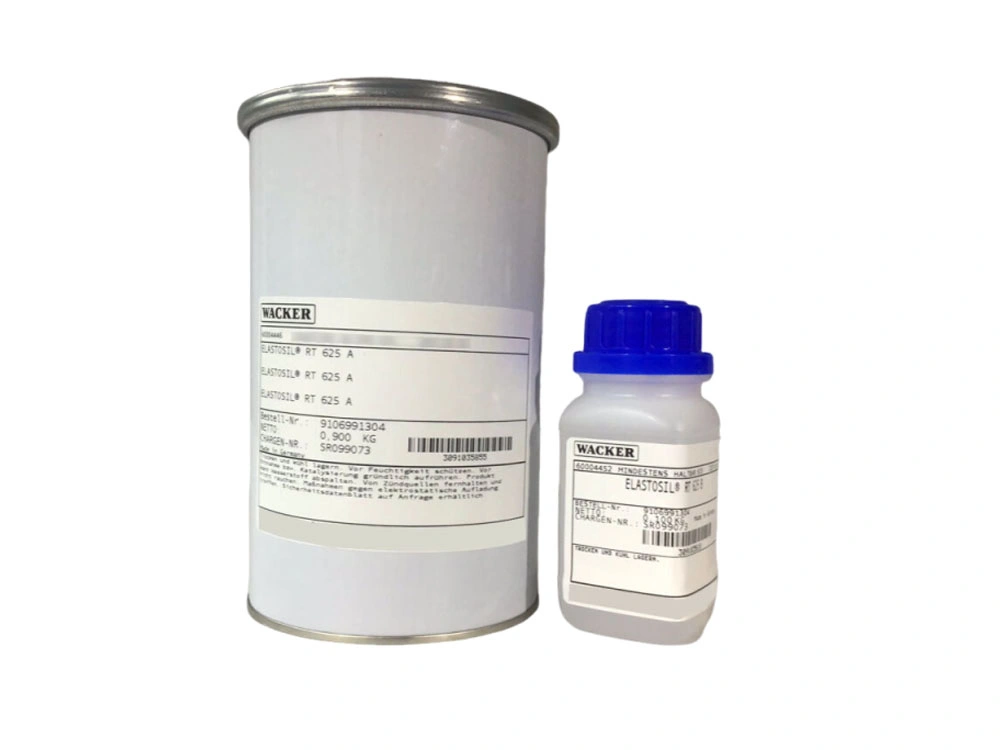
  • Hardness
    25 Shore A
  • Mix Ratio
    9:1
  • Working Time
    60 min

Visit Product

VS
MinghuiLink

RTV-4125

Platinum-Cure Silicone
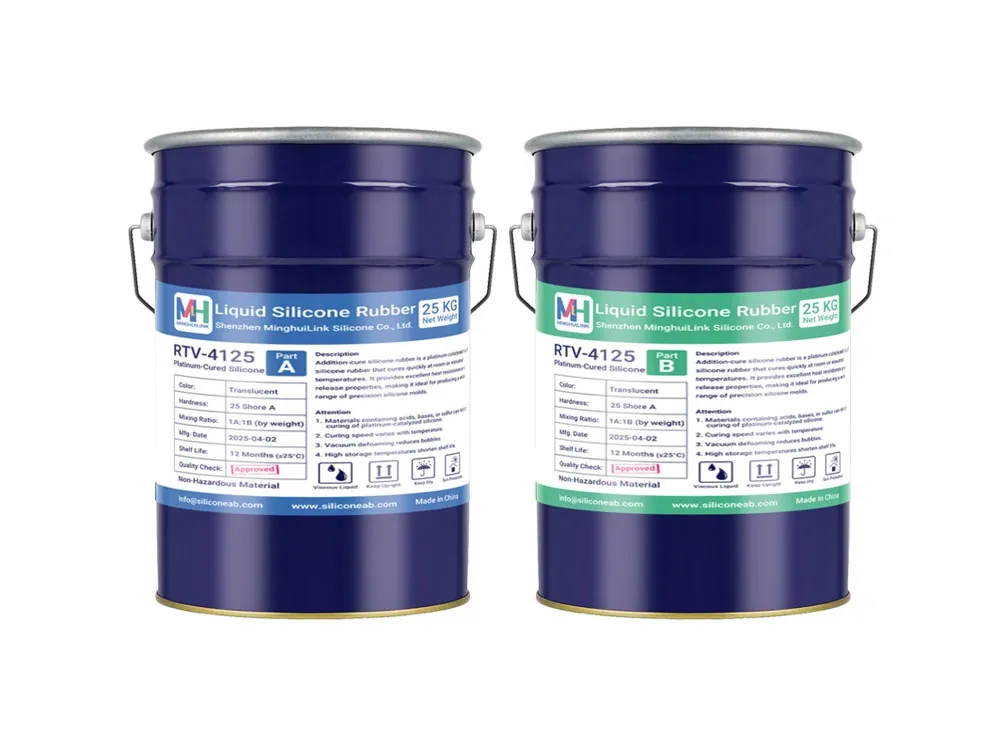
  • Hardness
    25±1 Shore A
  • Mix Ratio
    1:1
  • Working Time
    35 min

Visit Product

Conclusion

ELASTOSIL® RT 620 A/B and RTV-4115 are both soft silicones, but their primary strengths are different. RT 620 is the better fit for pad printing and repeated deformation, while RTV-4115 is better aligned with soft mold making, simpler 1:1 processing and higher tear resistance.


  • Pad Printing:
    RT 620 is specifically positioned for printing pads and publishes 900% elongation for repeated deformation.

  • Processing Window:
    Both provide roughly 30–40 minutes of working time, but RTV-4115 is simpler to proportion with its 1:1 mix ratio.

  • Tear Resistance:
    RTV-4115 publishes 26±0.5 N/mm tear strength, compared with at least 12 N/mm for RT 620.

1. Technical Assessment

ELASTOSIL® RT 625 A/B and RTV-4125 are closely matched at 25 Shore A, making processing and performance more important than hardness alone.

The main processing difference is the mixing system and working time. RT 625 uses a 9:1 ratio with approximately 60 minutes of pot life, while RTV-4125 uses a simpler 1:1 ratio with approximately 35 minutes of working time. RT 625 offers more processing latitude; RTV-4125 is easier to proportion manually.

Viscosity also differs significantly. RT 625 publishes approximately 25,000 mPa·s for Part A, 900 mPa·s for Part B and 12,000 mPa·s for the mixed material, while RTV-4125 publishes approximately 4,700 and 4,400 mPa·s for its components. These figures use different measurement points and should not be treated as a direct mixed-viscosity comparison.

RT 625 has the stronger published mechanical profile, with 6.5 MPa tensile strength, 30 N/mm tear strength and 600% elongation, compared with 4.0±0.5 MPa, 26±0.5 N/mm and 460±50% for RTV-4125. This provides greater published mechanical margin for demanding molds and repeated use.

WACKER specifically positions RT 625 for composite molding, vacuum-bag molding and technical reproduction, while RTV-4125 is more broadly suited to reusable molds and casting. The practical choice is therefore between longer processing and higher published mechanical performance with RT 625, or simpler 1:1 handling, lower component viscosity and faster routine curing with RTV-4125.

2. Technical Comparison

Technical Parameter WACKER ELASTOSIL® RT 625 A/B MinghuiLink RTV-4125
Silicone Type Addition-cure RTV-2 Platinum-cure silicone
Color Translucent Translucent
Mix Ratio 9:1 by weight 1:1 by weight or volume
Shore Hardness 25 Shore A 25±1 Shore A
Viscosity 25,000 mPa·s (Part A) 4,700±200 mPa·s (Part A)
Working / Pot Life 60 min 35 min
Demold / Cure Time 12 h tack-free 5 h cure
Tensile Strength 6.5 MPa 4.0±0.5 MPa
Tear Strength 30 N/mm 26±0.5 N/mm
Elongation 600% 460±50%
Shrinkage <0.1% ≤0.1%
Temperature Resistance Not publicly listed as an equivalent numerical service rating Up to 250°C / 482°F
Typical Applications Composite molding, vacuum-bag molding, reproduction molds and technical molding Reusable molds, resin casting and general medium-hardness mold making
Technical Data Sources ELASTOSIL® RT 625 A/B RTV-4125

3. Key Differences

Key Factor WACKER ELASTOSIL® RT 625 A/B MinghuiLink RTV-4125 What It Means
Hardness 25 Shore A 25±1 Shore A Both target essentially the same A25 hardness range.
Mix Ratio 9:1 1:1 RTV-4125 is simpler for manual proportioning.
Working Time 60 min 35 min RT 625 provides more processing time for larger or more complex molds.
Component Viscosity 25,000 / 900 mPa·s 4,700 / 4,400 mPa·s RTV-4125 has much lower and more balanced component viscosities; measurement points differ.
Tensile Strength 6.5 MPa 4.0±0.5 MPa RT 625 publishes the higher tensile-strength value.
Tear Strength 30 N/mm 26±0.5 N/mm RT 625 publishes the higher numerical tear-strength value.
Elongation 600% 460±50% RT 625 provides greater published stretch capability.
Application Positioning Composite, vacuum-bag and technical molding General reusable mold making and casting RT 625 has the more specific industrial-tooling positioning.
Routine Turnaround 12 h tack-free 5 h cure RTV-4125 is better aligned with faster routine production based on the published endpoints.

4. Application Comparison

Application ELASTOSIL® RT 625 A/B RTV-4125
General Reproduction Molds Strong candidate Strong candidate
Undercut Molds Strong candidate Strong candidate
Large / Complex Molds Strong candidate Suitable with adequate support
Composite Molding Strong candidate Suitable with application testing
Vacuum-Bag Molding Strong candidate Not specifically positioned
Resin Casting Strong candidate Strong candidate
Thin Mold Sections Strong candidate Strong candidate
Rapid Routine Production Suitable Strong candidate
Manual Small-Batch Mixing Suitable with accurate weighing Strong candidate
3D-Printed Masters Suitable with compatibility testing Suitable with compatibility testing

5. FAQ

Compare Another Silicone

Need Help Choosing?

Tell us your application. We’ll recommend the right RTV-2 silicone and provide a sample for testing.

Request a Sample