PlatSil® 73-45 vs RTV-4145 Silicone Comparison

PlatSil® 73-45 and RTV-4145 are both Shore A45 platinum-cure silicones for reusable molds and casting applications, but their published specifications show meaningful differences in component ratio, demold time and mechanical profile. PlatSil® 73-45 uses a 1A:10B mix ratio with a 40-minute pour time and approximately 16-hour demold time, while RTV-4145 uses a 1:1 mix ratio with a 35-minute working time and approximately 6-hour cure time. PlatSil® 73-45 also reports substantially higher published elongation. These differences are particularly relevant when balancing component handling, mold turnaround and demolding flexibility.

Polytek

PlatSil® 73-45

Platinum-Cure Silicone

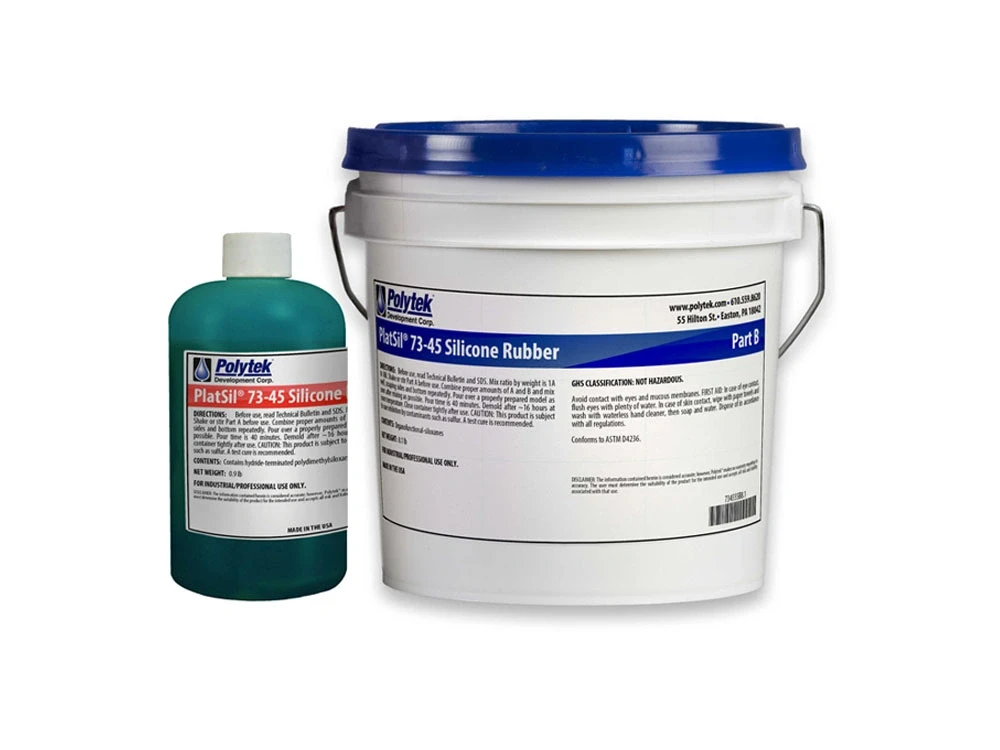
PlatSil® 73-45 silicone rubber
  • Hardness
    45 Shore A
  • Mix Ratio
    1A:10B
  • Viscosity
    35,000 cP

Visit Product

VS
MinghuiLink

RTV-4145

Platinum-Cure Silicone

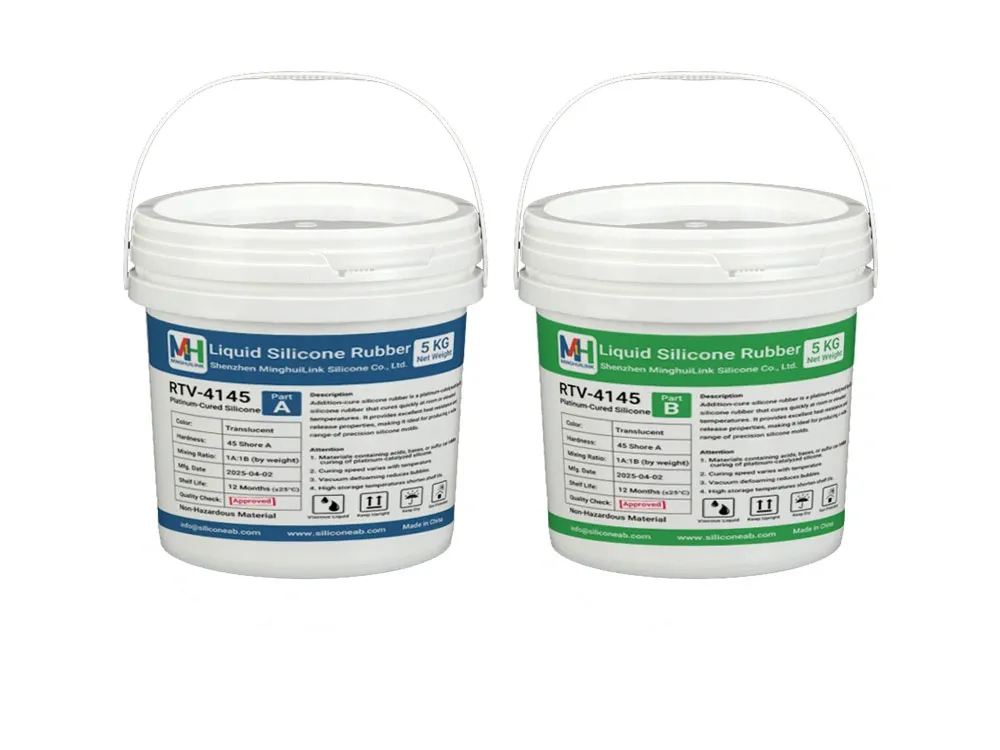
MinghuiLink RTV-4145 silicone rubber
  • Hardness
    45 Shore A
  • Mix Ratio
    1:1
  • Viscosity
    8,500 cps

Visit Product

Conclusion

PlatSil® 73-45 and RTV-4145 are both Shore A45 platinum-cure silicones, but their published specifications show meaningful differences in component handling, mold turnaround and mechanical flexibility.

  • Mixing System:
    PlatSil® 73-45 uses a 1A:10B ratio by weight, while RTV-4145 uses a 1:1 ratio by weight or volume. The two systems therefore require different component-measurement workflows.
  • Mold Turnaround:
    The published working times are relatively close at 40 minutes for PlatSil® 73-45 and 35 minutes for RTV-4145, but the stated demold or cure times differ substantially at approximately 16 hours versus 6 hours.
  • Mechanical Flexibility:
    PlatSil® 73-45 reports substantially higher published elongation at 707%, compared with 230±50% for RTV-4145. These figures should be treated as manufacturer-published reference data because test methods and conditions may differ.

1. Technical Assessment

PlatSil® 73-45 and RTV-4145 occupy the same general Shore A45 mold range, giving both materials a relatively firm cured profile with more body and deformation resistance than softer silicone grades. This hardness can provide useful support during casting and handling while retaining some flexibility for demolding. Actual mold performance still depends on mold thickness, geometry and casting material.

The main operational difference is the component ratio. Polytek specifies 1A:10B by weight for PlatSil® 73-45, which requires accurate measurement by weight. RTV-4145 uses a 1:1 ratio by weight or volume, giving users a different component-measurement workflow. The mixing systems therefore differ mainly in how the components are proportioned and prepared rather than in the nominal cured hardness.

The published working windows are relatively close. PlatSil® 73-45 has a 40-minute pour time, while MinghuiLink lists a 35-minute working time for RTV-4145. The stated demold or cure times, however, differ substantially: approximately 16 hours for PlatSil® 73-45 versus approximately 6 hours for RTV-4145 under the respective manufacturers’ stated conditions. This makes mold turnaround a more significant processing difference than the working window.

Viscosity also requires careful interpretation. Polytek reports 35,000 cP for mixed PlatSil® 73-45, while MinghuiLink reports 8,500±200 mPa·s for Part A of RTV-4145. Because the manufacturers report these values for different material states and measurement points, they should not be treated as a strict like-for-like laboratory comparison. The published data nevertheless indicate different processing characteristics, so mixing, pouring and air-removal procedures should follow the respective technical documentation.

The mechanical data show a particularly large difference in reported elongation. PlatSil® 73-45 is listed at 707% elongation, compared with 230±50% for RTV-4145. Polytek also reports 631 psi tensile strength and 145 pli Die B tear strength, while RTV-4145 reports 4.7±0.5 MPa tensile strength and 30±0.5 N/mm tear strength. The tear figures are based on different reported test methods and should not be treated as a direct ranking. The published elongation values do, however, show a substantial difference that may be relevant when an A45 mold must tolerate significant stretching during demolding.
2. Technical Comparison

Technical Parameter Polytek PlatSil® 73-45 MinghuiLink RTV-4145
Silicone Type Platinum-cure silicone Platinum-cure silicone
Color Green Translucent
Specific Gravity 1.30 g/cc (1.30 g/cm³) 1.08–1.10 g/cm³
Mix Ratio 1A:10B by weight 1A:1B by weight or volume
Shore Hardness 45 Shore A 45±2 Shore A
Viscosity 35,000 cP (mixed) 8,500±200 mPa·s* (Part A)
Working / Pot Life 40 min 35 min
Demold / Cure Time 16 hours 6 hours
Tensile Strength 631 psi (~4.35 MPa) 4.7±0.5 MPa
Tear Strength 145 pli (~25.4 N/mm, Die B) 30±0.5 N/mm
Elongation 707% 230±50%
Shrinkage Not publicly listed ≤0.1%
Heat Resistance Not publicly listed 250°C / 482°F
Food Contact Complies with 21 CFR 177.2600 for specified repeated-use food-contact surfaces when properly processed FDA documentation available; verify the applicable product-specific conditions for intended food contact
Technical Data Sources PlatSil® 73-45 RTV-4145

3. Key Differences

Key Factor Polytek PlatSil® 73-45 MinghuiLink RTV-4145 What It Means
Hardness 45 Shore A 45±2 Shore A Both target the same general A45 mold range, providing a firm yet flexible mold profile.
Mixing System 1A:10B by weight 1A:1B by weight or volume RTV-4145 uses a simpler 1:1 component-measurement workflow, while PlatSil® 73-45 requires accurate weighing of the 1:10 ratio.
Working Window 40 min pour time 35 min working time The published working windows are relatively close at 40 and 35 minutes.
Turnaround 16 hours demold 6 hours cure RTV-4145 has the shorter published time to demold or cure under the respective stated conditions.
Elongation 707% 230±50% PlatSil® 73-45 reports substantially higher published elongation, which may be relevant when the mold must withstand significant stretching during demolding.
Mechanical Data 631 psi tensile; 145 pli Die B tear 4.7±0.5 MPa tensile; 30±0.5 N/mm tear The published tensile values are in a broadly similar range, while tear values use different reported test methods and should not be directly ranked.
Brush-On Adaptation Can be thickened with PlatThix or fumed silica Not specifically listed PlatSil® 73-45 can be adapted for brush-on mold-making workflows in addition to poured molds.

4. Application Comparison

Application PlatSil® 73-45 RTV-4145 Key Consideration
Production Molds Suitable Suitable Both provide a relatively firm A45 profile. Consider mold life, demolding force, casting material and production frequency.
Resin Casting Suitable Suitable Both can be used for reusable resin molds. Tear strength, elongation, cure cycle and casting chemistry should be evaluated.
Food / Chocolate Molds Suitable Suitable with applicable documentation PlatSil® 73-45 has specific independent 21 CFR 177.2600 compliance documentation for repeated-use food-contact surfaces. RTV-4145 should be used according to its applicable FDA documentation and conditions.
Brush-On Mold Making Suitable with thickener Not specifically listed Polytek documents the use of PlatThix Liquid Thickener or fumed silica to adapt 73-45 for brush-on applications.
Jewelry / Lost-Wax Molds Suitable Suitable Both can be used for detailed reusable molds. Complex patterns should be evaluated with the actual master and demolding strategy.
3D-Printed Masters Suitable with compatibility testing Suitable with compatibility testing UV resin residue, coatings and other contaminants may inhibit platinum-cure silicone. A small compatibility test is recommended before full-scale molding.

5. FAQ

Compare Another Silicone

Need Help Choosing?

Tell us your application. We’ll recommend the right RTV-2 silicone and provide a sample for testing.

Request a Sample