Dragon Skin™ 30 vs RTV-4130 Silicone Comparison

Dragon Skin™ 30 and RTV-4130 are both Shore A30 platinum-cure RTV-2 silicones with a 1:1 mix ratio, providing a relatively firm yet flexible profile for reusable mold making and casting. The main differences are therefore not in nominal hardness, but in processing time, cure speed, viscosity and published mechanical properties. Dragon Skin™ 30 is part of Smooth-On’s high-performance Dragon Skin™ range, while RTV-4130 is designed for reusable mold-making and casting applications where processing efficiency and mechanical performance are important.

Smooth-On

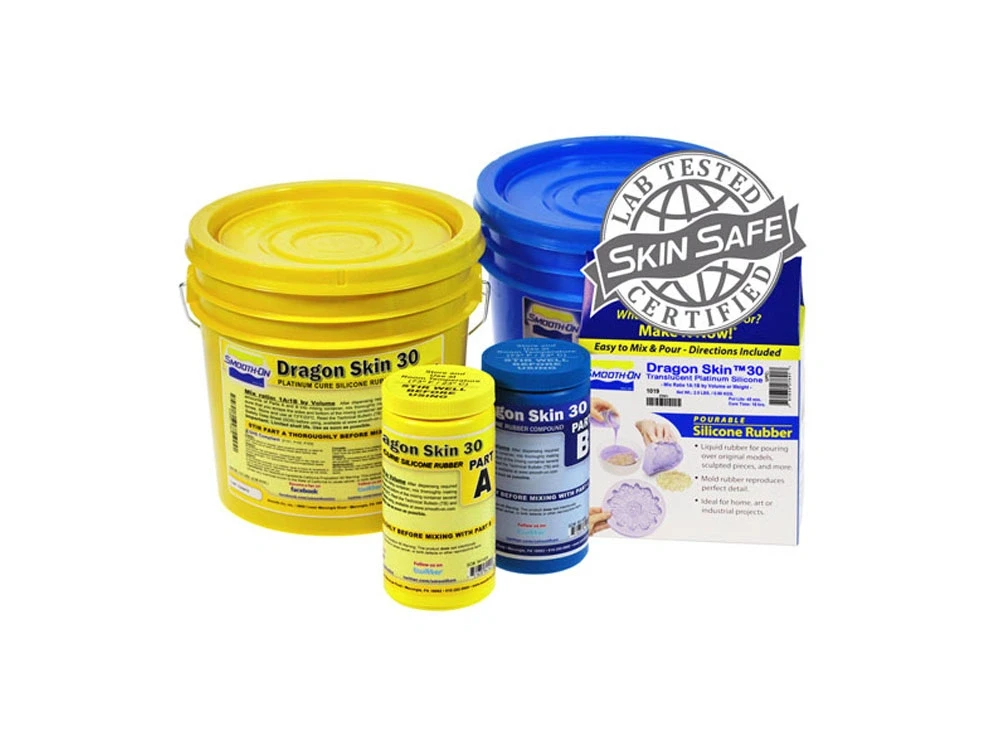
Dragon Skin™ 30

Platinum-Cure Silicone

Dragon Skin™ 30 silicone rubber
  • Hardness
    30 Shore A
  • Mix Ratio
    1A:1B
  • Viscosity
    20,000 cps

Visit Product

VS
MinghuiLink

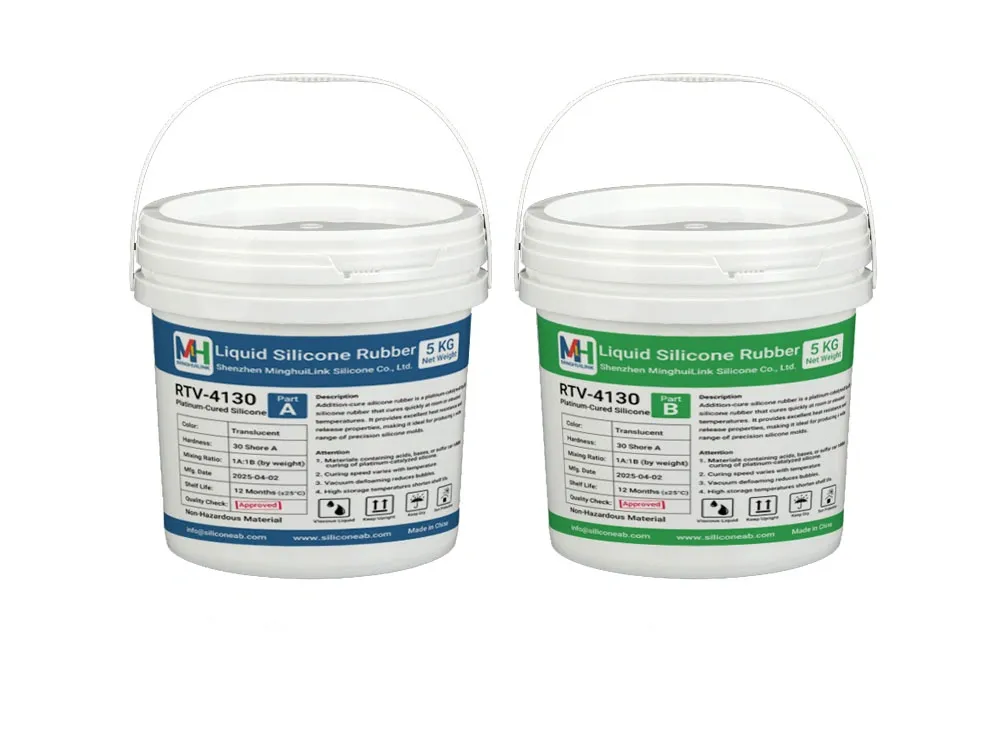
RTV-4130

Platinum-Cure Silicone

MinghuiLink RTV-4130 silicone rubber
  • Hardness
    30 Shore A
  • Mix Ratio
    1:1
  • Viscosity
    4,400 cps

Visit Product

Conclusion

Dragon Skin™ 30 and RTV-4130 are both Shore A30 platinum-cure silicones with a 1:1 mix ratio, so the main choice comes down to processing time, cure speed and the published mechanical profile rather than hardness.

  • Same Hardness:
    Both cure to Shore A30, providing a relatively firm yet flexible mold profile. For users who have already selected A30 hardness, the decision should focus on processing requirements and material performance rather than hardness itself.
  • Mechanical Profile:
    RTV-4130 reports higher published tensile strength, tear strength and elongation than Dragon Skin™ 30. This may make it worth evaluating for molds exposed to repeated demolding and handling stress, although actual mold life depends on the complete application.
  • Production Choice:
    Dragon Skin™ 30 offers a longer published working window, while RTV-4130 has a substantially shorter cure time. Dragon Skin™ 30 may suit processes that need more pouring time; RTV-4130 may be preferable when faster mold turnaround is a priority.

1. Technical Assessment

Dragon Skin™ 30 and RTV-4130 are both Shore A30 platinum-cure RTV-2 silicones with a 1:1 mix ratio. Because their nominal hardness and mixing ratio are the same, the main selection differences are in mechanical performance, working time, cure speed and reported viscosity. Both provide a relatively firm yet flexible profile for reusable mold making and casting.

The published mechanical data show different performance profiles. Smooth-On reports 3.45 MPa tensile strength, 18.9 N/mm tear strength and 364% elongation for Dragon Skin™ 30, while RTV-4130 reports 5.0 MPa tensile strength, 28.0 N/mm tear strength and 400% elongation. RTV-4130 therefore reports higher published values for tensile strength, tear strength and elongation. These figures should be treated as manufacturer-published reference data rather than a strict laboratory ranking because testing methods and conditions may differ.

Processing time presents a clear trade-off. Dragon Skin™ 30 has a published 45-minute pot life, compared with a 35-minute working time for RTV-4130. However, Dragon Skin™ 30 requires approximately 16 hours to cure, while RTV-4130 is listed at approximately 5 hours under its stated conditions. Dragon Skin™ 30 therefore provides more time for mixing and pouring, whereas RTV-4130 offers a substantially shorter cure cycle and may be better suited to applications where faster mold turnaround is important.

Viscosity is another notable reported difference. Smooth-On lists 20,000 cps for mixed Dragon Skin™ 30, while MinghuiLink lists approximately 4,400 mPa·s for Part A of RTV-4130. Because the manufacturers report viscosity at different measurement points, these values should not be treated as a strict like-for-like comparison. In practical mold making, the actual flow behavior should be evaluated based on mold geometry, fine details, air-release requirements and the selected pouring method.

Dragon Skin™ 30 may be attractive when a longer working window is important and the production process can accommodate a longer cure cycle. RTV-4130 may be worth evaluating when higher published tensile, tear and elongation values together with a substantially shorter cure time are priorities. The final choice should also consider mold thickness, undercuts, expected casting cycles, demolding forces, casting material and the required production schedule.
2. Technical Comparison

Technical Parameter Smooth-On Dragon Skin™ 30 MinghuiLink RTV-4130
Silicone Type Platinum-cure silicone Platinum-cure silicone
Color Translucent Translucent
Specific Gravity 1.08 g/cc (1.08 g/cm³) 1.06–1.08 g/cm³
Mix Ratio 1A:1B by volume or weight 1A:1B by weight or volume
Shore Hardness 30 Shore A 30 Shore A
Viscosity 20,000 cps (mixed) 4,400 mPa·s* (Part A)
Working / Pot Life 45 min 35 min
Cure Time 16 hours 5 hours
Tensile Strength 500 psi (~3.45 MPa) 5.0 MPa
Tear Strength 108 pli (~18.9 N/mm) 28.0 N/mm
Elongation 364% 400%
Shrinkage <0.001 in./in. (<0.1%) ≤0.1%
Heat Resistance 232°C / 450°F 250°C / 482°F
Technical Data Sources Dragon Skin™ 30 RTV-4130

3. Key Differences

Key Factor Smooth-On Dragon Skin™ 30 MinghuiLink RTV-4130 What It Means
Hardness 30 Shore A 30 Shore A Both provide a relatively firm mold profile while retaining useful flexibility compared with much harder rubber materials.
Working Window 45 min pot life 35 min working time Dragon Skin™ 30 provides more published time for mixing and pouring.
Cure Cycle 16 hours 5 hours RTV-4130 has the substantially shorter published cure time.
Mechanical Profile 500 psi tensile; 108 pli tear; 364% elongation 5.0 MPa tensile; 28.0 N/mm tear; 400% elongation RTV-4130 reports higher published tensile strength, tear strength and elongation.
Viscosity 20,000 cps (mixed) 4,400 mPa·s (Part A) The published values differ considerably, but the measurement points are not identical.
Repeated-Use Considerations Firm, flexible material positioned for production molds and repeated applications Medium-hardness material positioned for mold making and casting applications Mold life depends on casting material, abrasion, demolding method, mold geometry and production frequency rather than hardness alone.

4. Application Comparison

Application Dragon Skin™ 30 RTV-4130 Key Consideration
Production Molds Suitable Suitable Consider mold stability, expected casting cycles, demolding forces and the durability requirements of the application.
Resin Casting Suitable Suitable Both can be considered for resin mold making; working time, cure cycle and repeated-use requirements should be evaluated.
Complex Molds Suitable Suitable A30 provides more mold body than softer grades, but complex undercuts may require greater demolding force than very soft silicone molds.
Rapid Prototyping Suitable Suitable RTV-4130 offers the shorter published cure cycle, while Dragon Skin™ 30 provides the longer published working window.
Concrete / Heavier Casting Materials Suitable Suitable The A30 hardness can help maintain mold shape, but actual durability depends strongly on abrasion, geometry and demolding conditions.
Soft Silicone Components Suitable Suitable Both are flexible platinum-cure materials; the intended component design and required mechanical properties should determine the choice.

5. FAQ

Compare Another Silicone

Need Help Choosing?

Tell us your application. We’ll recommend the right RTV-2 silicone and provide a sample for testing.

Request a Sample