CENUSIL® M 810 A/B vs RTV-4110 Silicone Comparison

CENUSIL® M 810 A/B and MinghuiLink RTV-4110 are both Shore A10 addition-cure silicones for highly flexible reusable molds. CENUSIL® M 810 A/B is specifically positioned for accurate reproduction, pronounced undercuts and low demolding force, with good flowability and self-deaeration, while RTV-4110 offers higher published tensile and tear strength, simple 1:1 processing and a published 250°C heat-resistance specification. The main choice is therefore between maximum flexibility and difficult demolding versus a stronger published mechanical profile.

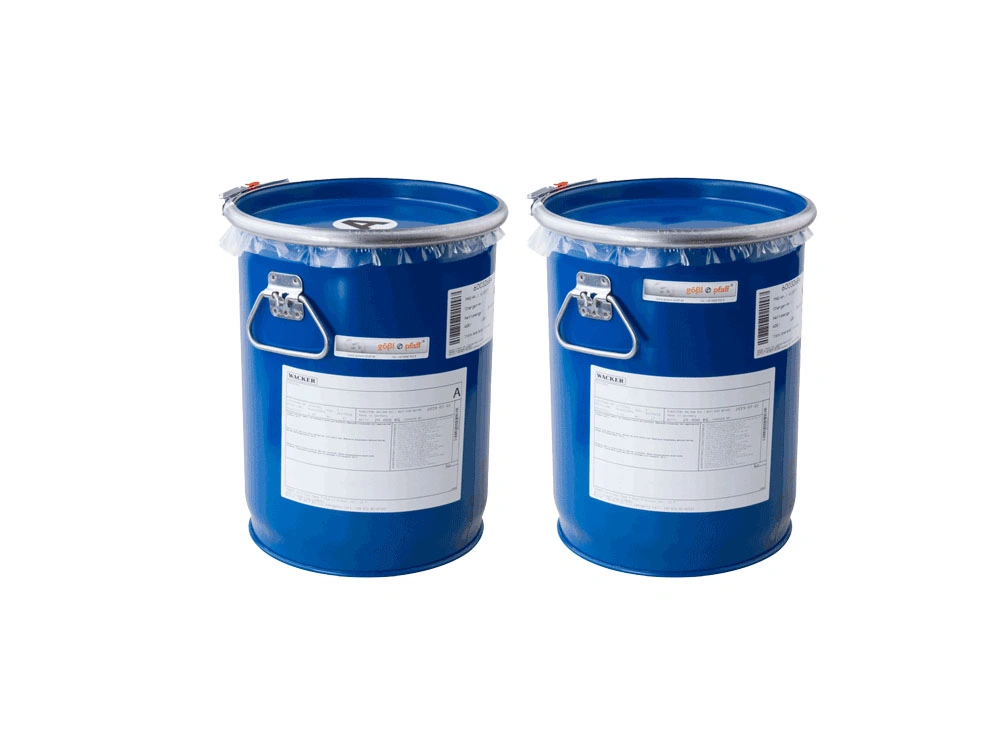
WACKER

CENUSIL® M 810 A/B

Addition-Cure Silicone

  • Hardness
    10 Shore A
  • Mix Ratio
    1:1
  • Working Time
    40 min

Visit Product

VS
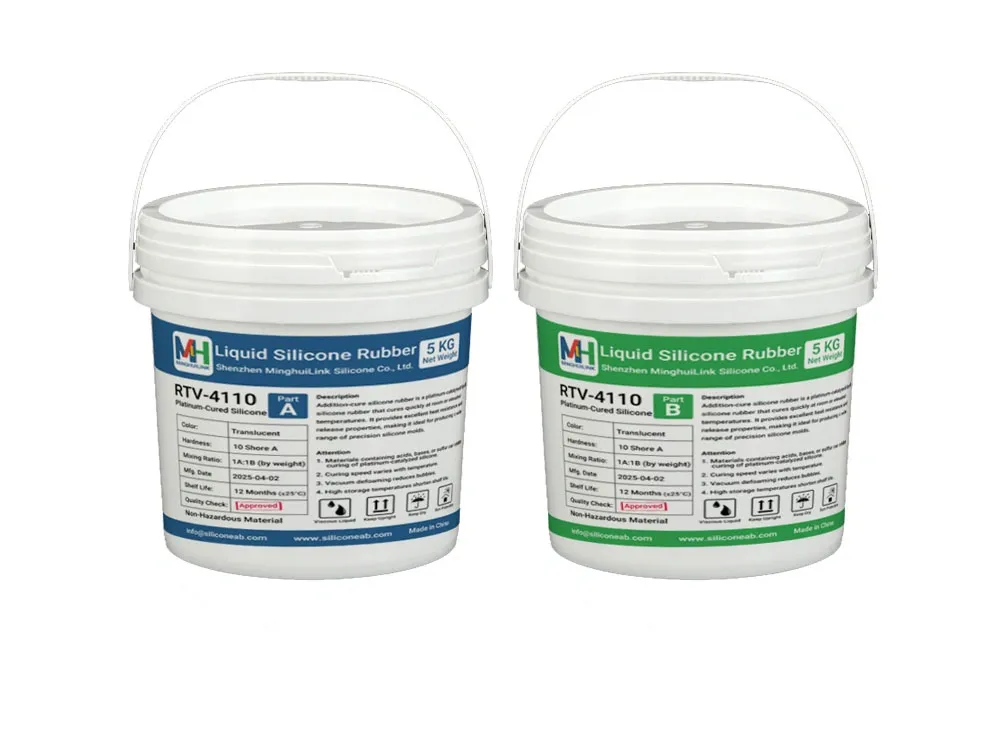
MinghuiLink

RTV-4110

Platinum-Cure Silicone

  • Hardness
    10 Shore A
  • Mix Ratio
    1:1
  • Working Time
    35 min

Visit Product

Conclusion

CENUSIL® M 810 A/B and RTV-4110 are both Shore A10 mold silicones with similar processing profiles, but they serve different priorities. CENUSIL® M 810 A/B is particularly suited to pronounced undercuts, low demolding force and highly flexible mold construction. RTV-4110 is better aligned with users who prioritize higher published tensile and tear strength, simple 1:1 processing and a published 250°C heat-resistance specification.


  • Flexible Demolding:
    CENUSIL® M 810 A/B publishes 600% elongation and is specifically positioned for low demolding force and models with pronounced undercuts.

  • Mechanical Strength:
    RTV-4110 publishes higher tensile strength and tear strength, which may be advantageous for thin mold edges and repeated mechanical handling.

  • Similar Processing:
    Both use a 1:1 mixing system and have relatively low viscosity. M 810 A/B provides a slightly longer working time, while the published cure times are broadly similar in practical use.

1. Technical Assessment

CENUSIL® M 810 A/B and RTV-4110 are both Shore A10 addition-cure silicone systems for highly flexible reusable molds. With essentially the same cured hardness, the main selection factors are flexibility, tear resistance, processing characteristics and mold geometry. WACKER specifically positions M 810 A/B for accurate reproduction, low demolding force and models with pronounced undercuts, while RTV-4110 offers a stronger published mechanical profile.

The mechanical data show a clear trade-off. M 810 A/B publishes 3.5 MPa tensile strength, 15 N/mm tear strength and 600% elongation, compared with 4.0 MPa, 25 N/mm and 510% respectively for RTV-4110. M 810 therefore provides the higher published elongation and is attractive when maximum stretching and easy release are important, while RTV-4110 provides higher tensile and tear strength, which can be valuable for thin mold edges and repeated mechanical handling.

Processing characteristics are broadly similar. Both use a simple 1:1 mix ratio, while M 810 A/B provides a slightly longer 40-minute working time versus approximately 35 minutes for RTV-4110. WACKER also highlights excellent flowability and good self-deaeration for M 810 A/B. Published component viscosities are in a similar low-viscosity range, so neither product has a decisive overall viscosity advantage for routine pouring and mold filling.

The biggest application difference is demolding behavior. M 810 A/B is specifically positioned for low demolding force, pronounced undercuts and glove or one-part skin molds. Its 600% elongation and very soft A10 hardness make it particularly suitable when the mold must flex substantially around complex geometry. RTV-4110 is also suitable for flexible undercut molds, but its higher tear and tensile strength make it more attractive where mechanical durability is the greater concern.

Both materials can be used for detailed molds, resin casting and other reusable mold applications, but large A10 molds may require a mother mold or support shell because very soft silicone can deform under the casting load. Overall, CENUSIL® M 810 A/B is the more specialized choice for maximum flexibility, low demolding force and difficult undercuts, while RTV-4110 is better aligned with users seeking higher published tensile and tear strength and a robust general-purpose A10 mold silicone.
2. Technical Comparison

Technical Parameter WACKER CENUSIL® M 810 A/B MinghuiLink RTV-4110
Silicone Type Addition-cure RTV-2 Platinum-cure silicone
Color White Translucent
Specific Gravity Not publicly listed 1.03–1.05 g/cm³
Mix Ratio 1A:1B 1A:1B by weight or volume
Shore Hardness 10 Shore A 10 Shore A
Viscosity 3,000 mPa·s (Part A) 4,000 mPa·s* (Part A)
Working / Pot Life 40 min 35 min
Demold / Cure Time 4 h tack-free 5 h cure
Tensile Strength 3.5 MPa 4.0 MPa
Tear Strength 15 N/mm 25 N/mm
Elongation 600% 510%
Shrinkage No chemical shrinkage ≤0.1%
Temperature Resistance Not publicly listed Up to 250°C / 482°F
Self-Deaeration Good self-deaeration Not specifically listed
Typical Applications Flexible mold making, glove molds, one-part skin molds and masters with pronounced undercuts Soft flexible molds, detailed casting molds and general mold-making applications
Technical Data Sources CENUSIL® M 810 A/B RTV-4110

3. Key Differences

Key Factor WACKER CENUSIL® M 810 A/B MinghuiLink RTV-4110 What It Means
Hardness 10 Shore A 10 Shore A Both are very soft A10 mold silicones, so hardness is not a key differentiator.
Elongation 600% 510% M 810 A/B provides higher published stretch capability for difficult demolding.
Tear Strength 15 N/mm 25 N/mm RTV-4110 provides substantially higher published resistance to tear propagation.
Tensile Strength 3.5 MPa 4.0 MPa RTV-4110 publishes the higher tensile-strength value.
Working Window 40 min 35 min M 810 A/B provides a slightly longer published working time.
Component Viscosity 3,000 / 3,000 mPa·s 4,000 / 2,800 mPa·s Both are relatively low-viscosity systems; neither has a decisive overall viscosity advantage.
Curing 4 h tack-free 5 h cure M 810 A/B reaches its published tack-free endpoint earlier, but the test endpoints are different.
Demolding Focus Low demolding force; pronounced undercuts General flexible mold making M 810 A/B has the stronger published positioning for difficult flexible demolding.
Self-Deaeration Good self-deaeration Not specifically listed M 810 A/B has a specific published advantage for air release during pouring.
Heat Resistance Not publicly listed 250°C / 482°F RTV-4110 provides the clearer numerical high-temperature specification.
Product Positioning Maximum flexibility and difficult demolding Higher tear/tensile strength and general A10 production The main choice is between stretchability and mechanical robustness.

4. Application Comparison

Application CENUSIL® M 810 A/B RTV-4110 Key Consideration
Pronounced Undercuts Strong candidate Strong candidate Both are highly flexible A10 materials, while M 810 A/B is specifically positioned for pronounced undercuts and low demolding force.
Flexible Demolding Strong candidate Strong candidate M 810 A/B has higher published elongation; RTV-4110 has higher published tear strength for repeated flexing and handling.
Glove / One-Part Skin Molds Strong candidate Suitable WACKER specifically identifies glove molds and one-part skin molds as applications for M 810 A/B.
Detailed / Fine-Feature Molds Strong candidate Strong candidate Both are soft, pourable materials; M 810 A/B has specifically stated excellent reproduction accuracy and good self-deaeration.
Thin Mold Edges Suitable Strong candidate RTV-4110's 25 N/mm published tear strength provides the stronger numerical profile for thin or repeatedly handled sections.
Large Soft Molds Suitable with support Suitable with support Both A10 materials are very soft and may require a mother mold or support shell to limit deformation.
Resin Casting Strong candidate Strong candidate Both can be used for reusable casting molds; compatibility should be confirmed with the intended resin.
Plaster / Decorative Casting Strong candidate Strong candidate The very soft A10 profile supports flexible demolding of detailed decorative casts, subject to adequate mold support.
High-Temperature Casting Suitable with temperature validation Strong candidate RTV-4110 publishes a numerical heat-resistance specification of 250°C; M 810 A/B requires application-specific temperature validation.
3D-Printed Masters Suitable with compatibility testing Suitable with compatibility testing UV resin residues, coatings and other contaminants may inhibit addition-cure silicone. Test the actual master before production.

5. FAQ

Compare Another Silicone

Need Help Choosing?

Tell us your application. We’ll recommend the right RTV-2 silicone and provide a sample for testing.

Request a Sample