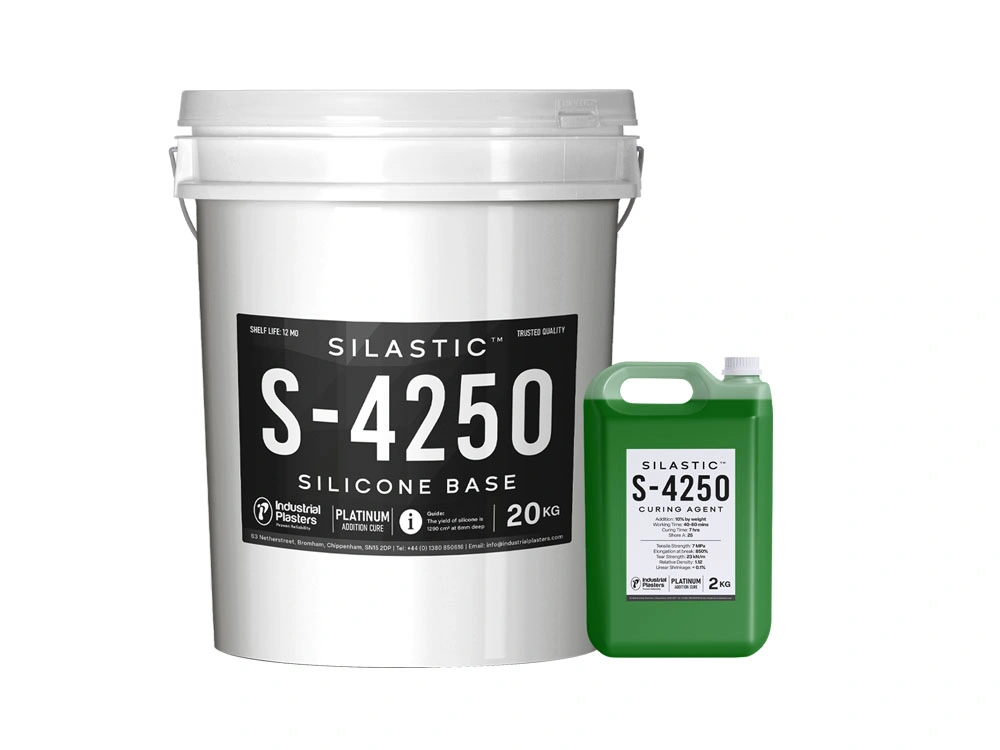
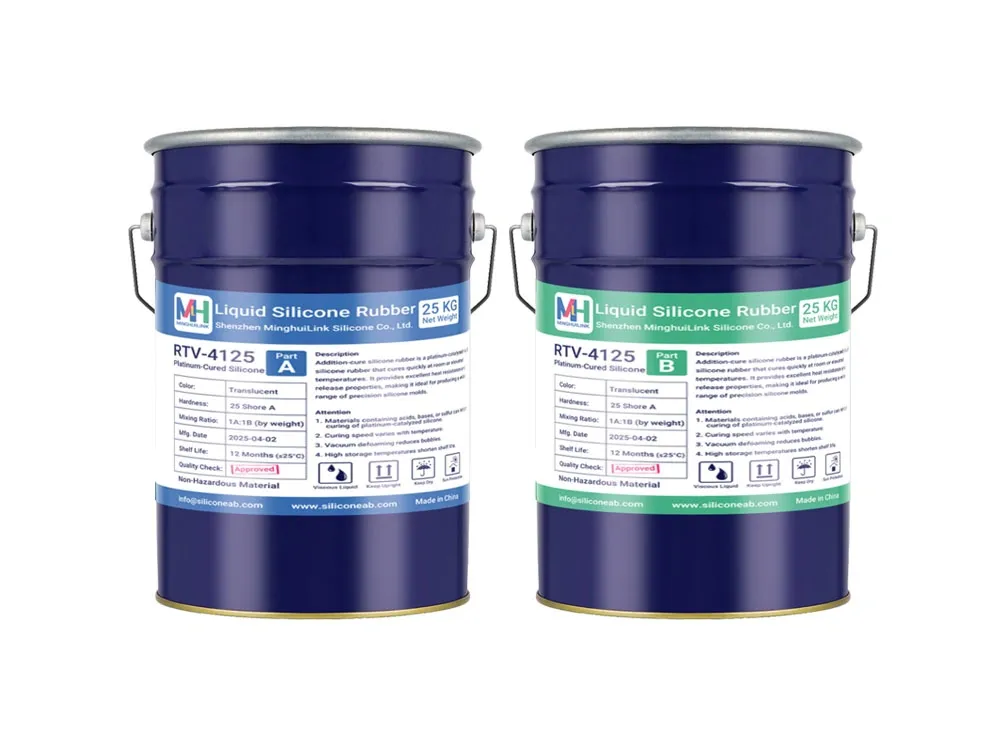
SILASTIC™ RTV-4250-S and MinghuiLink RTV-4125 are both addition-cure silicone systems for reusable molds in the Shore A25 range. Dow lists 26 Shore A for RTV-4250-S, while MinghuiLink lists 25±1 Shore A for RTV-4125. The hardness difference is small, so the main selection factors are elasticity, tear resistance, inhibition resistance and processing requirements.
The defining characteristic of RTV-4250-S is its very high elasticity. Dow publishes approximately 900% elongation and specifically positions the material for easy removal of complex replica parts. This makes it particularly suitable when molds must stretch substantially around deep undercuts, hooks, narrow openings or other difficult release features. RTV-4125 publishes 460±50% elongation, which is still substantial but considerably lower.
RTV-4250-S also publishes higher tensile strength, at approximately 6.90 MPa versus 4.0±0.5 MPa for RTV-4125. Tear strength is slightly different: RTV-4250-S is approximately 24.5 N/mm based on Dow’s 140 psi value, while RTV-4125 publishes 26±0.5 N/mm. The two materials therefore have different mechanical profiles rather than a universal strength advantage, and the published values should be treated as manufacturer reference data.
Inhibition resistance is another notable advantage of RTV-4250-S. Dow specifically lists high inhibition resistance, which can be useful when working with potentially challenging masters such as some 3D-printed resins, coatings and adhesives. Compatibility testing is still recommended because high inhibition resistance does not mean immunity to all contaminants.
Both products use a simple 1:1 mixing ratio. RTV-4125 publishes substantially lower component viscosities, while Dow lists approximately 12,800 cP for the mixed RTV-4250-S system. Because the manufacturers report different material states and measurement points, these values should not be treated as a strict like-for-like comparison. RTV-4250-S does, however, provide a modestly longer working time of approximately 45 minutes versus 35 minutes for RTV-4125.
For mold turnaround, RTV-4125 has the more convenient published process time. Dow lists approximately 7 hours to demold RTV-4250-S, while MinghuiLink publishes approximately 5 hours for RTV-4125. These are not identical test terms, but RTV-4125 is better aligned with faster routine production.
RTV-4250-S also has broader published casting-material positioning, including polyester, cement, rigid polyurethane and plaster. Dow also notes that it can be modified to become thixotropic for non-flowable replication on vertical surfaces. These features make it particularly relevant to complex replica work, while RTV-4125 is positioned more toward straightforward general-purpose mold production.
Overall, RTV-4250-S is the stronger fit when difficult demolding, very high elasticity, inhibition resistance or broader casting-material positioning are important. RTV-4125 is better aligned with users who prioritize lower published component viscosity, slightly higher published tear strength, simpler routine handling and faster mold turnaround.