KE-1300T/CAT-1300L-2 vs RTV-4140 Silicone Comparison

KE-1300T/CAT-1300L-2 and RTV-4140 are both 40 Shore A mold-making silicones, but they are designed for very different production workflows. KE-1300T/CAT-1300L-2 combines an exceptionally long 16-hour working time with high-strength and high-modulus positioning, making it particularly suited to large or complex molds that require extended processing. RTV-4140 takes a simpler approach with 1:1 mixing, lower published component viscosity and a much shorter 5–6-hour cure cycle for faster routine production.

Shin-Etsu

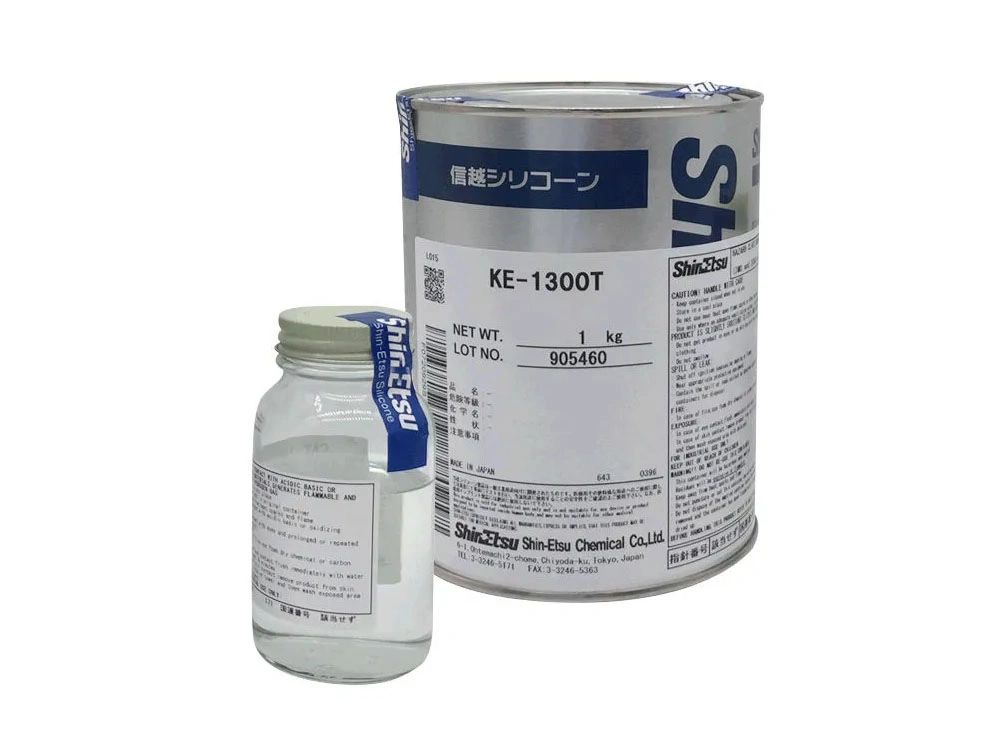
KE-1300T/CAT-1300L-2

Addition-Cure Silicone

KE-1300T/CAT-1300L-2 silicone rubber
  • Hardness
    40 Shore A
  • Mix Ratio
    10:1
  • Working Time
    16 hours

Visit Product

VS
MinghuiLink

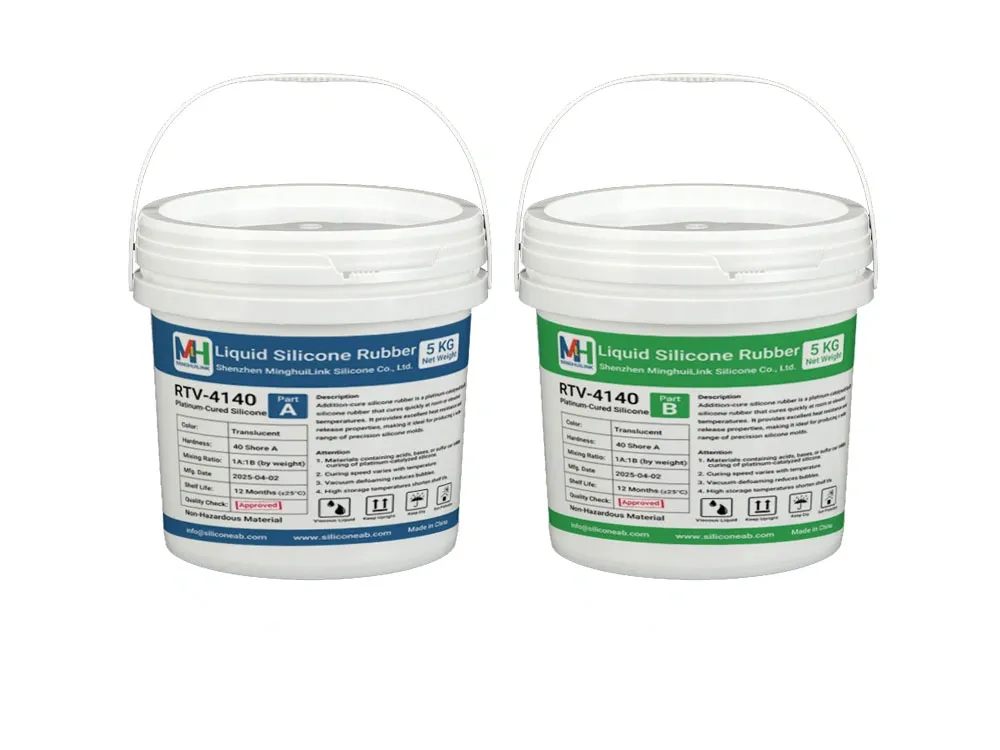
RTV-4140

Platinum-Cure Silicone

MinghuiLink RTV-4140 silicone rubber
  • Hardness
    40 Shore A
  • Mix Ratio
    1:1
  • Working Time
    35 min

Visit Product

Conclusion

KE-1300T/CAT-1300L-2 and RTV-4140 are both 40 Shore A mold silicones, but they are optimized for different production priorities. KE-1300T/CAT-1300L-2 is better aligned with large or complex molds where extended processing time and high-strength, high-modulus performance are important. RTV-4140 is better suited to routine production where simple 1:1 mixing, easier handling and faster mold turnaround are the main priorities.

  • Exceptional Working Time:
    KE-1300T/CAT-1300L-2 provides a published 16-hour working time, giving operators substantially more time for large mold layouts, vacuum deaeration and controlled pouring.
  • High-Strength Mold Profile:
    Shin-Etsu positions KE-1300T/CAT-1300L-2 as a high-strength, high-modulus mold-making material, with published tensile strength of 5.90 MPa and elongation of 340%.
  • Simple & Fast Processing:
    RTV-4140 uses a straightforward 1:1 mixing system, lower published component viscosity and a 5–6-hour cure cycle, making it attractive for routine production and faster mold turnaround.

1. Technical Assessment

KE-1300T/CAT-1300L-2 and RTV-4140 are both 40 Shore A mold-making silicones, but they are designed around very different production priorities. KE-1300T/CAT-1300L-2 is positioned by Shin-Etsu as a high-strength, high-modulus material with an exceptionally long working window, while RTV-4140 emphasizes simpler 1:1 processing, lower published component viscosity and faster mold turnaround.

The most distinctive characteristic of KE-1300T/CAT-1300L-2 is its published 16-hour working time, compared with approximately 30–40 minutes for RTV-4140. This extended processing window can be particularly valuable for large molds, complicated layouts, multi-stage pouring and projects where mixing, vacuum deaeration or controlled filling require substantial time.

KE-1300T/CAT-1300L-2 also combines its long working time with a high-strength and high-modulus product profile. Shin-Etsu publishes 5.90 MPa tensile strength, 22 N/mm tear strength and 340% elongation. This provides a useful balance of firmness, flexibility and mechanical performance for demanding mold-making applications.

RTV-4140 takes a simpler processing route. Its 1:1 mixing ratio by weight or volume is easier to batch than the 100:10 system used by KE-1300T/CAT-1300L-2. MinghuiLink reports approximately 4,800±200 mPa·s for Part A and 4,300 mPa·s for Part B, compared with approximately 75 Pa·s for the KE-1300T/CAT-1300L-2 base. Because these viscosity values are reported at different material states and measurement points, they should not be treated as a strict like-for-like ranking, although they indicate clearly different handling profiles.

The cure and mechanical data create a more balanced production comparison. KE-1300T/CAT-1300L-2 has a published 72-hour cure at 23°C, while RTV-4140 cures in approximately 5–6 hours. RTV-4140 also reports higher published tear strength at 32±0.5 N/mm, while KE-1300T/CAT-1300L-2 reports higher tensile strength and elongation. These mechanical values should be treated as manufacturer-published reference data because test methods and conditions may differ.

Overall, KE-1300T/CAT-1300L-2 is better aligned with users whose main challenge is the processing time required for large or complex molds and who value high-strength, high-modulus mold performance. RTV-4140 is better suited to routine production where simple 1:1 mixing, easier handling, faster curing and higher published tear strength are more important. The choice depends mainly on mold size, processing workflow and acceptable production turnaround.
2. Technical Comparison

Technical Parameter Shin-Etsu KE-1300T/CAT-1300L-2 MinghuiLink RTV-4140
Silicone Type Addition-cure silicone Platinum-cure silicone
Color Translucent Translucent
Specific Gravity Not publicly listed 1.08-1.10 g/cm³
Mix Ratio 100:10 by weight 1A:1B by weight
Shore Hardness 40 Shore A 40±1 Shore A
Viscosity 75 Pa·s (~75,000 cP, Base) 4,800±200 mPa·s* (Part A)
Working / Pot Life 16 hours 30–40 min
Cure Time 72 hours at 23°C 5–6 hours
Tensile Strength 5.90 MPa 5.3±0.5 MPa
Tear Strength 22 N/mm 32±0.5 N/mm
Elongation 340% 220±50%
Shrinkage Low shrinkage; numerical value not publicly listed ≤0.1%
Temperature Resistance −40 to +175°C Up to 250°C / 482°F
Technical Data Sources KE-1300T/CAT-1300L-2 RTV-4140

3. Key Differences

Key Factor Shin-Etsu KE-1300T/CAT-1300L-2 MinghuiLink RTV-4140 What It Means
Working Window 16 hours 30–40 min KE-1300T/CAT-1300L-2 provides substantially more processing time for large or complex mold preparation.
Strength & Modulus High strength and high modulus Standard mold-making formulation KE-1300T/CAT-1300L-2 is specifically positioned for high-strength, high-modulus mold making despite its 40 Shore A hardness.
Mixing System 100:10 by weight 1:1 by weight RTV-4140 is considerably simpler to measure and batch for routine manual production.
Published Viscosity 75 Pa·s base 4,800±200 mPa·s Part A KE-1300T/CAT-1300L-2 has a much higher published viscosity on its stated basis; the measurement points are not identical.
Cure Cycle 72 h at 23°C 5–6 h RTV-4140 is better aligned with production workflows requiring faster mold turnover.
Mechanical Profile 5.90 MPa tensile; 22 N/mm tear; 340% elongation 5.3±0.5 MPa tensile; 32±0.5 N/mm tear; 220±50% elongation KE-1300T/CAT-1300L-2 reports higher tensile strength and elongation, while RTV-4140 reports higher published tear strength.
Production Positioning Extended processing for large or complex molds Simple and faster routine mold production The main choice is between maximum processing latitude and simpler, faster everyday production.

4. Application Comparison

Application KE-1300T/CAT-1300L-2 RTV-4140 Key Consideration
Large Mold Making Strong candidate Suitable The 16-hour working window gives KE-1300T/CAT-1300L-2 substantially more time for large mold preparation and controlled pouring.
Complex / Detailed Molds Strong candidate Suitable Both can reproduce detailed geometry, but KE-1300T/CAT-1300L-2 provides much more processing time for careful mixing, deaeration and pouring.
Extended-Process Mold Making Strong candidate Suitable The 16-hour working window is valuable when mold preparation involves long mixing, deaeration, positioning or multi-stage processing.
Routine Mold Production Suitable Strong candidate RTV-4140 combines 1:1 mixing with a shorter cure cycle, making it convenient for repeatable everyday production.
Rapid Prototyping Limited fit Strong candidate RTV-4140's approximately 5–6-hour cure cycle is better aligned with rapid mold iteration.
Resin Casting Molds Suitable Strong candidate Both can be evaluated for reusable resin molds. Production speed, mold durability and resin compatibility should guide material selection.
3D-Printed Masters Suitable with compatibility testing Suitable with compatibility testing Resin residues, coatings and other contaminants can inhibit platinum-cure silicone. Testing the actual master is recommended before production.

5. FAQ

Compare Another Silicone

Need Help Choosing?

Tell us your application. We’ll recommend the right RTV-2 silicone and provide a sample for testing.

Request a Sample