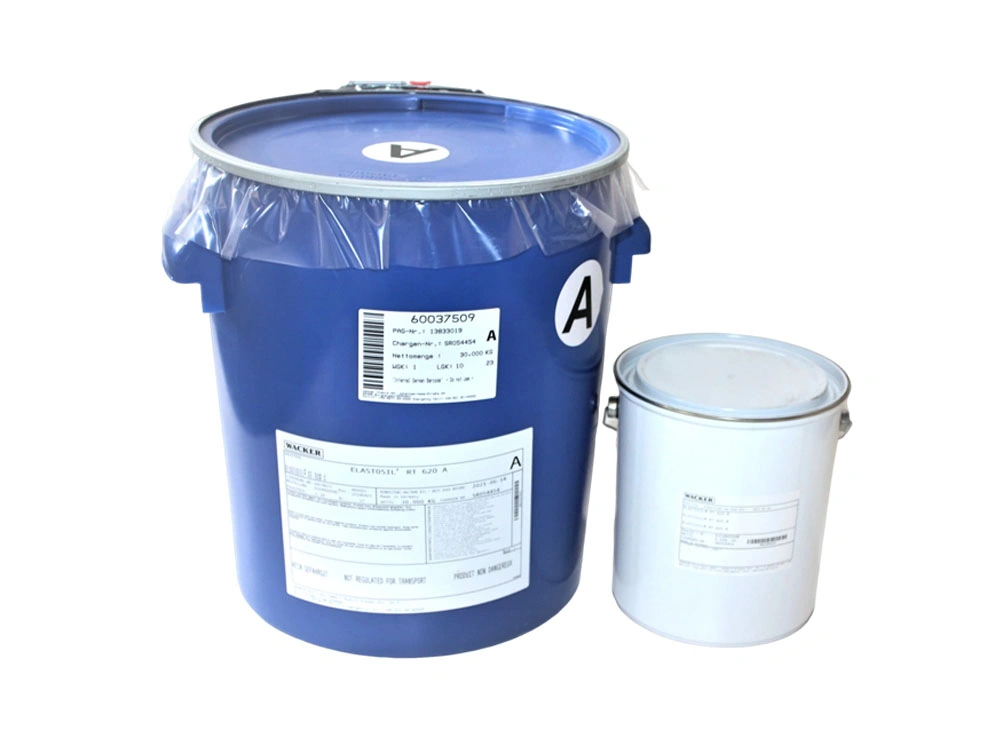
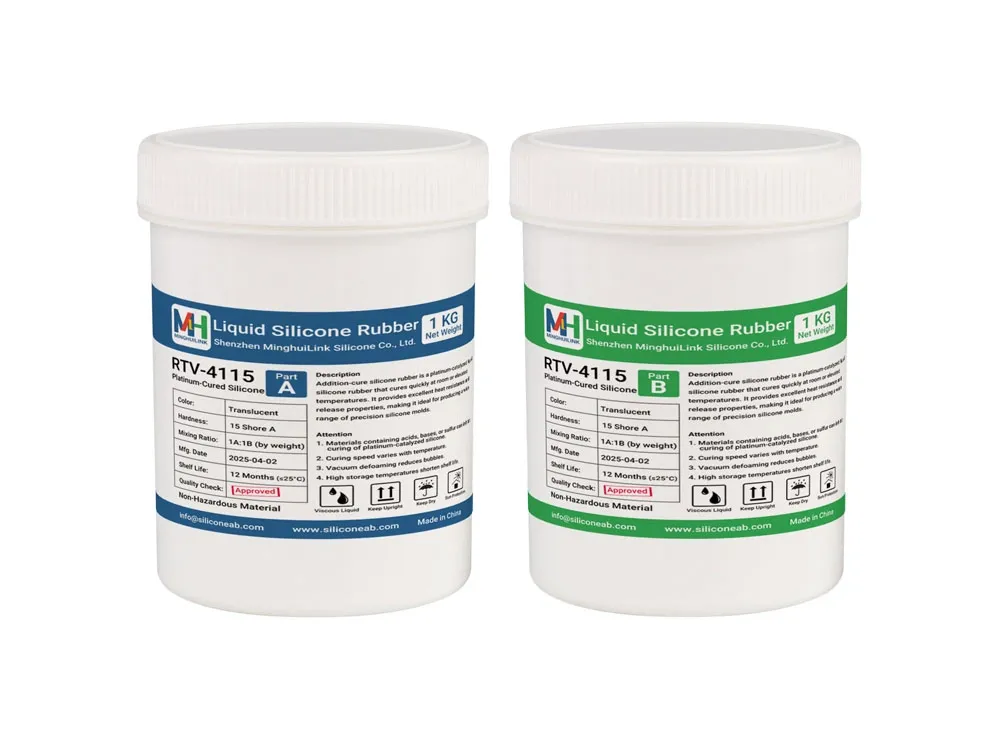
ELASTOSIL® RT 620 A/B and RTV-4115 are both soft addition-cure silicones, at 17 Shore A and 15±1 Shore A respectively. The small hardness difference is less important than their different application focus and mechanical properties.
RT 620 uses a 10:1 mix ratio with approximately 35 minutes of pot life, while RTV-4115 uses a simpler 1:1 system with approximately 30–40 minutes working time. RTV-4115 is therefore easier to proportion manually, while the published processing windows are broadly similar.
RTV-4115 has lower published Part A viscosity at approximately 4,000 mPa·s, while RT 620 publishes 7,000 mPa·s Part A, 1,200 mPa·s Part B and 6,000 mPa·s mixed viscosity. Because the manufacturers report different measurement points, the values should be compared with care.
Mechanical performance shows a clear trade-off. Both publish similar tensile strength, but RT 620 offers much higher elongation at 900%, while RTV-4115 publishes substantially higher tear strength at 26±0.5 N/mm. RT 620 therefore favors repeated deformation, while RTV-4115 offers greater resistance to tearing during mold handling and demolding.
WACKER specifically positions RT 620 for printing pads, emphasizing flow, self-deaeration and rapid demolding. RTV-4115 is more broadly positioned for soft mold making and flexible reproductions. The main choice is therefore between specialized pad-printing performance and general-purpose soft mold durability.