Platinum-cured silicone, also known as addition-cured silicone, is a two-part liquid silicone material widely used in precision mold making. It cures through a platinum-catalyzed addition reaction and typically offers low curing shrinkage, excellent dimensional stability, flexibility, and a long mold library life.
Compared with many tin-cured, condensation-cured silicone products, platinum-cured silicone generally has lower curing shrinkage and better long-term dimensional stability. Some formulations also offer high tear strength and good mechanical properties. These characteristics make it suitable for resin casting, jewelry making, prototype reproduction, art sculpture, and other applications that require high mold accuracy and durability.
However, different platinum silicone formulations vary in hardness, viscosity, tear strength, curing time, and temperature resistance. Selecting the right product requires careful consideration of the mold design, master pattern material, and casting material.
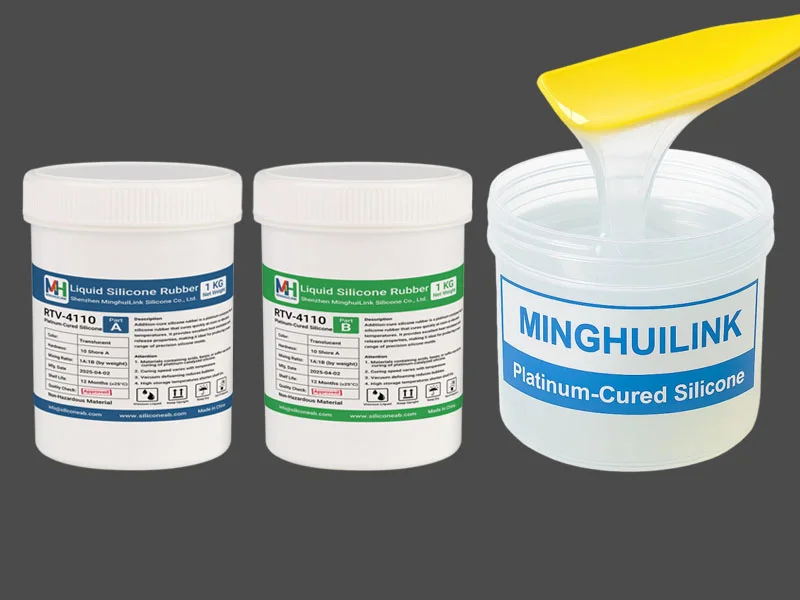 Platinum-cured silicone
1. What Is Platinum-Cured Silicone?
Platinum-cured silicone is an addition-cured liquid silicone that uses a platinum catalyst. It typically consists of two components, Part A and Part B. When mixed in the specified ratio, the two components undergo a crosslinking reaction and gradually form an elastic silicone rubber.
Unlike tin-cured silicone, platinum-cured silicone generally does not release small-molecule by-products during the curing reaction. This helps achieve low curing shrinkage and good dimensional stability.
For mold making, platinum-cured silicone offers several key characteristics:
- Low shrinkage: Helps preserve master pattern details and dimensional accuracy.
- Good flexibility: Makes demolding easier, especially for models with complex shapes or undercuts.
- A range of hardness options: Different formulations are available for soft, medium, and hard molds.
- Good mechanical properties: Some formulations offer high tear strength, tensile strength, and elongation.
- Long-term storage stability: Properly made and stored platinum silicone molds generally have a long library life.
It is important to note that these are typical characteristics of platinum-cured silicone, not guaranteed properties of every product. Actual performance should be verified using the technical data sheet (TDS) for the specific product.
2. Key Advantages
2.1 Low Curing Shrinkage
Low curing shrinkage is one of the main advantages of platinum-cured silicone in precision mold making.
During curing, the material gradually develops a stable rubber structure. Because addition-cured silicone generally does not produce the small-molecule by-products associated with condensation reactions, it typically has low curing shrinkage, helping minimize changes in mold dimensions.
This characteristic is particularly important for the following applications:
- Precision resin parts and product prototype reproduction.
- Jewelry, accessories, and small craft items.
- Reproduction of artistic models with complex textures and fine details.
- Repeat production where dimensional consistency is essential.
However, the final dimensional accuracy of a mold does not depend on silicone shrinkage alone. Master pattern accuracy, pouring methods, curing conditions, mold design, and shrinkage of the casting material can also affect the dimensions of the finished product.
2.2 Excellent Detail Reproduction
Mold making generally requires silicone to fit closely against the master pattern surface and accurately reproduce textures, grooves, edges, and fine structural features.
Platinum-cured silicone is available in different viscosity grades to meet specific application requirements. Lower-viscosity products generally flow more easily, allowing them to cover fine details on the master pattern and helping air bubbles rise and escape.
For detailed models, jewelry patterns, and molds with complex textures, pay particular attention to the following product specifications:
- Mixed viscosity.
- Pot life.
- Cure time.
- Suitability for vacuum degassing.
- Suitability for pouring or brush-on molding processes.
It is important to understand that a platinum-cure system does not automatically mean that every product has low viscosity. Actual flow properties depend on the specific formulation. For large molds made using a brush-on process, thixotropic or higher-viscosity products specially designed for this purpose may also be suitable.
2.3 Good Flexibility
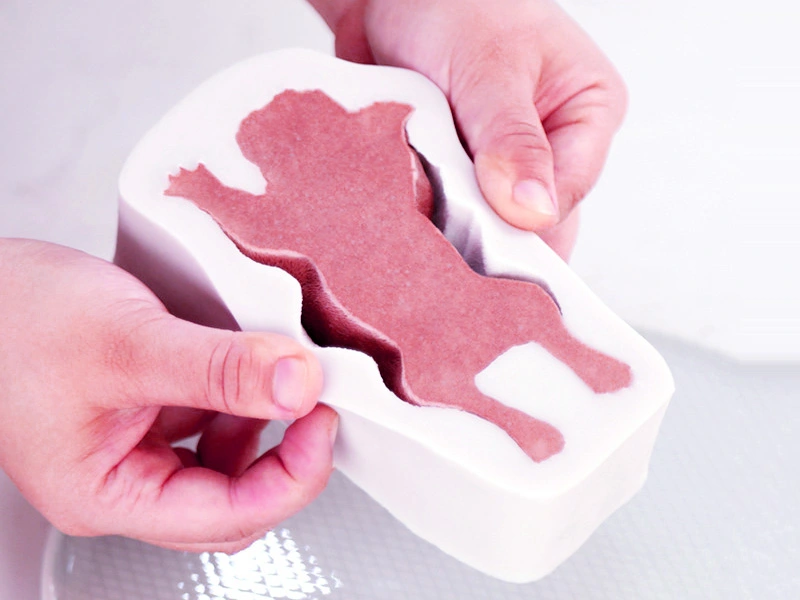
Once cured, platinum-cured silicone forms an elastic silicone rubber that can deform to a certain extent during demolding. This helps release models with grooves, undercuts, slender features, or complex surfaces.
Compared with rigid mold materials, flexible silicone molds are easier to work with when reproducing complex shapes. They can also help reduce mechanical damage to both the mold and the cast parts during demolding.
Different silicone hardness grades are suitable for different mold designs:
- Low-hardness silicone: Easier to bend and stretch, making it suitable for complex structures, deep undercuts, and molds that require greater deformation during demolding.
- Medium-hardness silicone: Offers a balance between flexibility and mold support, making it suitable for a wide range of mold-making applications.
- High-hardness silicone: Provides better shape support and is suitable for relatively simple designs or applications where the mold needs to retain its shape.
When selecting hardness, do not focus solely on ease of demolding. For molds with thin walls, sharp corners, or features that are prone to tearing, tear strength and elongation should also be evaluated.
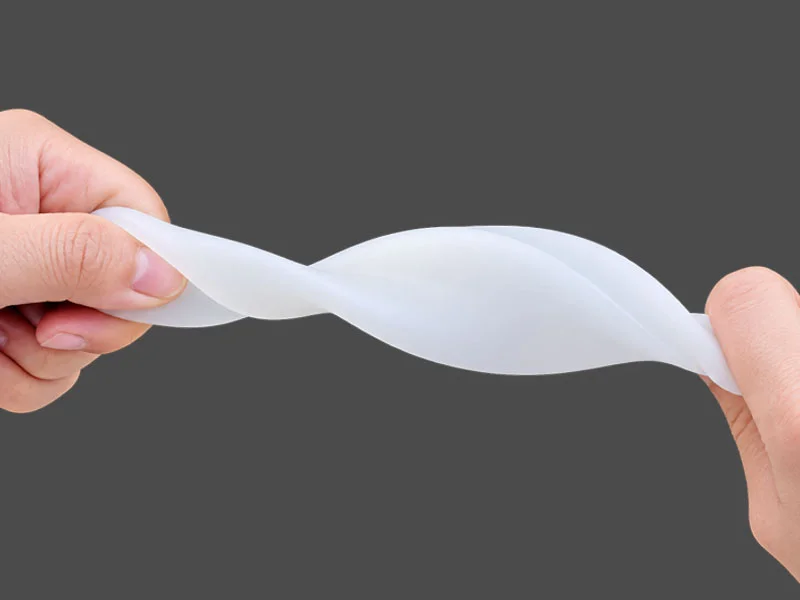 Flexibility of platinum-cured silicone
2.4 Good Mechanical Properties
During repeated pouring and demolding, molds are continuously subjected to stretching, bending, and localized tearing forces. The mechanical properties of silicone therefore have a direct impact on mold performance.
When purchasing platinum-cured silicone, pay particular attention to the following parameters:
| Property | Importance in Mold Making |
|---|---|
| Shore A Hardness | Affects mold softness, support, and demolding difficulty. |
| Tear Strength | Indicates resistance to tearing around thin edges, sharp corners, and complex structures. |
| Tensile Strength | Reflects the material's ability to withstand loads under tension. |
| Elongation at Break | Affects how much deformation the mold can withstand during demolding. |
Note that higher hardness does not necessarily mean higher tear strength, and softer silicone is not automatically more durable. The mechanical properties of different products should be compared using their respective TDS documents.
In actual use, mold life is also affected by the casting material, demolding method, release agent, mold thickness, production frequency, and operating conditions.
2.5 Long Mold Library Life
Another advantage of platinum-cured silicone is its generally long mold library life.
Two different concepts should be distinguished:
Mold Library Life
This refers to how long a finished silicone mold can remain usable when it is stored properly without being used for casting production. Platinum-cured silicone generally offers good long-term storage stability, making it suitable for projects that require master pattern reproduction capabilities to be retained or backup molds to be kept for future use.
Production Life
This refers to how long a silicone mold can remain usable during actual production. Production life is influenced by various factors, including the casting material, release agent, mold design, frequency of use, and demolding operations.
Therefore, platinum-cured silicone generally offers good long-term storage stability, but this does not mean that every mold will have a fixed service life or withstand a specific number of casting cycles.
In addition, mold library life refers to the usable storage period of a cured silicone mold. It is different from the shelf life of unmixed liquid silicone raw materials.
2.6 Compatible with Various Casting Materials
Depending on the specific formulation, platinum-cured silicone can be used for casting and reproducing products made from a variety of materials, including:
- Epoxy resin.
- Polyurethane resin.
- Polyester resin.
- Plaster.
- Wax.
- Cement and concrete.
- Some low-melting-point metals or alloys (the actual pouring temperature must be checked against the temperature resistance of the specific silicone grade).
For many common casting materials, silicone molds offer good release properties and may not require an additional release agent under suitable application conditions.
However, release performance depends on the casting material, mold surface, structural complexity, and operating conditions. For special resins, materials that tend to stick to molds, or production processes where longer mold life is required, an appropriate release agent may still be necessary.
When casting silicone into a silicone mold, two issues require particular attention: silicone materials may bond to each other, and different silicone systems may have curing compatibility issues. For these applications, conduct a small-scale test first and use a dedicated silicone-to-silicone release agent when necessary.
3. Applications
With its low curing shrinkage, flexibility, and good mechanical properties, platinum-cured silicone is suitable for a wide range of mold-making applications.
3.1 Resin Mold Making
Platinum-cured silicone is widely used to make molds for epoxy resin, polyurethane resin, and other resin products.
Typical applications include resin crafts, decorative items, model parts, and prototype reproduction. Depending on the required hardness and tear strength, different formulations can be selected for molds of varying sizes and levels of complexity.
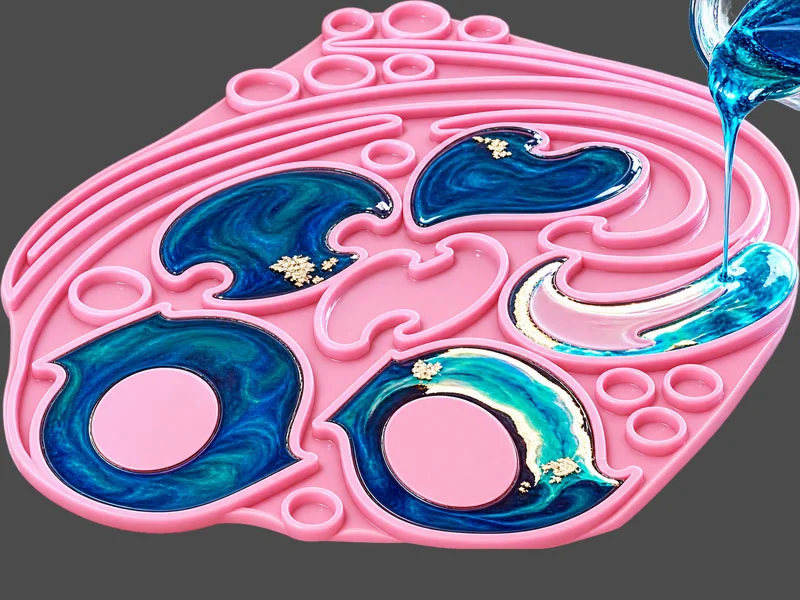 Silicone molds for epoxy resin
3.2 Jewelry and Fine Craft Molds
Jewelry, accessories, and small craft items often feature fine textures, complex contours, and demanding dimensional accuracy requirements.
Low-viscosity platinum-cured silicone helps cover fine details on the master pattern surface, while its flexibility makes demolding models with complex structures easier.
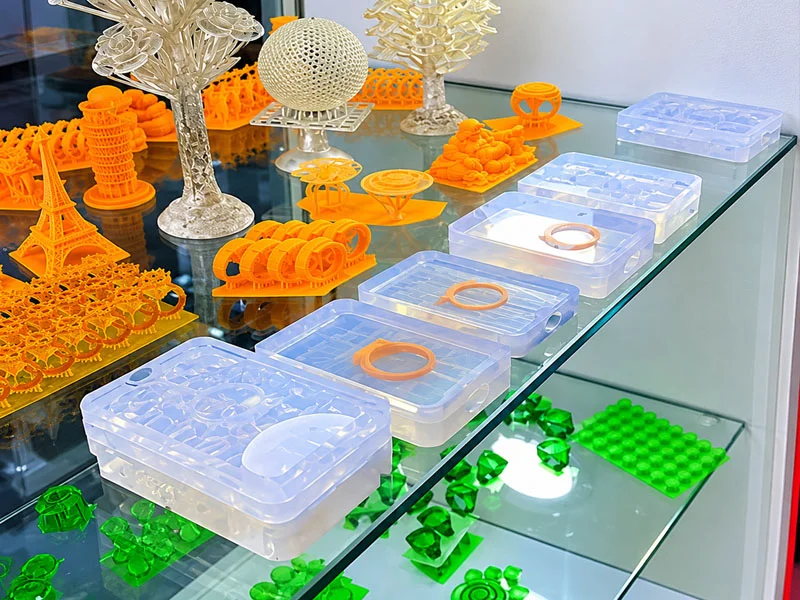 Silicone molds for jewelry and accessories
3.3 Sculpture and Art Model Reproduction
Platinum-cured silicone can be used to make flexible reproduction molds for sculptures, human figures, decorative ornaments, and other works of art.
For large models or those with deep undercuts, mold segmentation, silicone thickness, and the design of the outer support shell should also be considered to prevent mold deformation or damage during demolding.
3.4 Wax, Plaster, and Concrete Molds
Platinum-cured silicone can also be used to make molds for wax products, plaster decorations, and certain concrete products.
When selecting a suitable product, consider the casting material's temperature and weight, its particles or surface friction, and the number of production cycles the mold needs to withstand.
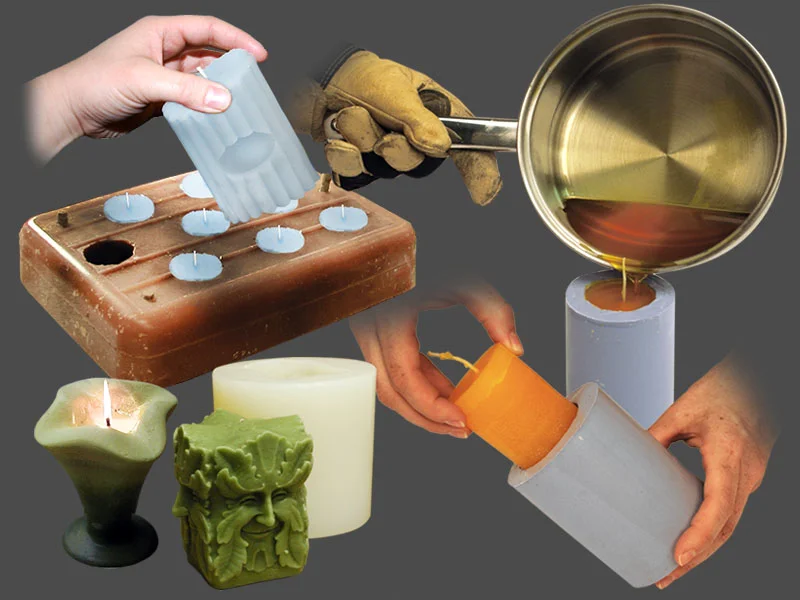 Silicone candle mold
3.5 Food-Contact and Baking Molds
Some platinum-cured silicone products that have been specially formulated and tested can be used for food-contact molds, including baking molds, chocolate molds, and candy molds.
However, it is important to emphasize that platinum catalysis does not automatically make a silicone product food grade, nor does it mean that all platinum-cured silicone products are suitable for direct food contact.
Silicone intended for food contact must be evaluated against the regulations and specific conditions of use in the target market. The product must also have the relevant test reports or compliance documentation. Curing conditions, post-treatment requirements, pigments, and release agents may also affect the compliance of the finished product.
In addition, food-contact compliance and baking temperature resistance are two separate criteria and must be verified independently.
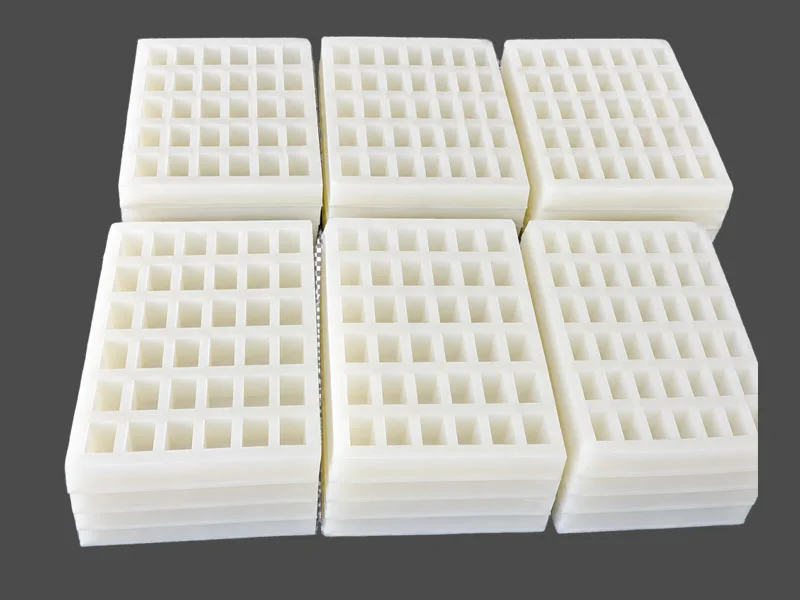 Food-safe silicone mold
4. How to Choose
Not all platinum-cured silicone products are suitable for the same mold-making processes. When selecting a product, evaluate the following factors.
4.1 Select Hardness Based on Mold Design
Mold size, wall thickness, undercuts, and demolding methods all affect the choice of silicone hardness.
For complex designs, deep undercuts, or molds that require greater deformation during demolding, consider a lower-hardness silicone. For molds that need a certain level of structural support, a medium- to high-hardness product may be more suitable.
4.2 Select Viscosity Based on Mold Details and Manufacturing Process
For master patterns with fine textures and complex structures, lower-viscosity products generally offer better flow and detail reproduction.
If a large mold is made using a brush-on process, consider a product with higher viscosity and suitable thixotropic properties to prevent the silicone from running down the master pattern surface.
4.3 Consider Tear Resistance Based on Production Requirements
If the mold features thin walls, sharp corners, deep grooves, or complex undercuts, pay particular attention to tear strength and elongation at break.
For these applications, Shore A hardness alone is not sufficient to determine whether a material is suitable.
4.4 Check Pot Life and Cure Time
The pot life and cure time of platinum-cured silicone can vary significantly between products.
A longer pot life is suitable for complex master patterns, large molds, or processes that require thorough degassing. A shorter cure time, on the other hand, can help improve production efficiency.
When selecting a product, consider the application temperature, mold size, and production schedule.
4.5 Verify Temperature Resistance and Compliance Documents
If the mold will come into contact with hot casting materials or be used for baking or food-contact applications, verify the product's temperature resistance data and relevant compliance documents separately.
Do not assume that a product is heat-resistant or suitable for food contact simply because it is called platinum silicone. Always refer to the TDS, test reports, and specified conditions of use for the specific product.
5. Important Considerations
Platinum-cured silicone offers excellent performance, but its addition-cure system is sensitive to certain chemical substances. Pay particular attention to the following points before making a mold.
5.1 Watch Out for Cure Inhibition
Platinum-cured silicone can be affected by certain chemical substances, resulting in slower curing, localized uncured areas, or a sticky surface.
Common potential causes include:
- Sulfur-containing materials, such as some sulfur-based modeling clays.
- Certain amine compounds.
- Tin compounds and residues from some condensation-cured silicone products.
- Certain adhesives, coatings, and resins.
- Some 3D-printed models that have not been properly cleaned or post-cured.
If you use a 3D-printed master pattern, check its compatibility with platinum-cured silicone. Follow the recommendations of the printing material and silicone suppliers for cleaning, post-curing, and surface treatment.
For master pattern materials with uncertain compatibility, conduct a small-scale curing test before proceeding with full-scale mold making.
5.2 Mix Parts A and B Strictly According to the Product Instructions
Platinum-cured silicone generally comes in a two-part system. The mixing ratio may vary from one product to another. Always measure the components according to the weight ratio or volume ratio specified in the TDS.
Incomplete mixing or an incorrect ratio may result in incomplete curing and affect mold performance.
5.3 Follow the Specified Degassing and Curing Procedures
For high-precision molds, vacuum degassing can help reduce air bubbles introduced during mixing.
After pouring, allow the silicone to cure at the temperature and for the duration specified by the product manufacturer. Curing conditions vary between products, so do not directly apply processing parameters from another product grade.
5.4 Determine Whether a Release Agent Is Needed Based on the Casting Material
Some silicone formulations offer good natural release properties when used with common casting materials such as resin, plaster, and wax.
However, if the casting material tends to stick to the mold or the mold will be used repeatedly in production, select a release agent compatible with both the silicone and the casting material. Test it in advance to evaluate its effects on surface quality and the curing process.
6. FAQs
- Q1: Which Is Better for Mold Making: Platinum-Cured Silicone or Tin-Cured Silicone?
-
Both can be used for mold making, but they have different performance characteristics and applications.
Platinum-cured silicone generally offers lower curing shrinkage, good long-term dimensional stability, and a longer mold library life. It is suitable for precision reproduction and projects with demanding long-term stability requirements.
Tin-cured silicone has a well-established history of use and is available in a wide range of products. It is also suitable for many general mold-making applications.
The final choice should be based on mold accuracy, budget, master pattern material, production requirements, and actual test results rather than the curing system alone.
- Q2: What Is the Shrinkage Rate of Platinum-Cured Silicone?
-
Platinum-cured silicone generally has low curing shrinkage, but the exact value depends on the product formulation and test conditions.
When selecting a product, check its TDS and distinguish between the curing shrinkage of the silicone itself and the molding shrinkage of the casting material. Both may affect the final product dimensions.
- Q3: Is a Release Agent Needed When Making Molds with Platinum-Cured Silicone?
-
Not necessarily. Platinum silicone molds can provide good release performance with many common casting materials. However, whether a release agent is needed depends on the casting material, mold design, and actual process conditions.
When casting silicone into a silicone mold, pay particular attention to the risk of bonding between the silicone materials. Use a dedicated release agent based on the results of preliminary testing.
- Q4: Is All Platinum-Cured Silicone Heat Resistant?
-
No. Temperature resistance depends on the specific formulation, and not all platinum-cured silicone products have the same heat resistance.
When selecting a product, check its specified continuous-use temperature and short-term temperature resistance. Also consider the actual temperature of the casting material and the effects of repeated thermal cycling on mold performance.
- Q5: Is All Platinum-Cured Silicone Suitable for Food Contact?
-
No. Platinum curing describes the silicone's curing system and does not, by itself, prove that a product complies with food-contact regulations. Only a specific formulation that has undergone the relevant testing and meets the applicable requirements in the target market can be used for the corresponding food-contact applications under the specified conditions. For example, when checking compliance with relevant U.S. FDA requirements, verify whether the specific product meets the applicable FDA regulatory provisions and review the corresponding test reports and conditions of use. You should also confirm the product's curing and post-treatment requirements before purchasing.
- Q6: Why Does Platinum-Cured Silicone Remain Uncured or Develop a Sticky Surface?
-
This may be caused by cure inhibition. Sulfur-containing substances, amines, tin compounds, certain coatings and adhesives on the master pattern surface, as well as some 3D printing materials, may interfere with the normal crosslinking reaction of platinum-cured silicone.
If this occurs, check the master pattern material, surface treatment, and cleaning process. Conduct a small-scale test using the actual master pattern material before proceeding with full-scale production.
7. Conclusion
With its low curing shrinkage, good dimensional stability, flexibility, and range of available mechanical properties, platinum-cured silicone is an important material choice for precision molds, resin reproduction, jewelry making, and art model applications.
In actual mold-making projects, selecting the right platinum silicone requires more than considering the curing system. You should also evaluate hardness, viscosity, tear strength, pot life, temperature resistance, and compatibility with the master pattern material.
Choosing a suitable formulation based on the specific mold design and production requirements will help you get the most out of platinum-cured silicone for mold making.

We value your comments, but please refrain from posting meaningless or irrelevant content. Kindly review our Comment Policy before commenting.