ELASTOSIL® M 4641 A/B vs RTV-4140 Silicone Comparison

ELASTOSIL® M 4641 A/B and MinghuiLink RTV-4140 are both A40-class addition-cure mold silicones, with M 4641 at 43 Shore A and RTV-4140 at 40±1 Shore A. M 4641 is specifically positioned for vacuum casting and rapid prototyping, particularly with crystal-clear casting resins, while RTV-4140 emphasizes simpler 1:1 processing, lower published component viscosity, faster routine curing and higher published tensile and tear strength.

WACKER

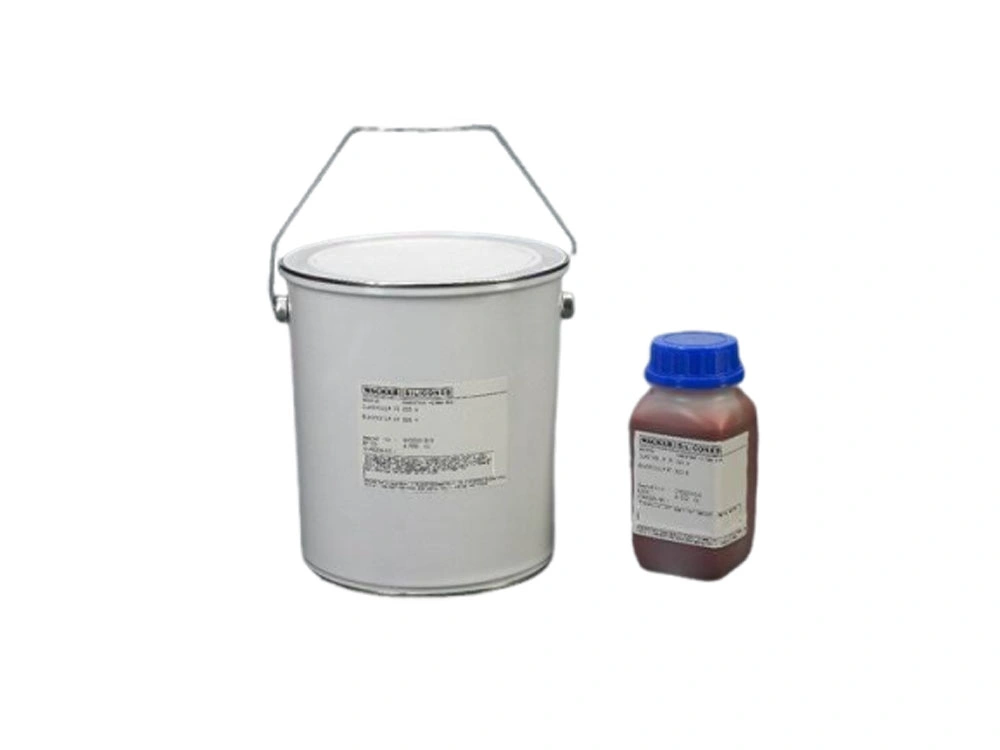
ELASTOSIL® M 4641 A/B

Addition-Cure Silicone

  • Hardness
    43 Shore A
  • Mix Ratio
    10:1
  • Working Time
    90 min

Visit Product

VS
MinghuiLink

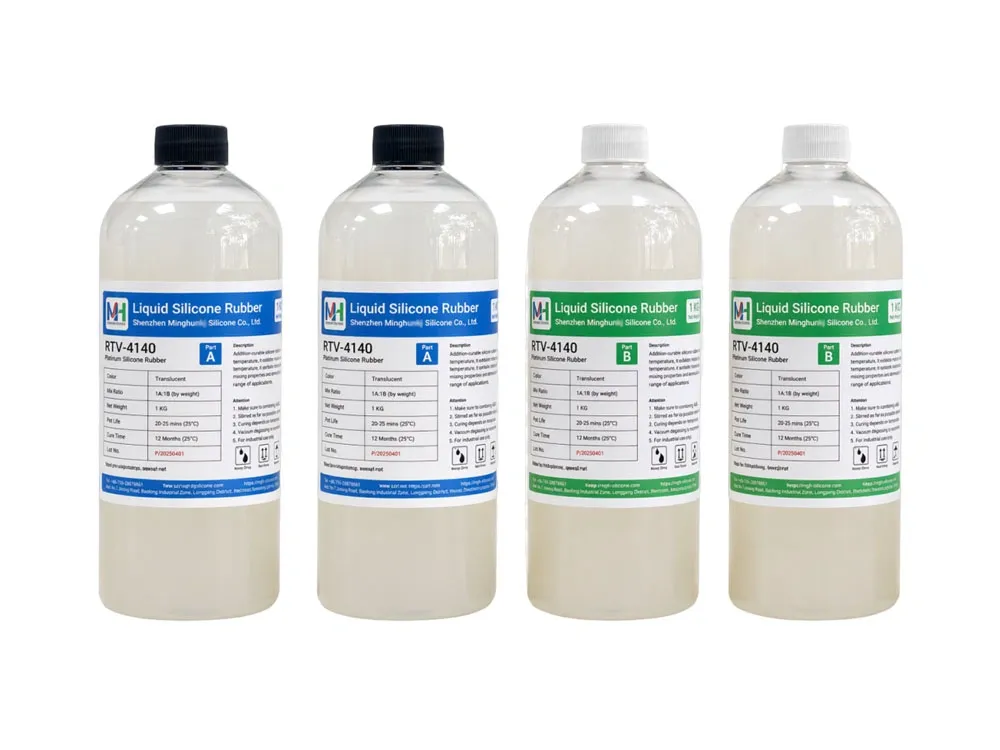
RTV-4140

Platinum-Cure Silicone

  • Hardness
    40±1 Shore A
  • Mix Ratio
    1:1
  • Working Time
    35 min

Visit Product

Conclusion

ELASTOSIL® M 4641 A/B and RTV-4140 target similar A40-class mold applications but serve different priorities. M 4641 A/B is the stronger fit for vacuum casting, rapid prototyping, crystal-clear resin work and applications that benefit from longer working time and higher elongation. RTV-4140 is better aligned with users who prioritize simple 1:1 mixing, lower published component viscosity, faster routine turnaround and higher published tensile and tear strength.


  • Vacuum Casting:
    M 4641 A/B is specifically positioned for vacuum casting and rapid prototyping, including crystal-clear casting resin applications.

  • Longer Processing Window:
    M 4641 A/B provides a 90-minute published pot life, compared with approximately 35 minutes for RTV-4140.

  • Simpler Production:
    RTV-4140 uses a 1:1 system with much lower published component viscosity and a shorter published cure cycle for routine mold production.

1. Technical Assessment

ELASTOSIL® M 4641 A/B and RTV-4140 are both A40-class addition-cure mold silicones. WACKER lists M 4641 at approximately 43 Shore A, while MinghuiLink lists RTV-4140 at 40±1 Shore A. The difference is modest, so processing behavior and application requirements are more important than hardness alone.

The main distinction is product positioning. WACKER specifically positions M 4641 A/B for vacuum casting and rapid prototyping, particularly with crystal-clear casting resins. It also provides good transparency, long working time and higher published elongation. RTV-4140 is positioned more broadly for reusable molds and emphasizes straightforward 1:1 processing, lower component viscosity and faster routine production.

The mixing and processing profiles are significantly different. M 4641 A/B uses a 10:1 ratio, with 50,000 mPa·s Part A and 400 mPa·s Part B, while RTV-4140 uses a 1:1 ratio with approximately 4,800±200 mPa·s Part A and 4,300±200 mPa·s Part B. RTV-4140 is therefore much simpler for small manual batches and has substantially lower published component viscosities. M 4641 A/B, however, provides a much longer 90-minute pot life, giving more time for vacuum degassing and controlled mold filling.

The cure profile favors RTV-4140 for routine turnaround. WACKER reports approximately 12 hours to a tack-free state for M 4641 A/B, compared with approximately 5–6 hours cure time for RTV-4140. These are different published endpoints, so they should not be treated as a direct cure-rate comparison, but the available data favor RTV-4140 when faster routine production is the priority.

Mechanical properties present a mixed trade-off. M 4641 A/B publishes greater than 4.5 MPa tensile strength, greater than 25 N/mm tear strength and greater than 300% elongation, while RTV-4140 publishes 5.3±0.5 MPa tensile strength, 32±0.5 N/mm tear strength and 220±50% elongation. RTV-4140 has the higher published tensile and tear values, while M 4641 A/B has the higher published elongation. For thin edges and repeated peeling, the stronger tear profile of RTV-4140 can be useful; for an A40-class mold that still needs to flex during demolding, M 4641's higher elongation is advantageous.

Both products support accurate reproduction, with published shrinkage below or equal to 0.1%. M 4641 A/B has the stronger application-specific positioning for vacuum casting, transparent or crystal-clear resin work and rapid prototyping. RTV-4140 is more attractive for routine production where simple batching, lower viscosity and faster turnaround are more important.

For undercuts, both materials can be considered, but neither should be assumed to handle every deep undercut as a one-piece A40 mold. Mold geometry, wall thickness and parting-line design remain important. For severe undercuts, a split mold may be more practical than relying only on silicone flexibility.

Overall, M 4641 A/B is best characterized as a specialty A40-class silicone for vacuum casting, rapid prototyping and demanding transparent-resin reproduction, with a long working window and higher elongation. RTV-4140 is better characterized as a simpler A40-class production silicone with 1:1 mixing, lower published component viscosity, higher published tensile and tear strength and faster routine curing.
2. Technical Comparison

Technical Parameter WACKER ELASTOSIL® M 4641 A/B MinghuiLink RTV-4140
Silicone Type Addition-cure RTV-2 Platinum-cure silicone
Color / Appearance Translucent / highly transparent Translucent
Specific Gravity 1.07 g/cm³ 1.10–1.12 g/cm³
Mix Ratio 10:1 by weight 1:1 by weight or volume
Shore Hardness 43 Shore A 40±1 Shore A
Viscosity 50,000 mPa·s (Part A) 4,800±200 mPa·s (Part A)
Working / Pot Life 90 min 35 min
Demold / Cure Time 12 h tack-free 5–6 h cure
Tensile Strength >4.5 MPa 5.3±0.5 MPa
Tear Strength >25 N/mm 32±0.5 N/mm
Elongation >300% 220±50%
Shrinkage <0.1% ≤0.1%
Temperature Resistance Not publicly listed as an equivalent numerical service rating Up to 250°C / 482°F
Vacuum Casting Specifically positioned for rapid prototyping Suitable for vacuum casting
Technical Data Sources ELASTOSIL® M 4641 A/B RTV-4140

3. Key Differences

Key Factor WACKER ELASTOSIL® M 4641 A/B MinghuiLink RTV-4140
Hardness 43 Shore A 40±1 Shore A M 4641 A/B is slightly harder, while RTV-4140 provides slightly more flexibility.
Mixing System 10:1 1:1 RTV-4140 is considerably simpler for manual batching.
Component Viscosity 50,000 / 400 mPa·s 4,800 / 4,300 mPa·s RTV-4140 publishes much lower component viscosities, while M 4641 A/B uses an asymmetric 10:1 system.
Working Window 90 min 35 min M 4641 A/B provides substantially more time for vacuum degassing and controlled mold filling.
Tensile Strength >4.5 MPa 5.3±0.5 MPa RTV-4140 publishes the higher numerical tensile-strength value.
Tear Strength >25 N/mm 32±0.5 N/mm RTV-4140 publishes the higher numerical tear-strength value.
Elongation >300% 220±50% M 4641 A/B publishes greater stretch capability.
Application Focus Vacuum casting, rapid prototyping and crystal-clear resin applications General-purpose A40-class mold making M 4641 A/B has the more specialized positioning for transparent resin and prototype applications.
Mold Turnaround 12 h tack-free 5–6 h cure RTV-4140 is better aligned with faster routine mold turnaround based on the published endpoints.

4. Application Comparison

Application ELASTOSIL® M 4641 A/B RTV-4140
Vacuum Casting Strong candidate Strong candidate
Rapid Prototyping Strong candidate Strong candidate
Crystal-Clear Resin Casting Strong candidate Suitable with testing
Complex / Detailed Molds Strong candidate Strong candidate
Undercut Molds Strong candidate Suitable
Large Mold Preparation Strong candidate Suitable
Thin Mold Sections Strong candidate Strong candidate
Rapid Routine Production Suitable Strong candidate

5. FAQ

Compare Another Silicone

Need Help Choosing?

Tell us your application. We’ll recommend the right RTV-2 silicone and provide a sample for testing.

Request a Sample