RTV silicone rubber (Room-Temperature Vulcanizing Silicone Rubber) is a type of silicone material that cures at room temperature to form an elastic rubber material. Depending on the number of components and curing chemistry, RTV silicone rubber is available in several product types and is widely used in construction sealing, industrial bonding, silicone mold making, resin casting, and electronic component protection.
Unlike conventional rubber processing systems that require high temperatures for vulcanization, RTV silicone rubber can generally cure through crosslinking at room temperature without the need for specialized high-temperature curing equipment. Different RTV silicone formulations vary in flexibility, hardness, temperature resistance, shrinkage, and material compatibility. Therefore, the appropriate product should be selected based on the specific application.
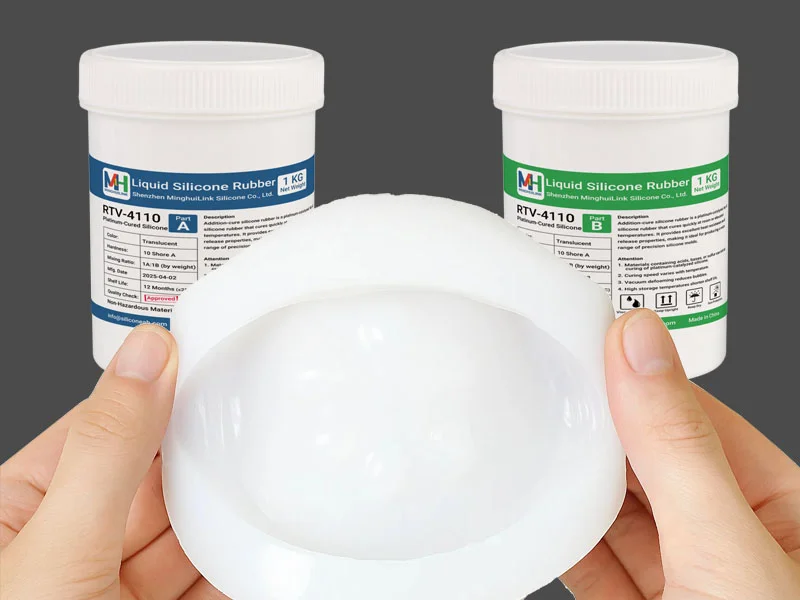 RTV Silicone Rubber
1. What Is RTV Silicone Rubber?
RTV stands for Room-Temperature Vulcanizing. It refers to silicone rubber materials that cure at room temperature through a chemical crosslinking reaction to form an elastic rubber material.
The main polymer backbone of silicone rubber consists of siloxane bonds (Si–O–Si) connected to various organic groups. This unique molecular structure gives silicone rubber excellent flexibility, heat resistance, and weather resistance, making it suitable for a wide range of industrial and commercial applications.
During curing, uncured liquid or paste silicone rubber undergoes a crosslinking reaction to form a three-dimensional polymer network, eventually becoming a solid material with specific hardness, elasticity, and mechanical strength.
Unlike ordinary physical drying, the curing of RTV silicone rubber is a chemical reaction. Depending on the product system, the curing process may be triggered by moisture in the air or initiated by mixing two components.
RTV describes the curing method of the material rather than a specific formulation. Different RTV silicone rubber products can vary significantly in composition, viscosity, hardness, curing speed, and end-use applications.
2. How Does RTV Silicone Rubber Cure?
RTV silicone rubber cures primarily through chemical crosslinking reactions. The curing process varies depending on the product's component structure and chemical system.
2.1 Moisture Curing
Moisture curing is a common curing method for one-component RTV silicone rubber.
In these systems, the crosslinking reaction begins when the material comes into contact with moisture in the air. Curing typically starts at the surface exposed to air and gradually progresses inward.
Small amounts of reaction by-products may be released during curing. The specific by-products depend on the crosslinking agents and curing system used in the formulation.
Therefore, the curing speed of moisture-curing RTV silicone rubber is generally affected by the following factors:
- Ambient Humidity: Moisture in the air participates in the curing reaction, so humidity affects the curing speed.
- Ambient Temperature: Temperature changes may accelerate or slow down the crosslinking reaction.
- Material Thickness: Thicker layers generally require more time to cure internally.
- Moisture Exposure Conditions: The extent of exposure to air and the moisture diffusion path affect the curing speed inside the material.
This curing method is suitable for sealing, bonding, and coating applications. However, when filling deep joints or enclosed spaces, the product's depth of cure and application requirements should be confirmed.
2.2 Two-Component Mixing and Curing
Two-component RTV silicone rubber requires Parts A and B to be mixed at the specified ratio to initiate the curing reaction.
Unlike conventional one-component systems that rely primarily on atmospheric moisture to cure from the surface inward, RTV-2 typically initiates crosslinking when Parts A and B are mixed. Many mold-making formulations can cure throughout the material, making them suitable for producing silicone rubber products with considerable thickness and complex structures.
For tin-cured RTV-2 silicone rubber, small-molecule by-products, such as alcohols, are typically generated during curing. If the mold or assembly structure prevents these by-products from escaping, curing quality and the final material properties may be affected. Therefore, for enclosed applications or situations where by-products cannot easily escape, the suitability of the specific product should be confirmed, and appropriate ventilation or post-curing conditions should be provided according to the technical instructions.
The curing process mainly depends on:
- The mixing ratio of Parts A and B.
- The product's curing chemistry.
- Ambient temperature and processing conditions.
- The specified working time and curing time.
After mixing, the material typically has a limited working time (Pot Life), during which pouring or application must be completed.
3. Main Types of RTV Silicone Rubber
Based on the number of components, RTV silicone rubber is mainly divided into one-component RTV-1 and two-component RTV-2. Two-component systems can be further classified into tin-cured and platinum-cured types based on their curing chemistry.
3.1 One-Component RTV Silicone Rubber (RTV-1)
RTV-1 is a pre-formulated, one-component silicone rubber product. It does not require additional mixing of Parts A and B before use and can generally be applied directly after opening the container.
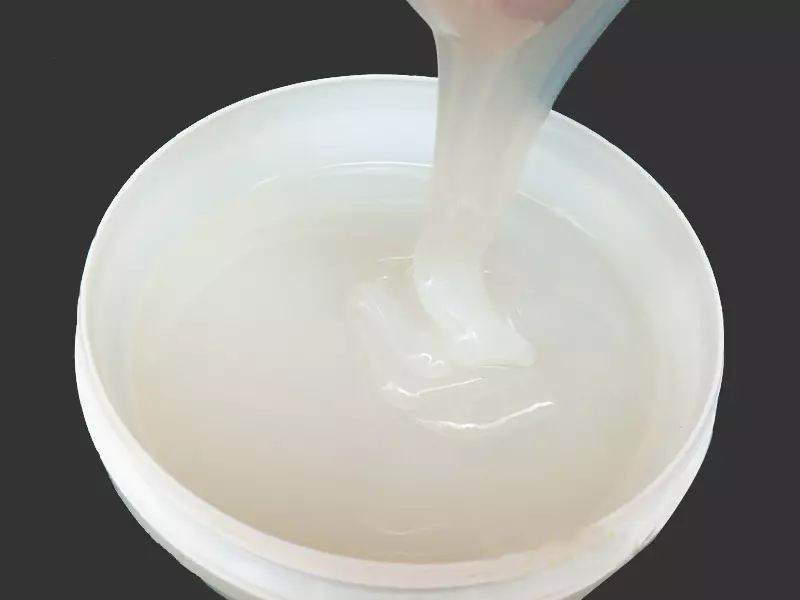
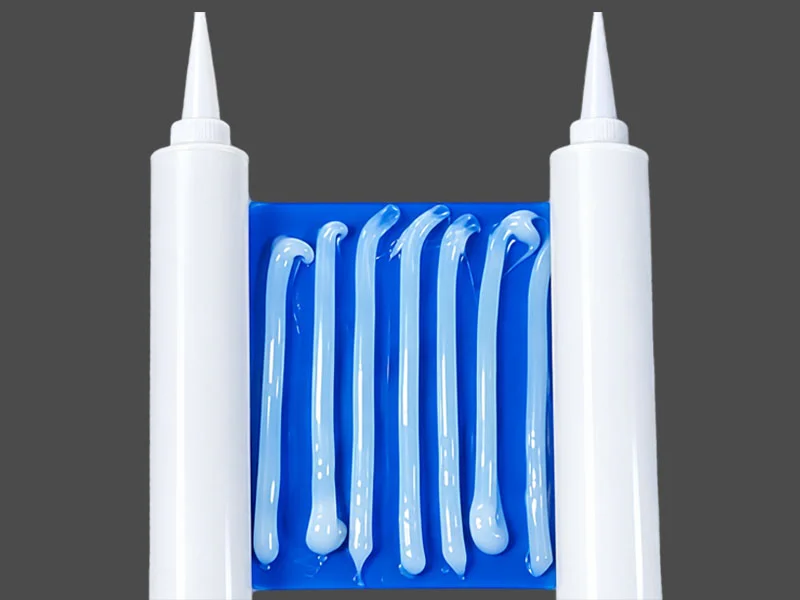 One-Component RTV Silicone Rubber
Common types of moisture-curing RTV-1 silicone rubber include:
- Acetoxy Cure: Releases acetic acid during curing. It generally has a fast surface skin-over time but may cause corrosion on certain metals.
- Alkoxy Cure: Typically releases alcohol-based by-products during curing. It is commonly used in construction sealing, industrial bonding, and other applications requiring a non-acetoxy curing system.
- Oxime Cure: Releases oxime-based by-products during curing and is commonly found in certain neutral-cure silicone sealants.
- Acetone Cure: Releases acetone during curing and is used in certain specialized neutral-cure systems. Compatibility with specific substrates should be confirmed based on the product formulation.
RTV-1 is mainly used for construction sealing, glass bonding, automotive gasket applications, and machinery maintenance. Some specially formulated neutral-cure products can also be used for sealing and protecting electronic components.
Compatibility varies between curing types and substrates. A product should not be considered suitable for all materials simply because it is labeled neutral-cure or low-odor.
3.2 Two-Component RTV Silicone Rubber (RTV-2)
RTV-2 consists of two components, Parts A and B, which must be mixed at the manufacturer's specified ratio before curing.
These materials can be formulated with different hardness levels, viscosities, working times, and mechanical properties, providing considerable flexibility in mold making and industrial applications.
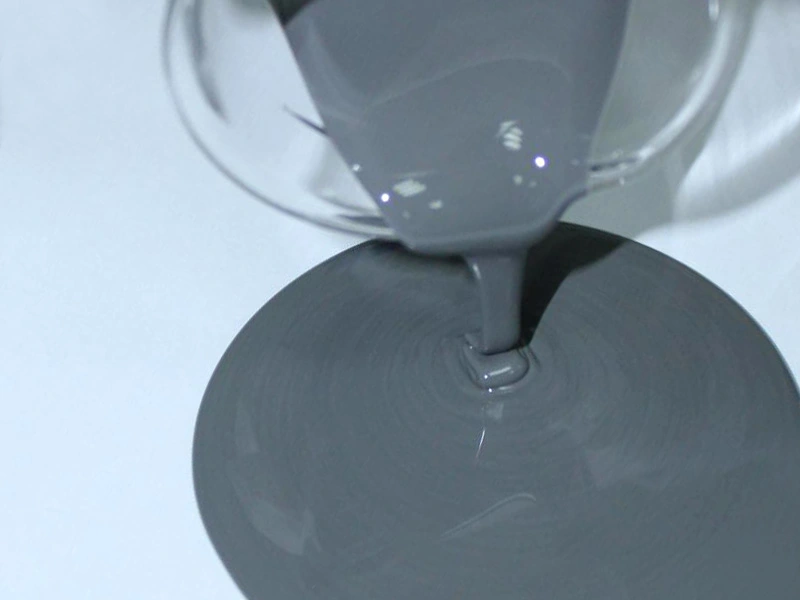
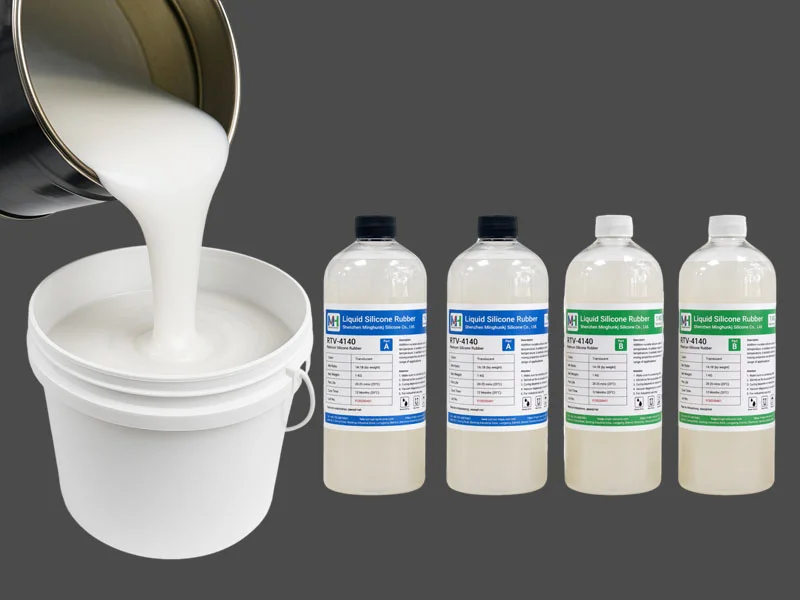 Two-Component RTV Silicone Rubber
Common applications of RTV-2 include:
- Mold making for sculptures, lifecasting models, and handicrafts.
- Molds for jewelry, rings, and intricate decorative items.
- Epoxy resin and polyurethane resin casting.
- Prototype development and small-batch replication.
- Potting and protection of certain electronic components.
It is important to note that RTV-2 includes more than just mold-making silicone. It also covers electronic potting compounds, silicone gels, and other specialized silicone rubber products. Always confirm that the specific product is suitable for the intended application.
Learn more: RTV-1 vs. RTV-2 Silicone Rubber: Key Differences.
3.3 Two Main Curing Systems for RTV-2: Tin-Cured and Platinum-Cured Silicone
Two-component RTV-2 silicone rubber is commonly available in two main curing systems.
Tin-Cured Silicone
Tin-cured silicone typically uses a tin catalyst or another suitable catalyst system. When Parts A and B are mixed, a condensation reaction forms a crosslinked network.
Its main characteristics include:
- Generally offers good processing versatility.
- Suitable for various conventional mold-making and model replication applications.
- Generally less sensitive to common curing inhibitors associated with platinum-cured silicone, although material compatibility should still be confirmed for the specific formulation.
- Small-molecule by-products are typically generated during curing, and actual shrinkage depends on the specific formulation.
Platinum-Cured Silicone
Platinum-cured silicone typically uses a platinum catalyst. When Parts A and B are mixed, an addition reaction forms the elastomer.
Its main characteristics include:
- The curing reaction typically produces no small-molecule by-products.
- Generally offers low curing shrinkage.
- Suitable for precision molds and applications requiring high dimensional stability.
- Some formulations offer excellent heat resistance.
- Sensitive to sulfur compounds, tin compounds, and certain amines, which may cause curing inhibition.
| Comparison | Tin-Cured Silicone | Platinum-Cured Silicone |
|---|---|---|
| Common Catalyst System | Tin-based catalysts, etc. | Platinum catalyst |
| Curing Reaction | Condensation reaction | Addition reaction |
| Curing By-Products | Typically produced | Typically not produced |
| Curing Shrinkage | Generally higher | Generally lower |
| Sensitivity to Curing Inhibitors | Generally lower | Sensitive to specific contaminants |
| Common Applications | General-purpose molds and craft replication | Precision molds and applications requiring high dimensional stability |
The above summarizes the main characteristics of tin-cured and platinum-cured silicone. For a more detailed comparison of their curing mechanisms, by-products, shrinkage, material compatibility, and applications, see: Platinum-Cured Silicone vs. Tin-Cured Silicone.
4. Applications of RTV Silicone Rubber
RTV silicone rubber is available in various curing systems and formulations for different industrial applications. Depending on product functionality and performance requirements, its main applications include the following:
4.1 Sealing and Bonding
RTV silicone sealants and adhesives are widely used in construction, automotive, machinery, and industrial assembly applications.
Common applications include:
- Sealing joints in building windows, doors, glass panels, and curtain walls.
- RTV gasket sealing for automotive engines and machinery.
- Bonding materials such as metals, glass, and ceramics.
- Waterproof sealing of pipelines, equipment housings, and other structures.
After curing, the material forms a flexible elastic sealing layer that can accommodate thermal expansion and minor movement between certain substrates.
Bonding strength, oil resistance, weather resistance, and service temperature depend on the product formulation and substrate conditions.
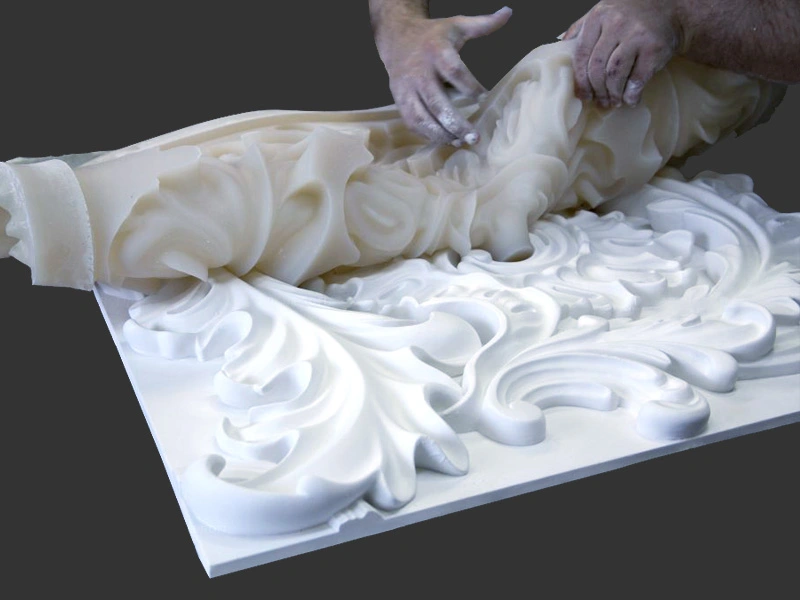
4.2 Silicone Mold Making and Model Replication
Two-component RTV-2 liquid silicone rubber is a commonly used elastomeric material for mold making.
By selecting silicone rubber with different hardness levels and mechanical properties, molds can be produced for complex structures and finely detailed surfaces.
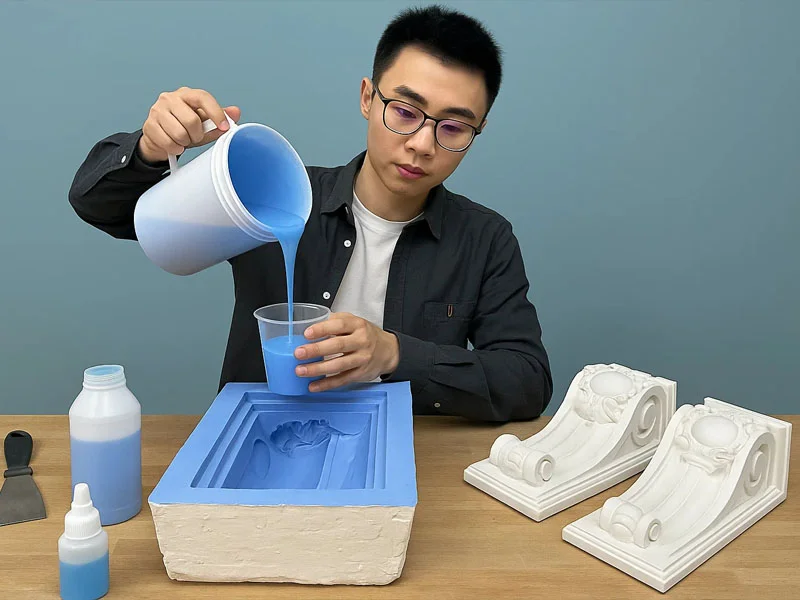 Silicone Mold Making
Common applications include:
- Mold making for sculptures, lifelike models, and artwork.
- Jewelry, rings, and intricate decorative items.
- Soap, candle, and craft molds.
- Epoxy resin, polyurethane resin, and polyester resin casting.
- Concrete, gypsum, and decorative product replication.
- Product prototyping and small-batch replication.
Silicone rubber generally offers excellent flexibility and surface detail reproduction, making it suitable for molds with complex curves, grooves, and undercuts.
For each project, the appropriate hardness, tear strength, and curing system should be selected based on the master pattern structure, demolding method, casting material, and expected mold usage frequency.
4.3 Electronic Potting and Electrical Protection
Certain specially formulated RTV silicone rubber products can be used for electronic potting, electrical insulation, and component protection.
After curing, the silicone rubber forms a flexible protective layer that helps protect electronic components against moisture, dust, vibration, and temperature variations within a specified range.
 Silicone Potting Compound
Common applications include:
- Protection of circuit boards and electronic components.
- Encapsulation of LED components and electrical equipment.
- Sealing of sensors and connectors.
- Potting of certain power modules and electronic control components.
It is important to note that silicone potting compounds for electronics and mold-making silicone products may differ in dielectric properties, thermal conductivity, flow characteristics, and curing behavior. They should not be used interchangeably.
4.4 Industrial Coating and Surface Protection
Some RTV silicone rubber products are also used for industrial coating, insulation, and surface protection.
Depending on the formulation, the cured material can form a flexible protective layer that provides substrates with a certain level of moisture resistance, weather resistance, and electrical insulation.
For these applications, products specifically formulated for coating or protection should be selected rather than substituting mold-making silicone.
5. Key Properties of RTV Silicone Rubber
The actual performance of RTV silicone rubber depends on its polymer structure, crosslinking system, fillers, and other formulation components. Different products should not be evaluated using a single set of performance criteria.
5.1 Flexibility and Elasticity
Cured silicone rubber generally offers excellent elasticity and flexibility, allowing it to recover its original shape after deformation caused by external forces.
In mold making, flexibility helps release castings with undercuts, grooves, and complex surface geometries.
In sealing applications, elasticity helps accommodate thermal expansion and minor movement between substrates.
5.2 Heat Resistance and Low-Temperature Performance
Silicone rubber generally has a wide operating temperature range, and many formulations can maintain their elasticity in both high- and low-temperature environments.
However, the heat resistance of RTV products varies depending on the formulation.
When selecting a material, check its specified continuous service temperature, short-term temperature resistance, and actual operating conditions. Temperature ratings for one model should not be applied to the entire RTV silicone rubber category.
5.3 Weather Resistance and Aging Resistance
Silicone rubber generally offers good UV resistance, ozone resistance, and outdoor weatherability, making it suitable for certain sealing and protection applications exposed to outdoor conditions over extended periods.
However, actual weather resistance is still affected by the formulation, color, fillers, and operating environment.
5.4 Low Shrinkage and Dimensional Stability
For mold making and precision prototyping, curing shrinkage is an important performance indicator.
Platinum-cured RTV-2 silicone generally has low curing shrinkage, helping improve dimensional consistency in mold reproduction.
Some tin-cured RTV-2 formulations generate small-molecule by-products during curing. As these by-products escape, the material may undergo a certain degree of shrinkage. In comparison, platinum-cured RTV-2 generally offers lower curing shrinkage. However, actual shrinkage also depends on the specific formulation, crosslinking system, and curing conditions, so it cannot be determined solely by the curing type.
Therefore, for precision components and molds with strict dimensional requirements, the linear shrinkage of the specific product should be compared rather than relying solely on its curing system.
5.5 Electrical Insulation and Chemical Resistance
Some RTV silicone rubber products offer excellent electrical insulation properties and are suitable for protecting electronic equipment and electrical components.
Silicone rubber generally has good water resistance and weatherability. However, this does not mean that it is resistant to all oils, solvents, and chemicals.
If the material will be in prolonged contact with fuel, lubricating oils, organic solvents, or other chemical media, it should be selected based on the chemical resistance data of the specific product.
6. How to Choose the Right RTV Silicone Rubber
When selecting RTV silicone rubber, first identify the intended application, then evaluate the curing system, mechanical properties, substrate compatibility, and processing requirements.
6.1 Select the Product Type Based on the Application
First, identify the primary purpose of the material:
- Sealing and Bonding: Choose RTV-1 products with the required adhesion, sealing performance, and weather resistance.
- Mold Making: Choose liquid two-component RTV-2 silicone rubber specifically formulated for mold making.
- Electronic Potting: Select specialized RTV silicone products with the required electrical and protective properties.
- Industrial Coating: Choose a specialized formulation based on the substrate, coating thickness, and operating environment.
Materials designed for different applications should not be substituted for one another based solely on the RTV designation.
6.2 Choose the Material Based on the Curing System
For mold-making applications, tin-cured or platinum-cured RTV-2 silicone can be selected according to project requirements.
Tin-cured silicone is generally suitable for general-purpose mold making, craft replication, and projects where cost is a key consideration.
Platinum-cured silicone is generally suitable for precision replication, applications requiring low shrinkage, and certain high-performance uses.
If the master pattern is made from sulfur-containing clay, certain 3D printing resins, or other materials that may interfere with platinum-catalyzed curing, a compatibility test should be performed first.
6.3 Select the Material Based on Hardness and Mechanical Properties
For RTV-2 mold-making silicone, the following properties should be given particular attention:
- Shore A Hardness: Determines the relative softness or firmness of the mold, affecting its flexibility and support capacity.
- Tear Strength: Indicates the mold's resistance to tearing around cuts, thin sections, and during repeated demolding.
- Tensile Strength: Measures the material's ability to withstand tensile loads.
- Elongation at Break: Indicates how much the material can stretch before breaking.
These properties should be evaluated together based on the master pattern structure and the actual demolding method.
6.4 Select the Material Based on Viscosity and Working Time
Viscosity affects material flow, pouring efficiency, and the ability to fill fine details and complex cavities.
For master patterns with small grooves or complex surface geometries, consider whether the material can adequately fill the mold cavity and whether vacuum degassing equipment is required.
Also, make sure the working time (Pot Life) is sufficient for measuring, mixing, degassing, and pouring.
Working time and full curing time are two different concepts. Surface skinning or loss of flowability does not mean that the material has achieved its final performance.
6.5 Confirm Material Compatibility and Certification Requirements
RTV silicone rubber may interact with master pattern surfaces, sealers, release agents, and final casting materials.
For platinum-cured silicone, particular attention should be paid to curing inhibition.
For food-contact, electrical insulation, and other applications with specific compliance requirements, confirm whether the specific product has the relevant test reports and certification documents.
Transparency, low odor, platinum catalysis, or good physical properties alone do not prove that a product complies with specific regulatory requirements.
7. Precautions When Using RTV Silicone Rubber
Proper processing procedures help ensure that RTV silicone rubber cures fully and achieves its expected performance.
7.1 Maintain the Correct Mixing Ratio
For RTV-2, Parts A and B must be measured strictly according to the mixing ratio specified in the product's TDS.
Pay particular attention to whether the mixing ratio is specified by weight or by volume. Even if different products use the same mixing ratio, this does not mean their Parts A and B can be mixed interchangeably.
Do not arbitrarily change the mixing ratio to accelerate curing. Doing so may result in incomplete curing or changes in the final material properties.
7.2 Mix Thoroughly and Degas When Necessary
Ensure that Parts A and B are evenly mixed, without leaving unmixed material at the bottom or along the sides of the container.
For higher-viscosity RTV-2 silicone or applications requiring a high-quality surface finish, vacuum equipment can be used for degassing according to the product's processing requirements.
During pouring, maintain a slow and steady flow to minimize the introduction of new air bubbles into the material.
7.3 Be Aware of Curing Inhibition
Certain platinum-cured silicone products are sensitive to specific chemicals. Contact with incompatible materials may cause localized tackiness, uncured surfaces, or complete curing failure.
Common potential sources of contamination include:
- Sulfur-containing modeling clay.
- Tin-catalyzed silicone rubber and its residues.
- Certain latex or natural rubber materials.
- Specific amine compounds.
- Some incompletely cured epoxy resins and 3D printing resins.
- Certain coatings, sealers, and chemical contaminants.
Before making a mold, it is recommended to conduct a small-scale curing test to confirm that the master pattern and other contact materials will not interfere with the curing process.
7.4 Follow the Product's Curing Requirements
The curing time of RTV silicone rubber is affected by factors such as formulation, ambient temperature, humidity, and material thickness.
For RTV-1, ensure that the material has adequate exposure to moisture. For RTV-2, ensure that the mixing ratio and curing conditions meet the technical requirements.
Some products allow moderate heating to accelerate curing, but this process cannot be applied to all RTV silicone products. Always follow the manufacturer's TDS for specific instructions.
In addition, read the Safety Data Sheet (SDS) before use, wear appropriate personal protective equipment as required, and maintain suitable working conditions.
8. Frequently Asked Questions (FAQ)
- Q1: What does RTV silicone rubber mean?
- RTV stands for Room-Temperature Vulcanizing. It refers to silicone rubber materials that cure at room temperature to form an elastic rubber material through chemical crosslinking. Common products include one-component RTV-1 and two-component RTV-2.
- Q2: What are the main types of RTV silicone rubber?
- Based on the number of components, RTV silicone rubber is mainly divided into RTV-1 and RTV-2. Based on common curing chemistries, RTV-2 can be further classified into tin-cured and platinum-cured types. One-component moisture-curing RTV products can also be classified by their curing by-products, including acetoxy, alkoxy, and oxime types.
- Q3: What is the difference between RTV-1 and RTV-2?
- RTV-1 is generally a one-component product that cures primarily through exposure to moisture in the air. RTV-2 is a two-component product that requires Parts A and B to be mixed at a specified ratio before curing. The two types differ in curing methods, processing requirements, and typical applications.
- Q4: Can RTV-2 silicone be used for mold making?
- Yes. Many RTV-2 products are specifically formulated for making flexible silicone molds. They are suitable for sculptures, jewelry, crafts, resin casting, and product prototyping. The appropriate material should be selected based on hardness, viscosity, tear strength, and master pattern structure.
- Q5: Which is better, tin-cured or platinum-cured silicone?
- Both have their own advantages. Tin-cured silicone generally offers good cost efficiency and processing versatility, making it suitable for general-purpose mold making. Platinum-cured silicone generally provides lower curing shrinkage and better dimensional stability, making it suitable for precision molds and certain high-performance applications.
- Q6: Does RTV silicone rubber need to be heated to cure?
- RTV silicone rubber can generally cure at room temperature without specialized high-temperature vulcanization equipment. Some formulations allow moderate heating to accelerate curing, but the temperature and curing time should always be determined according to the specific product's technical instructions.
- Q7: Do all RTV silicone rubber products have the same heat resistance?
- No. Heat resistance depends on the specific formulation, curing system, and product design. Refer to the TDS of the corresponding product to distinguish between long-term service temperature and short-term temperature resistance. Temperature ratings for one product should not be applied to the entire RTV category.
- Q8: Is all RTV silicone rubber suitable for food contact?
- No. Even platinum-cured silicone does not automatically meet food-contact requirements. Compliance must be confirmed based on the test reports, certification scope, and actual conditions of use for the specific product.
9. Conclusion
RTV silicone rubber is a category of silicone materials that cure at room temperature through chemical crosslinking to form elastomers. It is available in different component configurations, curing systems, and application-specific formulations.
From one-component sealants and two-component mold-making silicone to electronic potting compounds and industrial protective materials, different RTV products vary considerably in processing methods, mechanical properties, and suitable operating environments.
For mold-making applications, two-component RTV-2 liquid silicone rubber is an important material choice. Depending on the project requirements, factors such as the tin-cured or platinum-cured system, hardness, viscosity, tear strength, shrinkage, and material compatibility should all be considered.
Understanding the classifications, curing principles, and performance characteristics of RTV silicone rubber helps users select the right material and improve reliability in mold making and industrial applications.

We value your comments, but please refrain from posting meaningless or irrelevant content. Kindly review our Comment Policy before commenting.