In the world of silicone manufacturing, DIY hand casting and machine compression molding each offer unique advantages for specific applications. Selecting the right production method is crucial not only for improving efficiency but also for optimizing costs and ensuring product quality.
This article provides a detailed comparison of these two silicone mold-making processes to help you make the best decision based on your specific needs.
1. Process Principles
1. DIY Hand-Casted Molds
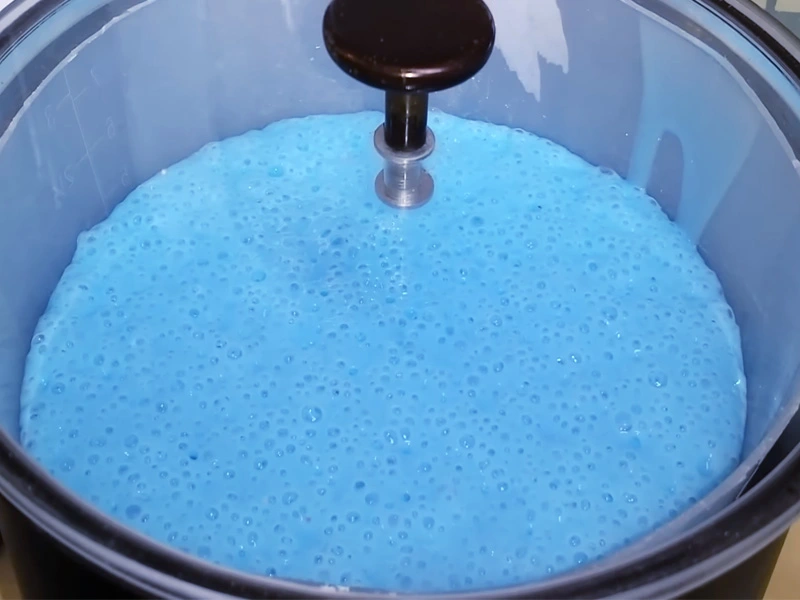
DIY silicone molds are created through manual operations, making them ideal for small-batch customization and complex designs. Common methods involve creating a master pattern using 3D printing or sculpting, followed by manually pouring RTV-2 Silicone Rubber to cast the mold.
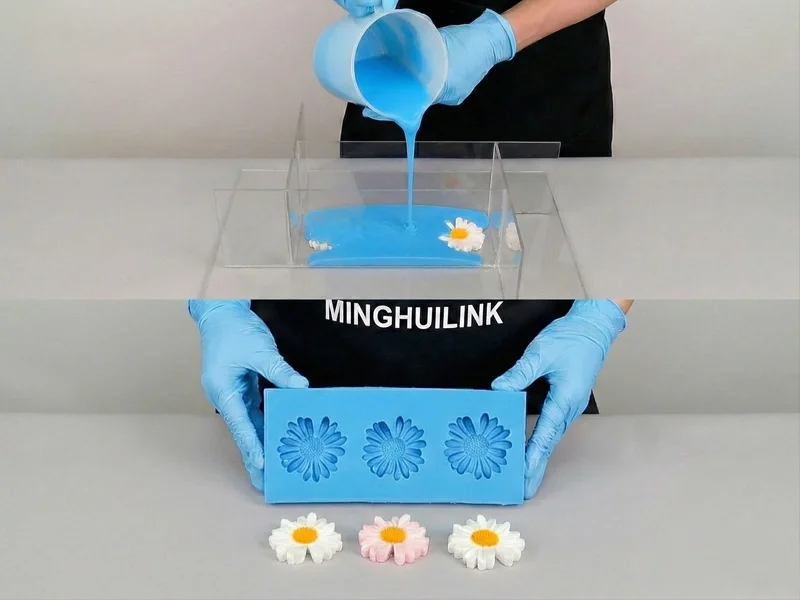 Handmade DIY silicone mold making
Key Features:
- Low Cost: Requires minimal tooling and equipment, perfect for small-scale projects with limited budgets.
- High Customization: Capable of replicating intricate designs and personalized details, especially suitable for artistic creations.
- Short Lead Time: No need for heavy machinery or long tooling times; allows for rapid design iterations and quick delivery of small batches.
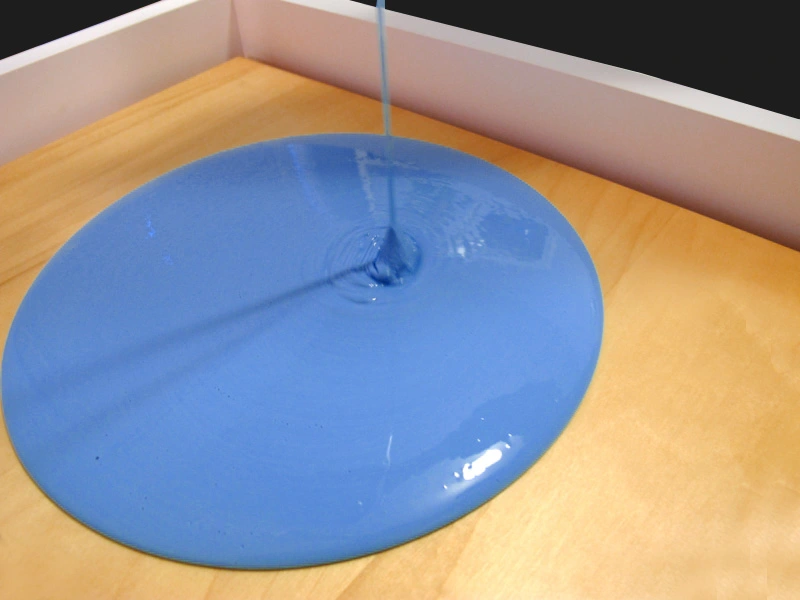
 RTV-2 liquid silicone rubber
Applicable Scenarios:
- DIY & Crafts: Candles, soaps, resin jewelry, and other artistic handicrafts.
- Small-Batch Customization: Limited edition products for artists and small brands.
- Prototyping: Product verification and design feasibility testing before mass production.
Pros: Low initial investment; highly adaptable to complex shapes (undercuts); rapid turnaround time.
Cons: Low production efficiency (not suitable for mass manufacturing); lower consistency (manual processes may introduce slight variations).
2. Machine Compression Molding
Silicone compression molding utilizes industrial hydraulic presses with high temperature and pressure, making it the standard for mass production. The process typically involves CNC-machined precision steel molds and uses HTV (High Temperature Vulcanization) solid silicone rubber.
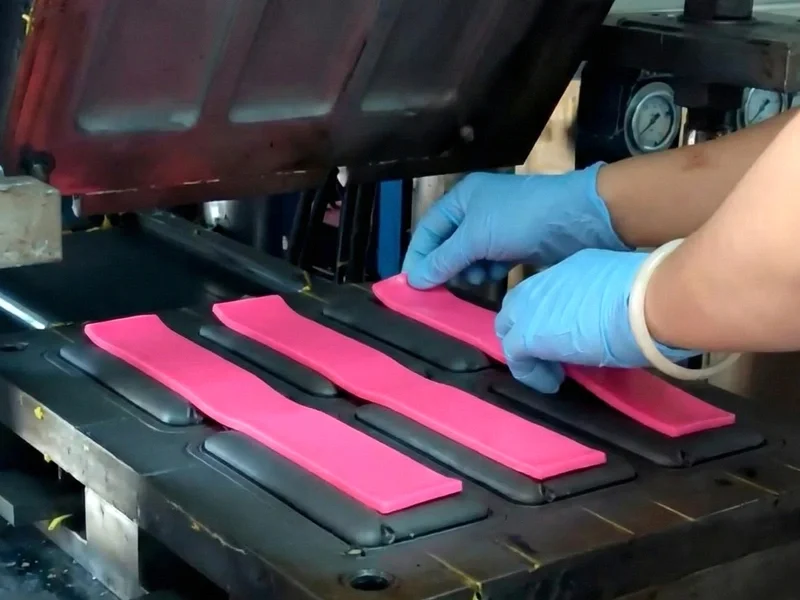 Silicone compression molding production process
Key Features:
- Low Unit Cost: Economies of scale significantly reduce the cost per unit as production volume increases.
- High Efficiency: Automated production lines accelerate the process and minimize manual intervention.
- High Precision & Consistency: Mechanical control ensures strict dimensional tolerances and uniformity across thousands of parts, ideal for high-precision components.
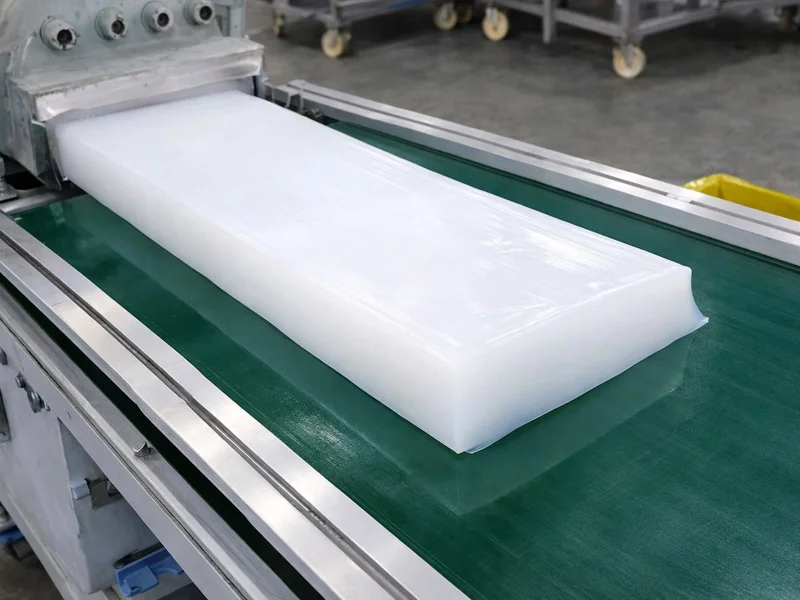 HTV solid silicone rubber
Applicable Scenarios:
- Mass Production: High-volume consumer goods.
- Precision Components: Electronic enclosures, automotive seals, and parts requiring strict tolerances.
- Commercial Manufacturing: Long-term, large-scale production runs.
Pros: High throughput (fast cycle times); superior consistency; long mold life (supports high-intensity production).
Cons: High initial cost (expensive machinery and steel tooling); low flexibility (difficult to modify molds once made).
2. Key Comparison Table
| Comparison Item | DIY Hand-Casted Mold | Machine Compression Mold |
|---|---|---|
| Best For | 1-500 pcs (Small batch, Art, Prototyping) | 1,000+ pcs (Mass production, Precision parts) |
| Production Method | Manual pouring / Vacuum casting | Mechanical Compression Molding |
| Unit Price | Higher ($1 - $10) | Lower ($0.5 - $3) |
| Tooling Cost | Low ($50 - $300) | High ($1,500 - $10,000+) |
| Lead Time | Short (3-10 days) | Long (1-4 weeks) |
| Cycle Time | Slow (4 - 12 hours) | Fast (30 - 180 seconds) |
| Dimensional Precision | Standard (±0.1-0.5mm) | High Precision (±0.01-0.1mm) |
| Wall Thickness | Thicker & Uneven (5-20mm) | Thin & Uniform (0.5-3mm) |
| Mold Life | 20-200 cycles | 100,000 - 300,000+ cycles |
| Complexity Handling | Excellent (Handles deep undercuts easily) | Limited (Requires draft angles) |
| Master Pattern | 3D Print or Clay Sculpture | Precision Steel Mold (CNC) |
| Material | RTV-2 Liquid Silicone | HTV Solid Silicone |
| ROI | Low CapEx, High OpEx | High CapEx, Low OpEx |
| Equipment | Low Barrier (Vacuum chamber, Scale) | Heavy Asset (Hydraulic Press, Mixing Mill) |
3. How to Choose
Depending on your production volume, budget, and timeline, here is how you should decide:
Scenario A: Choose DIY Hand-Casted Molds
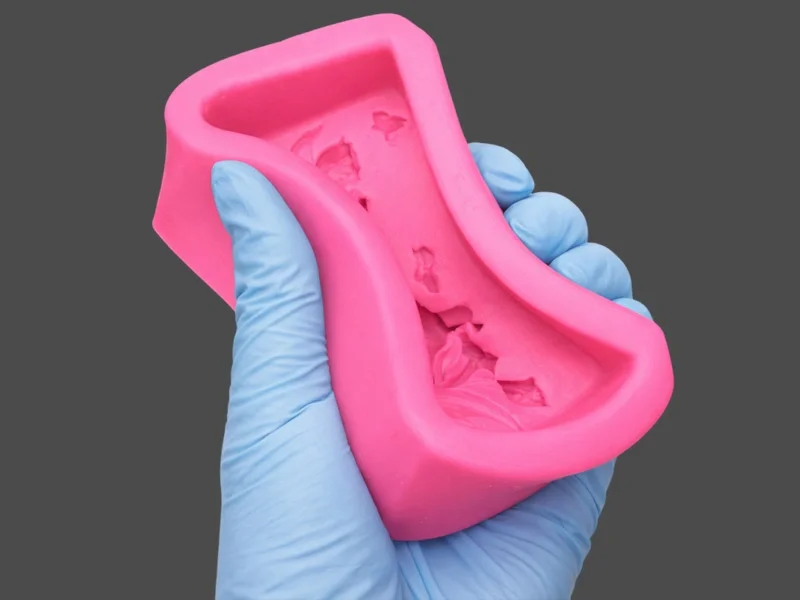 Handmade DIY Silicone Mold
If:
- Validation Phase: You need a few dozen samples for market testing or design verification.
- Artistic Products: Items like intricate candles, soaps, or figurines. These often feature complex undercuts that are difficult to eject from rigid steel molds, and strict dimensional tolerances are less critical.
- Limited Budget: You are a startup and cannot justify thousands of dollars in tooling costs before sales are proven.
- Urgent Deadline: You need finished products within 10 days (e.g., for an exhibition).
Scenario B: Choose Machine Compression Molding
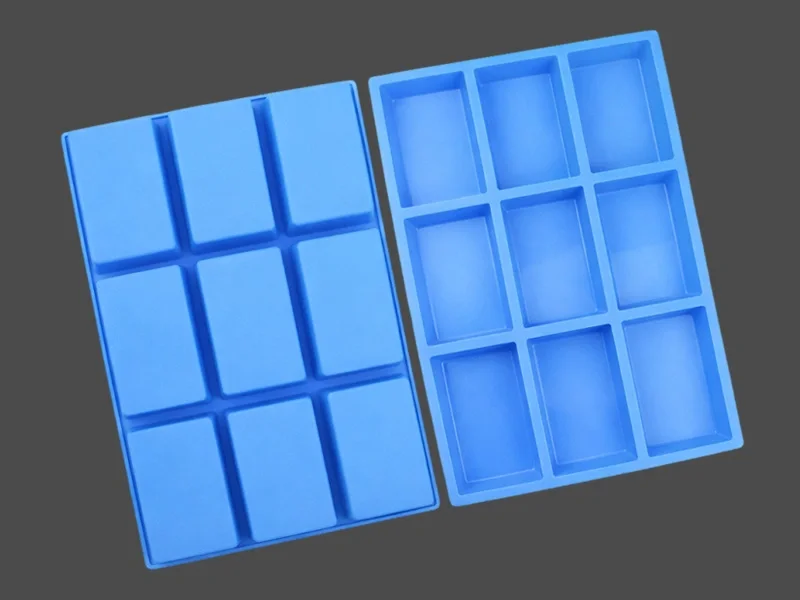 Compression Molded Silicone Mold
If:
- Stable Volume: Your initial order exceeds 1,000 units with expected repeat orders. The high tooling cost will be quickly amortized by the low unit price.
- Industrial/Electronic Parts: Items like waterproof seals or protective cases that require assembly. The tolerances of hand casting are generally insufficient for these applications.
- Food/Medical Grade Requirements: While RTV-2 can be food-safe, machine-molded HTV silicone (especially platinum-cured) is easier to certify for FDA/LFGB standards and offers a denser surface that resists bacterial growth.
- Aesthetic Perfection: You require a flawless finish with no visible parting lines or air bubbles.
4. FAQs
- Q1: At what volume is it cost-effective to switch from hand casting to machine molding?
- A1: Typically, 1,000 units is the break-even point. While the tooling cost for machines is high, the unit cost drops drastically. Beyond 1,000 units, the savings on per-unit production usually offset the initial tooling investment.
- Q2: Why are machine molds so much more expensive than handmade molds?
- A2: Machine molds are "tooling assets." They are made from high-grade steel (like S136) and undergo complex CNC machining, EDM (Electrical Discharge Machining), and polishing. Handmade molds are simply liquid silicone poured over a prototype, which is much cheaper to produce.
- Q3: Is there a difference in appearance between handmade and machine-made molds?
- A3: Yes. Handmade molds typically have thicker, uneven walls and may retain microscopic textures from the master pattern. Machine molds produced by precision equipment have uniform wall thickness, smoother surfaces, and are completely free of air bubbles, making them suitable for products requiring a premium finish.
- Q4: Is there a performance difference in the final silicone products?
- A4: Yes. Handmade molds use RTV-2 liquid silicone (Room Temperature Vulcanization), which generally has lower tear strength and heat resistance. Machine molding uses HTV solid silicone (High Temperature Vulcanization), which provides superior physical properties and durability, making it suitable for high-frequency industrial use.
5. Conclusion
Choosing the right silicone mold production method is a balancing act between scale, budget, design requirements, and lead time. DIY Hand Casting is the champion for customization and small batches, while Machine Compression Molding is the powerhouse for mass production and precision.
We hope this analysis clarifies the pros and cons of each method, helping you make the most informed decision for your manufacturing needs.


We value your comments, but please refrain from posting meaningless or irrelevant content. Kindly review our Comment Policy before commenting.