In the field of silicone rubber materials, RTV silicone and HTV silicone are two highly common technical terms. They both belong to the silicone rubber family but are not the same type of material. This article will comprehensively analyze the core differences between RTV and HTV silicone from the perspectives of material science, processing technology, and application fields.
1. What Is RTV Silicone?
RTV stands for Room Temperature Vulcanizing. From a polymer science perspective, the base polymer of RTV silicone is typically a low molecular weight linear polysiloxane. Due to its relatively short molecular chains, the material presents as a flowable liquid or paste before crosslinking.
Its core technical feature is that the activation energy required for the crosslinking (vulcanization) reaction is low, allowing the chemical reaction to occur at room temperature to form a three-dimensional elastomeric network. Based on different crosslinking mechanisms and component designs, RTV is mainly divided into two primary systems:
1. One-Part RTV Silicone
One-part RTV silicone, also commonly known as 1-part RTV, typically remains stable in sealed packaging. Once extruded and exposed to the air, it relies on trace amounts of ambient moisture to trigger the curing reaction.
Its curing process usually proceeds gradually from the surface inward. The material's surface first contacts moisture in the air to initiate crosslinking, and then the cured layer progressively advances toward the inside.
Depending on the by-products released, one-part RTV silicone can be further classified into de-acidic, de-alcoholic, de-oximic, and de-amidic systems. Different systems exhibit variations in odor, corrosiveness, adhesion, and material compatibility.
One-part RTV silicone is frequently used in applications such as sealing, bonding, caulking, waterproofing, electronic protection, and localized repairs. Its main advantage is ease of use, but because curing relies on atmospheric moisture, deep section curing in thick layers or confined spaces is limited.
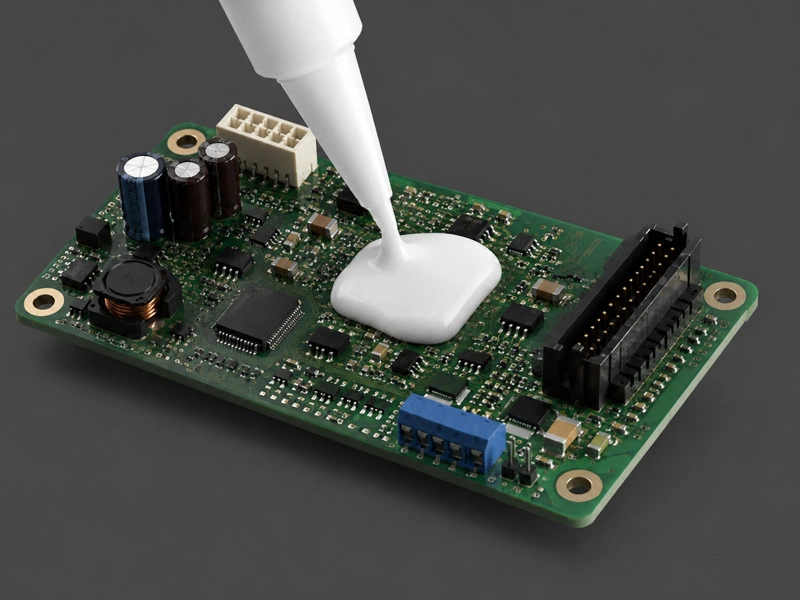 One-part RTV silicone
2. Two-Part RTV Silicone
Two-part RTV silicone, also known as 2-part RTV or RTV-2, generally consists of Part A and Part B. Before mixing, the two components remain relatively stable independently. Only when Part A and Part B are thoroughly mixed in a specified ratio is the crosslinking reaction triggered, gradually transforming the material from a liquid into an elastomer.
Compared to one-part RTV silicone, the curing of two-part RTV silicone does not depend on atmospheric moisture. Therefore, it can achieve a more uniform overall cure and is better suited for curing in thicker layers or complex spaces.
Based on the curing mechanism, two-part RTV silicone mainly follows two technological routes:
Condensation-cure (tin-catalyzed) silicone: Based on a condensation reaction, typically using organotin compounds as the catalyst. Small molecules such as water or alcohol are released during the reaction, resulting in a certain degree of linear shrinkage. However, it offers high tolerance to the operating environment and is less prone to "cure inhibition" (silicone poisoning).
 Condensation-cure silicone
Addition-cure (platinum-catalyzed) silicone: Based on a hydrosilylation reaction, using platinum complexes as the catalyst. No by-products are released during the reaction, meaning the cured material has an extremely low shrinkage rate (typically less than 0.1%). It boasts exceptionally high purity and excellent deep-curing capabilities.
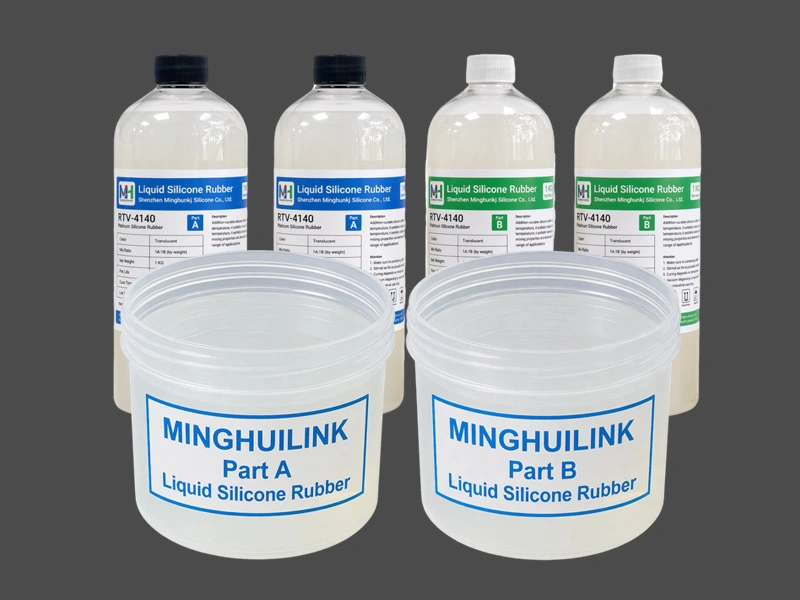 Addition-cure silicone
Further reading: Differences Between Addition-Cure And Condensation-Cure Silicone.
2. What Is HTV Silicone?
HTV stands for High Temperature Vulcanizing. In stark contrast to the RTV system, the base polymer of HTV silicone is an extremely high molecular weight polysiloxane (typically ranging from hundreds of thousands to millions in molecular weight).
Its core technical feature is that the crosslinking reaction requires high activation energy. The crosslinker and the base polymer will not react at room temperature. They must be subjected to high temperatures (usually between 150°C and 200°C) and external physical pressure to initiate free-radical or addition reactions, ultimately completing the vulcanization network.
Based on its initial physical form, HTV silicone is primarily subdivided into two technological branches:
High Consistency Rubber (HCR): This is the most traditional form of HTV. Before crosslinking, it appears as a highly viscous, solid rubber block similar to clay or chewing gum. It requires a two-roll mill for compounding (adding peroxides or platinum vulcanizing agents) and is subsequently vulcanized in a high-temperature metal compression molding press under heat and pressure.
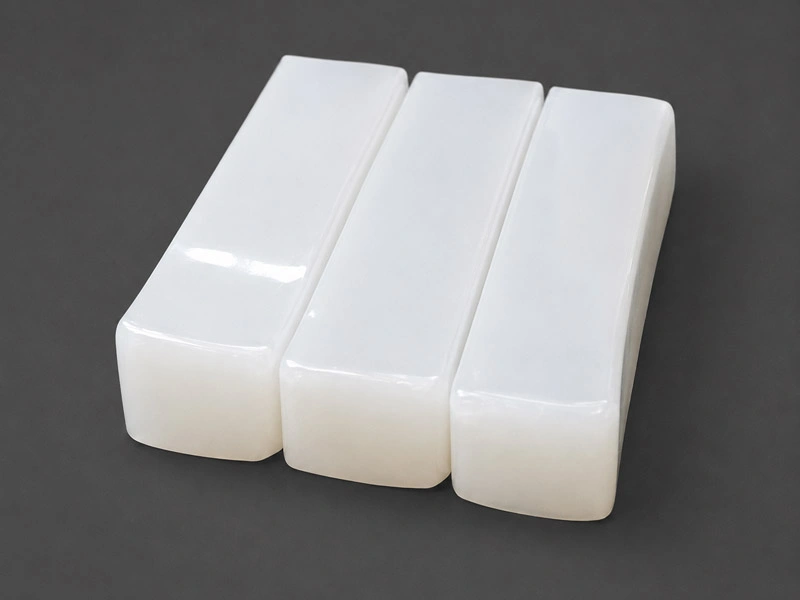 HTV solid silicone rubber
Liquid Silicone Rubber (LSR): Despite being called "liquid," it belongs to the high-temperature vulcanizing system, and its viscosity is far higher than that of RTV liquids. LSR utilizes a two-part platinum-catalyzed system and must be processed through specialized liquid injection molding (LIM) equipment. It is injected into a heated, closed metal mold cavity under extremely high pressure to achieve rapid high-temperature crosslinking within seconds to tens of seconds.
 LSR liquid silicone rubber
3. Core Differences Comparison
The biggest difference between RTV silicone and HTV silicone lies in their curing conditions.
RTV silicone can cure at room temperature, whereas HTV silicone requires high temperatures to complete vulcanization. This fundamental difference further impacts the material's form, processing methods, equipment requirements, and ultimate performance.
| Comparison item | RTV silicone | HTV silicone |
|---|---|---|
| Full name | Room temperature vulcanizing silicone | High temperature vulcanizing silicone |
| Formulation | Low molecular weight polysiloxane | High molecular weight polysiloxane |
| Physical form | Paste, viscous liquid | Solid, high-consistency rubber |
| Curing conditions | Room temperature curing (can be accelerated with heat) | High temperature, with pressure required for some processes |
| Reaction mechanism | Moisture cure, condensation cure, or addition cure | Peroxide vulcanization or addition-cure high-temperature vulcanization systems |
| Curing time | Relatively long (typically takes tens of minutes to several hours for full cure) | Extremely short (typically requires only seconds to a few minutes at high temperatures) |
| Processing methods | Mixing, pouring, brushing, potting, room temperature curing | Compounding, compression molding, extrusion, calendering, heat vulcanizing |
| Equipment requirements | Low (mixing containers, electronic scale, vacuum chamber) | High (two-roll mill, vulcanizing press/compression molding machine) |
| Mold cost | Low (3D printed master mold) | High (metal steel molds) |
| Typical applications | Silicone mold making, electronic potting | Automotive parts, extruded tubing, industrial seals |
4. Conclusion
RTV silicone and HTV silicone represent two distinct vulcanization systems in the silicone rubber industry.
RTV silicone, centered around room temperature curing, generally offers excellent flowability and operational flexibility. It is frequently used in mold making, electronic potting, sealing, and on-site curing scenarios.
HTV silicone, centered around high-temperature vulcanization, typically requires processing with industrial equipment such as compression presses, extruders, or injection molding machines. It is more commonly used for the mass production of seals, tubing, gaskets, automotive parts, and bulk silicone products.
In summary: RTV silicone emphasizes room temperature curing and operational flexibility, while HTV silicone focuses on high-temperature processing, mechanical performance, and mass production stability.


We value your comments, but please refrain from posting meaningless or irrelevant content. Kindly review our Comment Policy before commenting.