PlatSil® Gel-OO20 vs RTV-4020 Silicone Comparison

PlatSil® Gel-OO20 and RTV-4020 are both Shore OO20 platinum-cure silicones designed for highly flexible applications such as life casting, prosthetics and soft-tissue simulation. Their 1:1 mixing systems and published working windows are broadly similar, while the main differences appear in elongation, viscosity, demolding time and surface characteristics. Gel-OO20 reports 964% elongation and approximately 2-hour demolding, compared with 560±50% elongation and approximately 4–5-hour cure for RTV-4020.

Polytek

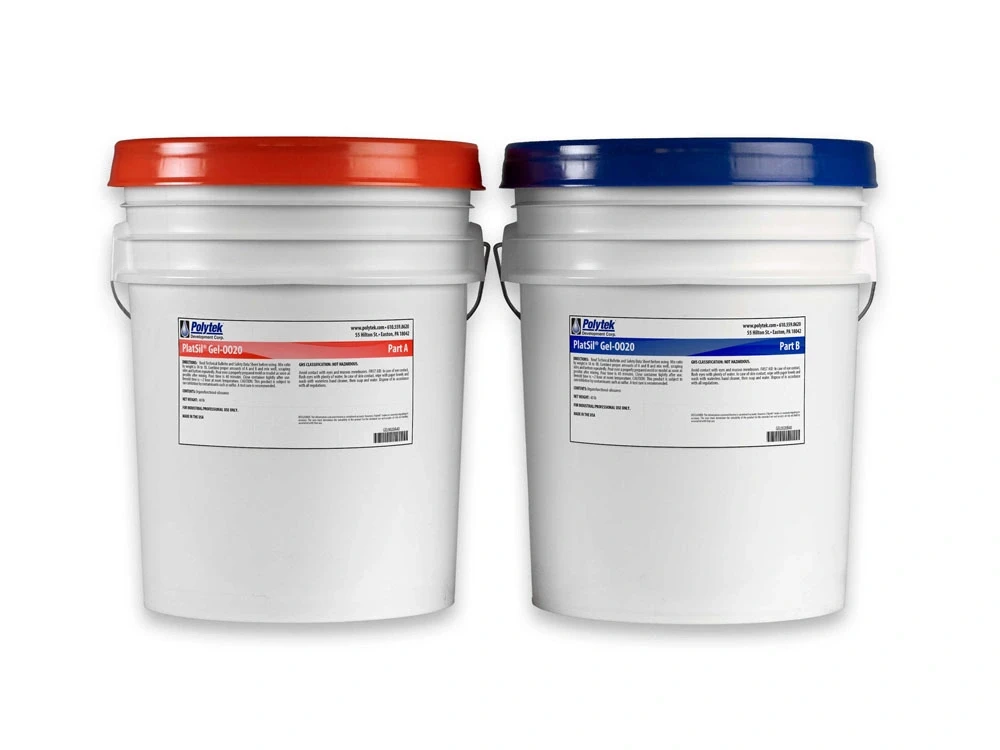
PlatSil® Gel-OO20

Platinum-Cure Silicone

PlatSil® Gel-OO20 silicone rubber
  • Hardness
    20 Shore OO
  • Mix Ratio
    1A:1B
  • Viscosity
    3,900 cps

Visit Product

VS
MinghuiLink

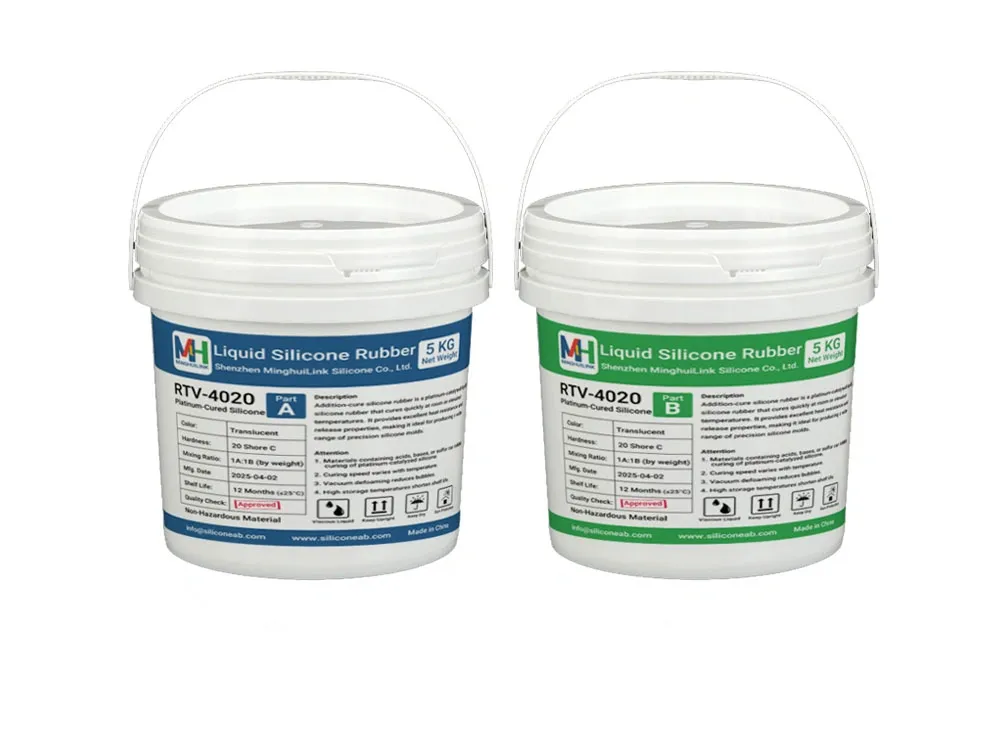
RTV-4020

Platinum-Cure Silicone

MinghuiLink RTV-4020 silicone rubber
  • Hardness
    20 Shore OO
  • Mix Ratio
    1:1
  • Viscosity
    2,200 cps

Visit Product

Conclusion

PlatSil® Gel-OO20 and RTV-4020 are both Shore OO20 ultra-soft platinum-cure silicones, but their published specifications show meaningful differences in stretchability, demolding time and surface characteristics.

  • Stretchability:
    Gel-OO20 reports 964% elongation, substantially higher than the 560±50% reported for RTV-4020, which may be relevant when the cured material must undergo significant stretching.
  • Demold & Turnaround:
    Gel-OO20 has a published demolding time of approximately 2 hours, while RTV-4020 has a published cure time of approximately 4–5 hours, creating a noticeable difference in fabrication turnaround.
  • Surface Characteristics:
    RTV-4020 may have slight surface tack after curing according to MinghuiLink’s published information, while Gel-OO20 is positioned for soft gel-like applications. Surface finishing and handling requirements should therefore be considered.

1. Technical Assessment

PlatSil® Gel-OO20 and RTV-4020 are both ultra-soft Shore OO20 platinum-cure silicones, placing them in a category that differs substantially from conventional Shore A mold silicones. At this hardness, the material is intended to provide very high flexibility and deformation rather than strong structural support. This profile is relevant to applications where substantial stretching and soft cured behavior are required.

Both systems use a 1:1 mixing ratio, so component proportioning is not a major distinction between them. Polytek specifies 1A:1B by weight or volume for Gel-OO20, while RTV-4020 also uses a 1:1 system. Their published working windows are broadly similar, at approximately 40 minutes for Gel-OO20 and 30–40 minutes for RTV-4020.

Viscosity is somewhat different in the published specifications. Polytek reports 3,900 cP for mixed Gel-OO20, while MinghuiLink reports approximately 2,200±200 mPa·s for Part A of RTV-4020. Because these values are reported at different measurement points and material states, they should not be treated as a direct viscosity ranking. The published data nevertheless indicate different processing characteristics that should be considered when mixing, pouring and managing air.

The more noticeable processing difference is demolding or cure time. Polytek lists approximately 2 hours for demolding Gel-OO20, while MinghuiLink lists approximately 4–5 hours for RTV-4020. Their published definitions are not identical, so the figures should be treated as manufacturer-stated processing references rather than a direct cure-rate comparison. For workflows where earlier demolding is important, the shorter published demolding time of Gel-OO20 may be advantageous.

The largest published mechanical difference is elongation. Gel-OO20 reports 964% elongation, compared with 560±50% for RTV-4020. This substantial difference may be relevant when the cured silicone needs to undergo significant stretching around irregular shapes or during demolding. Tensile strength and tear strength are reported at different levels and using different test methods, so those values should be treated as manufacturer-published reference data rather than directly ranked.

Surface characteristics provide another practical consideration. MinghuiLink notes that the softest grades in its life-casting series, including RTV-4020, may have slight surface tack after curing and recommends a light application of talcum or baby powder to reduce the tack. Gel-OO20 is positioned by Polytek for soft, flexible applications including prosthetics, masks, animatronics and medical models. Final selection should therefore consider elongation, demolding time, surface feel, finishing requirements and the intended fabrication workflow.
2. Technical Comparison

Technical Parameter Polytek PlatSil® Gel-OO20 MinghuiLink RTV-4020
Silicone Type Platinum-cure silicone Platinum-cure silicone
Color Milky White Translucent
Specific Gravity 1.05 1.03–1.05 g/cm³
Mix Ratio 1A:1B by weight or volume 1A:1B by weight or volume
Shore Hardness 20 Shore OO 20 Shore OO
Viscosity 3,900 cP (mixed) 2,200±200 mPa·s* (Part A)
Working / Pot Life 40 min 30–40 min
Demold / Cure Time 2 hours 4–5 hours
Tensile Strength 122 psi (~0.84 MPa) 1.0±0.5 MPa
Tear Strength 24.8 pli (~4.34 N/mm, Die B) 4±0.5 N/mm
Elongation 964% 560±50%
Shrinkage Not publicly listed ≤0.2%
Heat Resistance Not publicly listed 250°C / 482°F
Surface Feel Designed for soft, flexible gel-like applications Softest grades may have slight surface tack after cure
Technical Data Sources PlatSil® Gel-OO20 RTV-4020

3. Key Differences

Key Factor Polytek PlatSil® Gel-OO20 MinghuiLink RTV-4020 What It Means
Hardness 20 Shore OO 20 Shore OO Both are ultra-soft OO20 silicones designed for highly flexible applications.
Mixing System 1A:1B by weight or volume 1A:1B by weight or volume Both use the same 1:1 mixing system, so component ratio is not a major selection factor.
Published Viscosity 3,900 cP (mixed) 2,200±200 mPa·s (Part A) The published values are based on different material states, so they should not be treated as a direct viscosity ranking.
Working Window 40 min 30–40 min Both provide a broadly similar working window for typical processing.
Demold / Cure 2 hours demold 4–5 hours cure Gel-OO20 has the shorter published demolding time, which may support faster fabrication turnaround.
Elongation 964% 560±50% Gel-OO20 reports substantially higher published elongation, which is relevant where extreme stretching is required.
Surface Characteristics Soft gel-like material May have slight surface tack after curing Surface handling and finishing may differ, particularly in applications requiring a dry or skin-like surface.

4. Application Comparison

Application PlatSil® Gel-OO20 RTV-4020 Key Consideration
Life Casting Suitable Suitable Both provide an extremely soft OO20 profile. Stretchability, surface characteristics and the specific casting procedure should be evaluated.
Prosthetic Appliances Suitable Suitable High flexibility is important for thin edges and movement. Gel-OO20 reports the higher published elongation.
Special Effects / Masks Suitable Suitable Both can be considered for flexible skin-like effects. Stretchability, pigmentation, cure time and final surface characteristics should be evaluated.
Soft-Tissue Simulation Suitable Suitable The OO20 hardness provides very high flexibility, while support and geometry become important when dimensional stability is required.
3D-Printed Masters Suitable with proper preparation Suitable with proper preparation Some 3D-printing materials, residues and coatings can inhibit platinum-cure silicone. A compatibility test is recommended before production use.

5. FAQ

Compare Another Silicone

Need Help Choosing?

Tell us your application. We’ll recommend the right RTV-2 silicone and provide a sample for testing.

Request a Sample