Dragon Skin™ 10 SLOW vs RTV-4110 Silicone Comparison

Dragon Skin™ 10 SLOW and RTV-4110 are both Shore A10 platinum-cure RTV-2 silicones designed for soft and flexible applications. While they share the same nominal hardness and 1:1 mix ratio, their published working time, cure time and mechanical properties differ, with Dragon Skin™ 10 SLOW offering a longer processing window and higher elongation. This comparison reviews the available manufacturer data to clarify the practical differences between the two materials.

Smooth-On

Dragon Skin™ 10 SLOW

Platinum-Cure Silicone

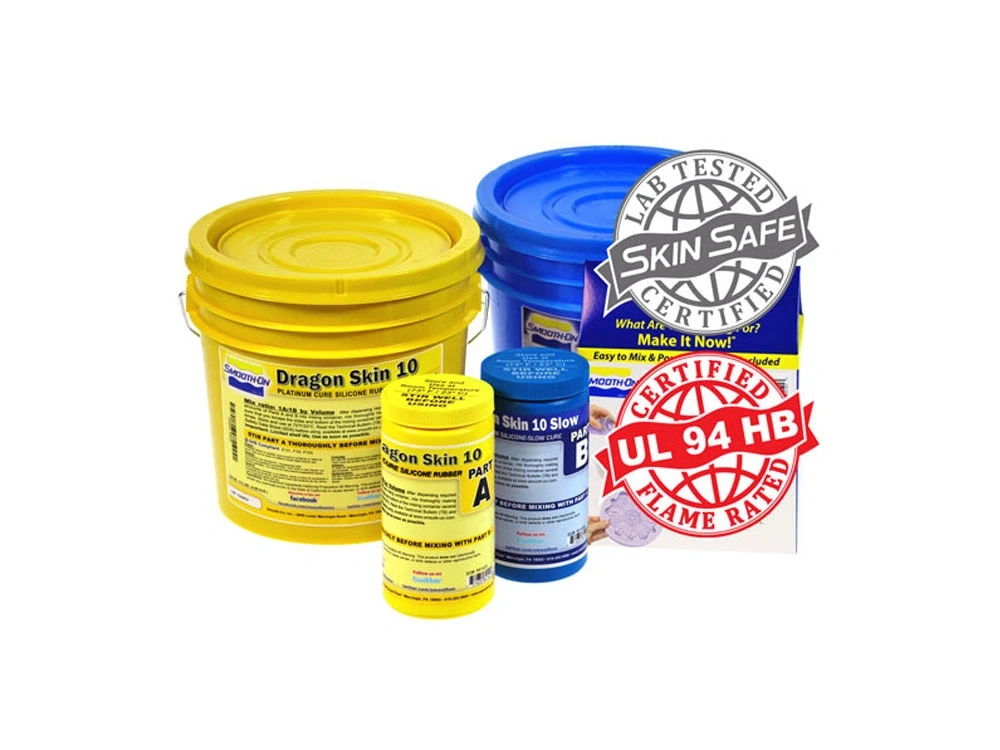
Dragon Skin™ 10 SLOW silicone rubber
  • Hardness
    10 Shore A
  • Mix Ratio
    1A:1B
  • Viscosity
    23,000 cps

Visit Product

VS
MinghuiLink

RTV-4110

Platinum-Cure Silicone

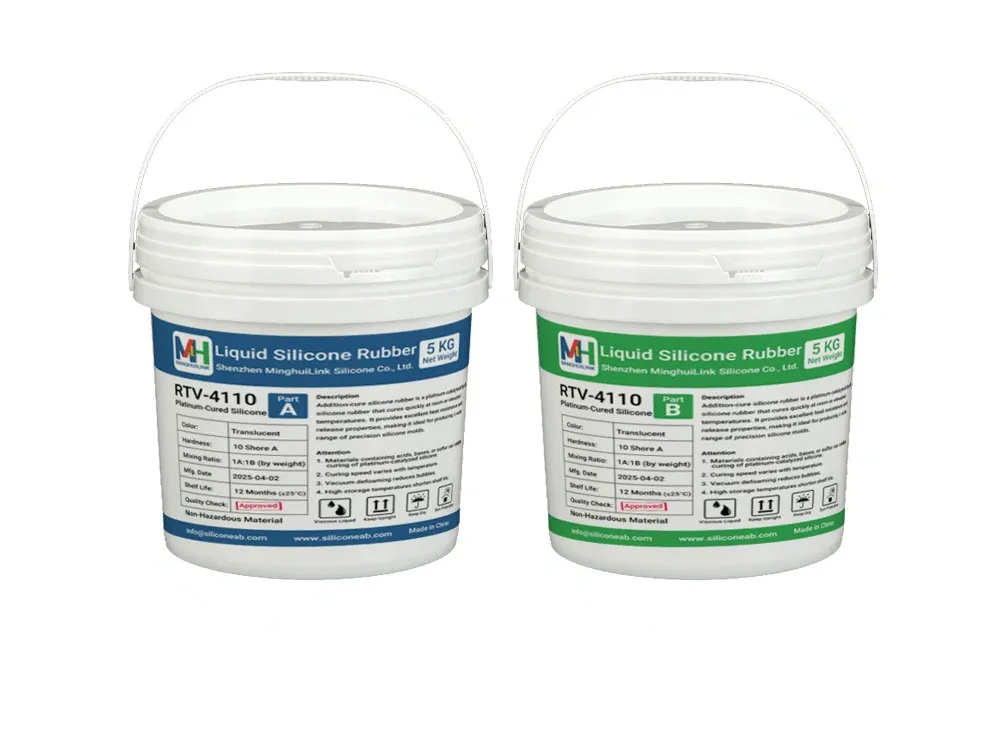
MinghuiLink RTV-4110 silicone rubber
  • Hardness
    10 Shore A
  • Mix Ratio
    1:1
  • Viscosity
    4,000 cps

Visit Product

Conclusion

Dragon Skin™ 10 SLOW and RTV-4110 are both Shore A10 platinum-cure silicones, but their published data show different strengths in working time, stretch capability, mechanical strength and application positioning.

  • Stretch & Flexibility:
    Both are soft, flexible materials, while Dragon Skin™ 10 SLOW has a substantially higher published elongation of 1,000%, making it particularly relevant where extensive stretching or deformation is required.
  • Processing & Strength:
    Dragon Skin™ 10 SLOW provides the longer published working time at 45 minutes, while RTV-4110 has the shorter published cure time and higher published tensile and tear strength.
  • Application Selection:
    Dragon Skin™ 10 SLOW may be more relevant where long working time and extreme stretch are priorities, while RTV-4110 may suit users prioritizing shorter cure time, higher published tensile and tear strength, food-mold applications or other flexible mold-making needs.

1. Technical Assessment

Dragon Skin™ 10 SLOW and RTV-4110 share the same Shore A10 hardness and 1:1 mix ratio, making both suitable for applications that require soft, flexible silicone. The more important differences are found in their processing window and cured mechanical profile, particularly when a project involves detailed molds, extended pouring time or significant stretching during demolding or use.

Dragon Skin™ 10 SLOW stands out for its published 1,000% elongation, compared with 510% for RTV-4110. This higher elongation can be advantageous when a mold or finished silicone part must undergo substantial stretching or deformation. By contrast, RTV-4110 reports higher published tensile strength and tear strength, so the two materials offer different mechanical balances rather than one material being stronger in every respect.

Working time and cure time are also important practical differences. Smooth-On lists a 45-minute pot life for Dragon Skin™ 10 SLOW, compared with a 35-minute working time for RTV-4110. The longer published working window may be useful for mixing, pigmenting, vacuum degassing or carefully filling larger and more detailed molds. However, Dragon Skin™ 10 SLOW has a longer published cure time of approximately 7 hours, while RTV-4110 is listed at approximately 5 hours under the respective stated conditions.

Viscosity requires careful interpretation in this comparison. Smooth-On reports a mixed viscosity of 23,000 cps for Dragon Skin™ 10 SLOW, while MinghuiLink reports approximately 4,000 mPa·s for Part A of RTV-4110. Because the manufacturers report these values at different measurement points, they should not be treated as a direct like-for-like laboratory comparison. Actual flow behavior, air release and detail reproduction should be evaluated using the intended mold geometry and pouring process.

The better choice therefore depends on the priorities of the application. Dragon Skin™ 10 SLOW may be more relevant when a longer working window and very high stretch capability are important, while RTV-4110 may be attractive for users prioritizing a shorter published cure time and higher published tensile and tear strength. Compatibility with the master pattern, casting material and production process should be confirmed before switching between materials.
2. Technical Comparison

Technical Parameter Smooth-On Dragon Skin™ 10 SLOW MinghuiLink RTV-4110
Silicone Type Platinum-cure silicone Platinum-cure silicone
Color Translucent Translucent
Specific Gravity 1.07 g/cc (1.07 g/cm³) 1.05–1.07 g/cm³
Mix Ratio 1A:1B by volume or weight 1A:1B by weight or volume
Shore Hardness 10 Shore A 10 Shore A
Viscosity 23,000 cps (mixed) 4,000 mPa·s* (Part A)
Working / Pot Life 45 min 35 min
Cure Time 7 hours 5 hours
Tensile Strength 475 psi (~3.28 MPa) 4.0 MPa
Tear Strength 102 pli (~17.9 N/mm) 25.0 N/mm
Elongation 1,000% 510%
Shrinkage <0.001 in./in. (<0.1%) ≤0.1%
Heat Resistance 232°C / 450°F 250°C / 482°F
Food Contact Not publicly listed FDA 21 CFR compliant food-grade silicone
Skin Safety Certified by an independent laboratory as skin safe Not publicly listed
Technical Data Sources Dragon Skin™ 10 SLOW RTV-4110

3. Key Differences

Key Factor Smooth-On Dragon Skin™ 10 SLOW MinghuiLink RTV-4110 What It Means
Hardness 10 Shore A 10 Shore A Both are very soft silicones intended for applications where flexibility is important.
Working Window 45 min pot life 35 min working time Dragon Skin™ 10 SLOW provides more published time for mixing, degassing and pouring.
Viscosity 23,000 cps (mixed) 4,000 mPa·s (Part A) The published values differ substantially, but the measurement points are not identical.
Mechanical Profile 475 psi tensile; 102 pli tear; 1,000% elongation 4.0 MPa tensile; 25.0 N/mm tear; 510% elongation RTV-4110 reports higher published tensile and tear strength, while Dragon Skin™ 10 SLOW reports substantially higher elongation.
Cure Cycle 7 hours 5 hours RTV-4110 has the shorter published cure time under the respective stated conditions.
Application Positioning Flexible molds, skin effects, prosthetics, cushioning and soft silicone applications Flexible molds, intricate prototyping, medical models and food molds The published application focus differs, so the intended end use should guide material selection.

4. Application Comparison

Application Dragon Skin™ 10 SLOW RTV-4110 Key Consideration
Flexible / Complex Molds Suitable Suitable Both are soft enough for flexible demolding; Dragon Skin™ 10 SLOW has substantially higher published elongation for applications requiring greater stretch.
Resin Casting Suitable Suitable Consider mold flexibility, working time, release requirements and the expected number of casting cycles.
Medical Models Suitable Suitable The intended medical application and any required certification should be evaluated separately from general silicone suitability.
Food Molds Not publicly listed Suitable RTV-4110 is positioned as food-grade by MinghuiLink. Food-contact suitability should not be assumed for Dragon Skin™ 10 SLOW without applicable documentation.
Skin Effects / Prosthetics Suitable Not specifically listed Dragon Skin™ 10 SLOW is specifically positioned for skin effects and prosthetic applications, with cured material identified as skin safe.
Soft Silicone Parts Suitable Suitable Dragon Skin™ 10 SLOW offers very high published elongation, while RTV-4110 provides a different balance of tensile and tear strength.

5. FAQ

Compare Another Silicone

Need Help Choosing?

Tell us your application. We’ll recommend the right RTV-2 silicone and provide a sample for testing.

Request a Sample