Tin-cured silicone, also known as condensation-cured silicone, is a two-part room-temperature vulcanizing silicone rubber (RTV-2) widely used in mold making. It typically consists of a silicone base and a tin catalyst. After mixing, the material gradually cures through a condensation reaction to form an elastic and flexible silicone rubber mold.
Thanks to its cost-effectiveness, processing versatility, and good release properties, tin-cured silicone is commonly used to make molds for plaster, resin, wax products, sculptures, and models. It is a practical material choice for general mold making and product reproduction projects.
This article introduces the key characteristics and advantages of tin-cured silicone for mold making, its common applications, and the important factors to consider when selecting and using this material. It will help you determine whether this type of silicone is suitable for your specific mold-making project.
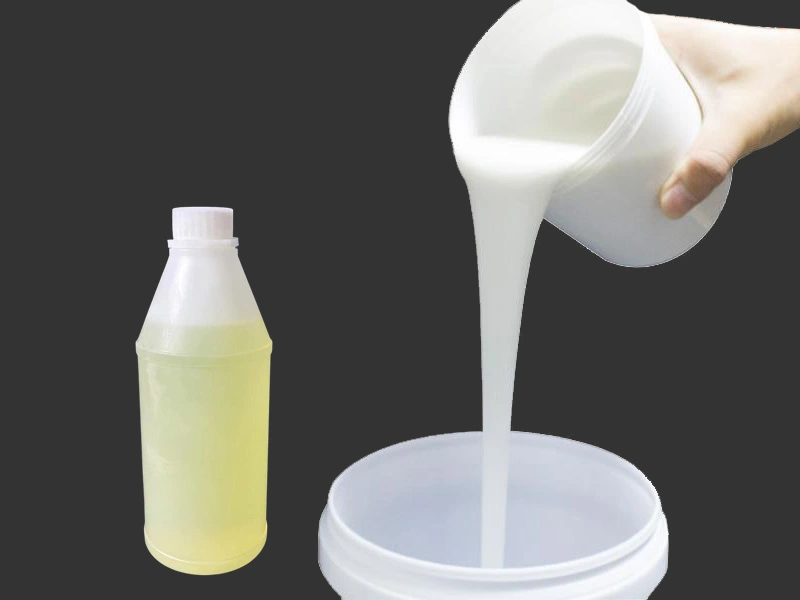
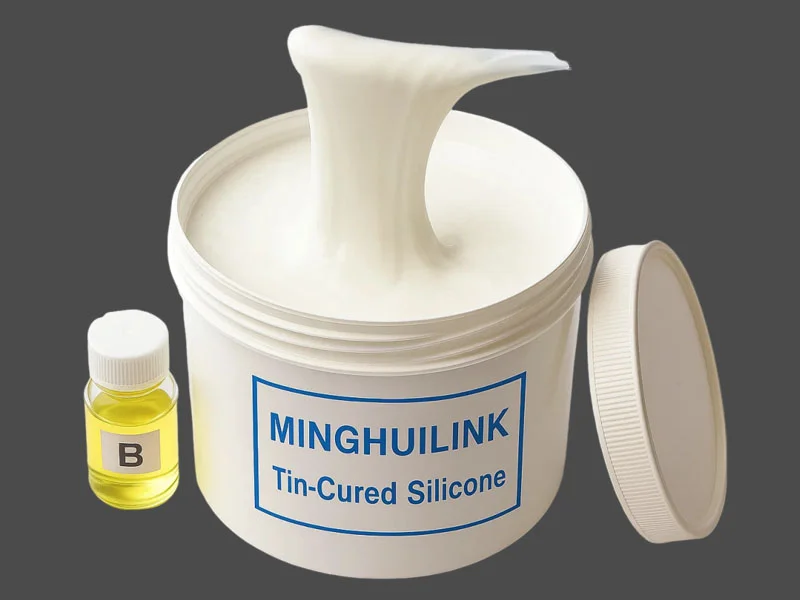 Tin-cured silicone
1. What Is Tin-Cured Silicone?
Tin-cured silicone is a two-part liquid silicone rubber that uses a tin-based catalyst system. It is also known as condensation-cured silicone because its curing process mainly involves a condensation reaction that forms a crosslinked structure.
Tin-cured silicone typically consists of two components:
- Part A (Silicone Base): Mainly consists of a polysiloxane base polymer and other formulation ingredients. It is usually supplied as a pourable liquid or a viscous paste.
- Part B (Tin Catalyst): Contains tin-based catalytic ingredients that initiate and promote the silicone crosslinking and curing reaction.
After the two components are thoroughly mixed at the specified ratio, the material gradually cures at room temperature to form an elastic silicone rubber. Its curing speed is generally affected by the amount of catalyst used, ambient temperature, humidity, and the specific formulation.
Tin-cured silicone is an RTV-2 room-temperature vulcanizing silicone. Like platinum-cured silicone, it is a commonly used two-part mold making silicone. However, the two systems use different catalysts and curing mechanisms, resulting in differences in cost, curing shrinkage, material compatibility, and long-term dimensional stability.
2. Key Advantages
2.1 Cost-Effective
One of the main advantages of tin-cured silicone is its cost-effectiveness. Compared with platinum-cured silicone, tin-cured silicone generally has a lower material cost, making it suitable for mold-making projects with relatively limited budgets.
For applications such as plaster models, resin crafts, candle molds, and general art reproduction, selecting a tin-cured silicone with suitable performance can provide a good balance between material cost and mold requirements.
For projects that require multiple molds or repeated product reproduction, material costs are also an important factor affecting overall production expenses. Therefore, tin-cured silicone is commonly used for general mold manufacturing, prototype reproduction, and budget-sensitive projects.
2.2 Compatible with a Wide Range of Materials
During mold making, the material on the master pattern surface may affect the curing performance of silicone. This phenomenon is commonly known as cure inhibition.
Platinum-cured silicone is sensitive to certain sulfur-containing substances, tin compounds, and other specific chemicals. If these substances are present on the master pattern surface, they may prevent the silicone from curing properly at the contact interface, resulting in localized stickiness or incomplete curing.
In comparison, tin-cured silicone is generally less sensitive to these common cure inhibition factors. This gives it greater processing flexibility for projects involving a wider range of master pattern materials or limited surface treatment options.
2.3 Good Flow Properties and Detail Reproduction
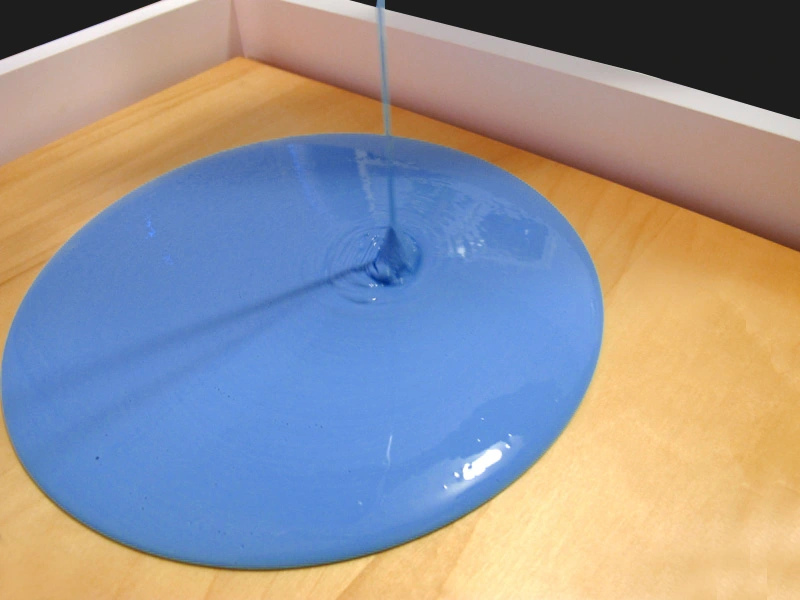
Tin-cured silicone generally offers good flow properties, making it suitable for pour-on mold-making processes. For models with complex contours, fine textures, or detailed surfaces, liquid silicone with suitable viscosity can make closer contact with the master pattern and reproduce its shape and surface features.
During application, an appropriate viscosity helps the silicone flow into narrow areas and fine structures, reducing the risk of missing details caused by insufficient material flow.
For complex master patterns, you can also select a suitable silicone grade based on the application method. Low-viscosity products are suitable for pour-on mold making. Some tin-cured silicone products can also be thickened with a compatible thixotropic agent to adjust their consistency for brush-on mold making.
It is important to note that detail reproduction depends not only on the silicone itself but also on master pattern surface quality, air release methods, application techniques, and material viscosity.
2.4 Good Flexibility and Release Properties
Elasticity and flexibility are important properties that make silicone rubber suitable for mold making.
After curing, tin-cured silicone forms an elastic mold that can stretch and deform to a certain extent during demolding, making it easier to remove finished products from the mold.
For models with complex contours, grooves, undercuts, or irregular structures, a flexible silicone mold can deform during demolding to help release the finished product and reduce the risk of mechanical locking between the product and the mold.
In addition, silicone surfaces generally offer good release properties. In many common casting applications involving resin, plaster, and wax products, this can reduce the need for release agents and simplify the molding process.
However, actual release performance also depends on silicone hardness, tear strength, mold design, and the casting material. For molds with thin walls, deep cavities, or sharp undercuts, select a product grade based on the actual demolding requirements.
2.5 Suitable for Various Mold-Making and Casting Processes
Tin-cured silicone is suitable for a wide range of mold-making applications. Depending on the product and application method, it can be used in both pour-on and brush-on processes.
- Pour-on Molds: The mixed liquid silicone is poured around the master pattern or into a mold frame. This method is suitable for models with relatively simple structures that can be covered by pouring.
- Brush-on Molds: A compatible thixotropic agent is added to increase the silicone's consistency. The material is then applied to the master pattern surface in layers. This method is suitable for large sculptures, complex models, and projects where silicone consumption needs to be controlled.
For different mold designs, the application method can be selected according to silicone viscosity, hardness, and curing speed, providing greater flexibility in mold making.
3. Applications
Tin-cured silicone is widely used for art reproduction, craft manufacturing, industrial prototypes, and various casting molds. Depending on the material properties and intended application, common uses include the following:
3.1 Plaster and Decorative Molds
Tin-cured silicone can be used to make molds for plaster decorations, architectural decorative components, reliefs, and artistic models.
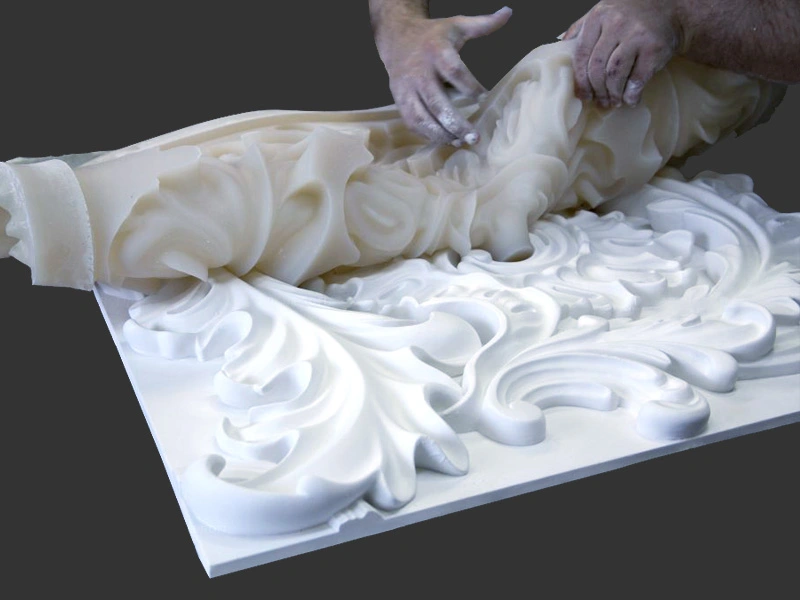
With its good flexibility, silicone can accommodate models of different shapes and help reproduce surface textures, lines, and fine details. For plaster products with intricate patterns or irregular contours, silicone molds can also make demolding easier.
Some tin-cured silicone products can also be used for molds designed for cement and concrete products. However, for projects involving long-term continuous production, particular attention should be paid to long-term dimensional stability, aging, and actual service life. Before use, verify that the specific product is suitable for the application and conduct practical casting tests.
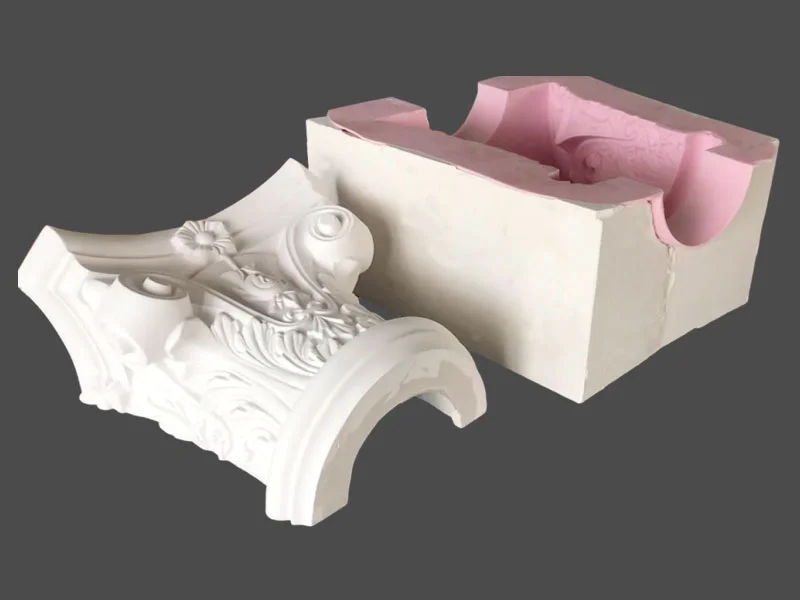 Silicone mold for plaster decorations
3.2 Resin Craft Molds
Tin-cured silicone is commonly used to make molds for epoxy resin, unsaturated polyester resin, and certain polyurethane resin crafts.
During resin casting, the elasticity and release properties of silicone molds help remove cured products and make demolding less difficult, even when the products have complex shapes.
For resin products that require the reproduction of fine textures, decorative patterns, or complex geometric structures, choosing tin-cured silicone with suitable viscosity and hardness can help achieve good molding results.
It is important to note that some tin-cured silicone products release alcohol-based by-products during curing. If residues remain in newly made molds, they may affect the surface curing of certain casting materials, particularly some transparent casting resins and polyurethane materials. Therefore, follow the silicone supplier's recommendations for adequate ventilation or pretreatment, and conduct small-batch tests first. The actual effects depend on the silicone formulation and casting material, so it should not be assumed that all resins will be affected.
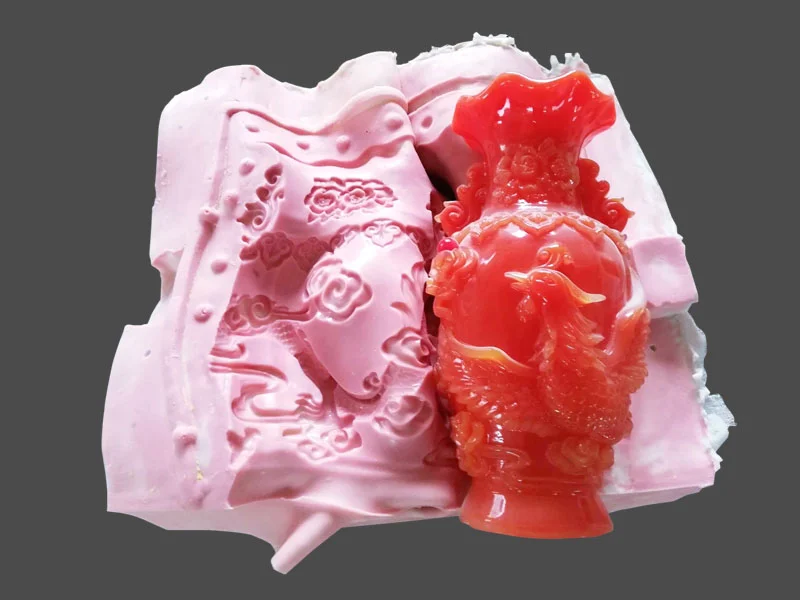 Silicone mold for resin crafts
3.3 Candle and Wax Molds
Tin-cured silicone is also suitable for making molds for candles, decorative wax products, and other wax-based items.
Wax materials generally have good flow properties and can fill mold details when poured at an appropriate temperature. The flexibility of silicone molds also helps release wax products with complex shapes.
For wax products featuring human figures, patterns, decorative designs, and other three-dimensional structures, silicone molds can reproduce the surface details of the master pattern with good accuracy.
When selecting a product, pay particular attention to silicone temperature resistance, hardness, and release requirements. Confirm that the product is suitable for the actual temperature of the molten wax.
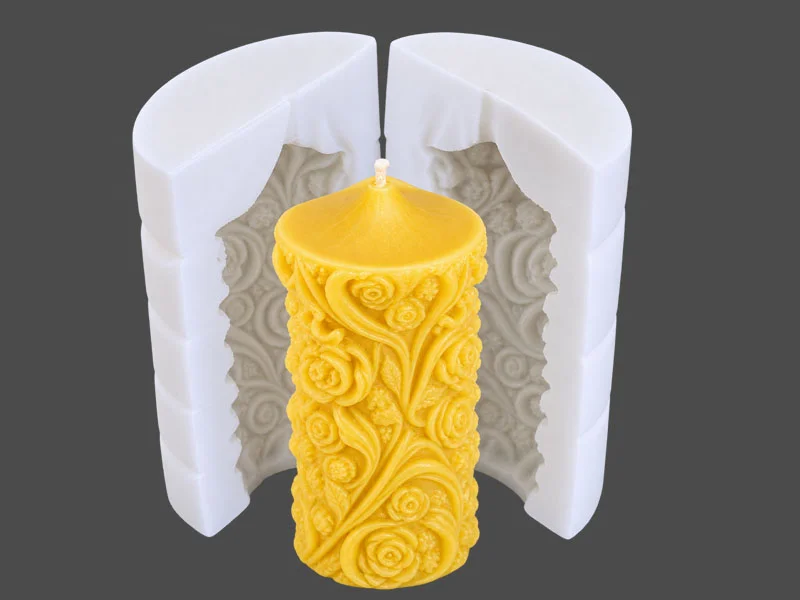 Silicone mold for decorative candles
3.4 Sculpture and Art Reproduction
In sculpture making, art reproduction, and model development, silicone molds are often used to reproduce original models with complex surface textures.
Tin-cured silicone can be used to make molds for figurative sculptures, decorative ornaments, artistic models, and other three-dimensional designs.
For large models, a brush-on process can be used to make the silicone mold. A supporting shell can also be added according to the model's size and structure to maintain the mold's shape and overall stability.
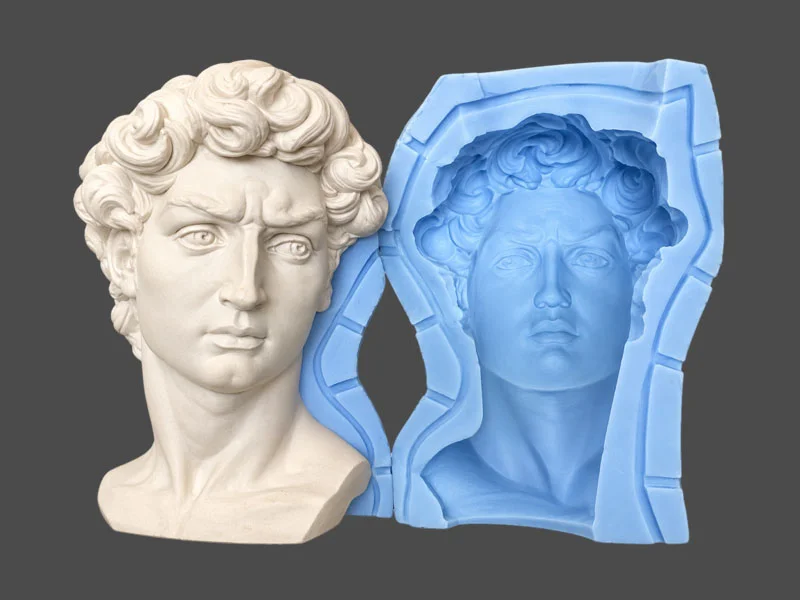 Silicone mold for plaster statues
3.5 Industrial Prototypes and Product Reproduction
Tin-cured silicone can also be useful for certain industrial prototype development and small-batch product reproduction projects.
Applications may include product appearance models, structural prototypes, decorative components, and reproduction parts with less demanding precision requirements. A suitable tin-cured silicone can be selected according to the casting material and operating environment.
For projects involving long-term batch production, high dimensional accuracy requirements, or long-term mold storage, curing shrinkage, mold aging, and actual service life should also be evaluated.
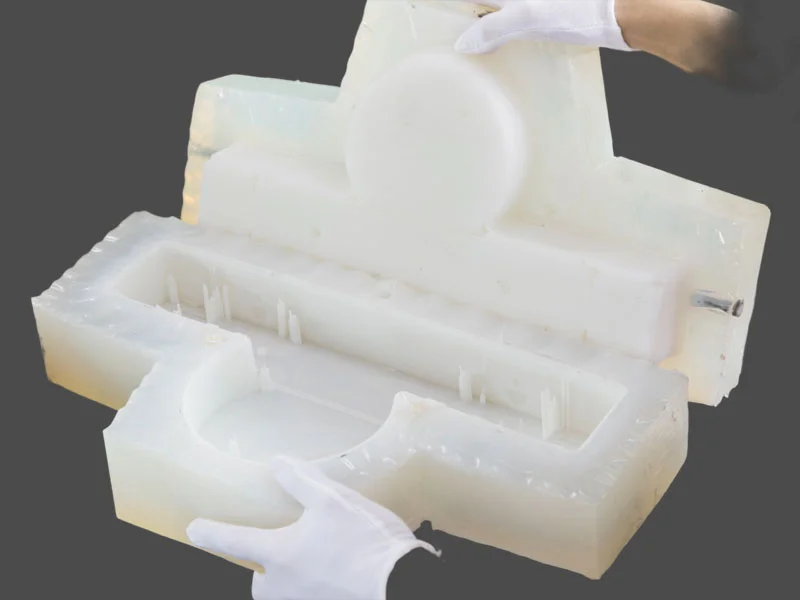 Silicone mold for industrial prototyping
4. How to Choose
Different mold-making projects have different material performance requirements. When selecting tin-cured silicone, do not focus solely on price or hardness. You should also consider mold design, casting material, and actual conditions of use.
4.1 Select Hardness Based on Mold Design
Silicone hardness is generally measured on the Shore A scale. Different hardness grades offer different levels of flexibility, support, and demolding performance.
- Low-hardness silicone: Offers greater flexibility and is suitable for molds with complex contours, deep cavities, and undercuts.
- Medium-hardness silicone: Provides a good balance between flexibility and support, making it suitable for a wide range of general mold-making applications.
- Higher-hardness silicone: Offers better shape support and is suitable for relatively simple structures or applications where the mold needs to retain its shape.
When selecting hardness, also consider mold wall thickness, model size, and demolding method. Higher hardness is not always better for complex mold structures.
4.2 Select Viscosity Based on the Application Method
Silicone viscosity affects its flow properties and application method.
Low-viscosity silicone is more suitable for pour-on mold making because it can flow more easily into fine features of the master pattern. For large sculptures or molds that require application in layers, consider a brush-on process and use a compatible thixotropic agent to adjust the silicone's consistency.
If the mold contains many fine details, narrow sections, or deep cavities, also consider the material's air release properties to prevent trapped bubbles from affecting the final reproduction.
4.3 Consider Pot Life and Cure Time Based on Production Requirements
Different tin-cured silicone grades have different pot lives and cure times.
Pot life refers to the period during which the mixed silicone remains workable and suitable for application. Cure time refers to the time required for the material to gradually change from a liquid into an elastic solid.
For large molds or complex structures, a longer pot life provides more time for mixing, pouring, and air release. For small molds or continuous production projects, a product with a faster curing speed may be a better choice.
Note that curing speed is also affected by ambient temperature, humidity, and catalyst ratio. Always refer to the technical data sheet for the specific product.
4.4 Consider Tear Strength and Mold Service Life
Tear strength is an important performance indicator for molds with deep grooves, thin walls, or complex undercuts.
Silicone with good tear strength is generally better suited to withstand localized stretching and mechanical stress during repeated demolding. This helps reduce the risk of tearing around mold edges or other weak areas.
In addition, mold service life depends on the silicone formulation, mold design, casting material, demolding method, storage conditions, and frequency of use. Actual service life cannot be determined by silicone hardness or tear strength alone.
4.5 Consider Curing Shrinkage and Dimensional Stability
Tin-cured silicone generally undergoes some dimensional change during curing. Its curing shrinkage and long-term dimensional stability are typically less favorable than those of platinum-cured silicone.
For decorative products, general crafts, and ordinary model reproduction, moderate shrinkage can often be managed through proper mold design.
However, for precision parts, products with tight dimensional tolerances, or molds intended for long-term storage, pay particular attention to curing shrinkage and long-term dimensional changes. Evaluate these properties using actual product data.
5. Important Considerations
Proper material selection and application techniques are important for achieving good mold quality. Before using tin-cured silicone, pay particular attention to the following points.
5.1 Check Master Pattern Surface Condition and Material Compatibility
Before making a mold, check the master pattern surface for dust, oil, moisture, release agent residue, and other contaminants.
For porous materials such as plaster and wood, sealing may be necessary depending on the actual conditions. This helps prevent liquid silicone from penetrating the material or forming bubbles.
Although tin-cured silicone is relatively insensitive to some common cure inhibition factors, certain sulfur-containing modeling clays and other incompatible materials may still affect the curing process.
Therefore, it is advisable to carry out a small-scale test before full-scale mold making to confirm good compatibility between the silicone and the master pattern.
5.2 Mix the Components Strictly at the Specified Ratio
Tin-cured silicone generally requires the silicone base and tin catalyst to be mixed at the ratio specified for the product.
Different brands and product grades may have different mix ratios. Do not directly apply the mixing ratio of another silicone product.
During mixing, use clean containers and mixing tools. Stir the material thoroughly, making sure to scrape the bottom and sides of the container to avoid localized uneven mixing.
If the product specifies a weight-based mixing ratio, use an electronic scale for accurate measurement. Do not estimate the amount of catalyst based on experience alone.
5.3 Pay Attention to Ambient Temperature and Humidity
Environmental conditions can affect the curing speed and final properties of tin-cured silicone.
In general, lower ambient temperatures extend the curing time, while humidity may also affect the curing process of certain tin-cured silicone products.
Therefore, try to carry out the application within the temperature and humidity ranges recommended for the product. Avoid large-scale mold production when environmental conditions are unstable.
5.4 Allow Sufficient Curing Time Before Demolding
Tin-cured silicone does not cure completely immediately after mixing. It requires time to gradually develop a stable elastic structure.
During curing, avoid moving the master pattern frequently or demolding prematurely, as this may cause mold deformation, surface damage, or incomplete curing in certain areas.
For large or structurally complex molds, determine whether the material is ready for demolding based on the product's technical documentation and actual curing conditions. Do not decide when to demold based solely on the surface appearance.
5.5 Consider Curing Shrinkage and Long-Term Storage
Compared with platinum-cured silicone, tin-cured silicone generally has more noticeable curing shrinkage and long-term dimensional changes. For high-precision reproduction projects, these material shrinkage factors should be taken into account during mold design and dimensional control.
In addition, silicone molds may experience reduced elasticity, aging, or lower tear strength during long-term storage. Mold library life varies between formulations, so not all tin-cured silicone products should be assumed to have the same storage life.
Store molds in a clean, dry, and dark environment. Avoid unnecessary stretching, compression, and contact with incompatible chemicals.
5.6 Check Compatibility with Other Silicone Systems and Casting Materials
Tin-cured silicone and platinum-cured silicone use different curing systems, and direct contact between them may cause compatibility issues. This is particularly important when pouring platinum-cured silicone directly onto an existing tin-cured silicone surface. The tin-based catalytic system may inhibit the curing of the platinum silicone, resulting in a sticky interface or incomplete curing. Therefore, when making secondary silicone-to-silicone reproductions or composite molds, verify the compatibility of the two materials. Use suitable barrier treatment when necessary and conduct a small-scale test first.
6. FAQs
- Q1: What Is the Difference Between Tin-Cured Silicone and Platinum-Cured Silicone?
-
Tin-cured silicone and platinum-cured silicone are both common two-part RTV-2 liquid silicone products, but they use different catalyst systems and curing mechanisms.
Tin-cured silicone is generally more cost-effective and relatively less sensitive to some common cure inhibition factors. It is suitable for general mold making and ordinary product reproduction.
Platinum-cured silicone generally offers better dimensional stability and lower curing shrinkage. Some product grades also provide good high-temperature resistance. However, it is more sensitive to certain sulfur-containing substances, amines, and other specific contaminants, so material compatibility requires greater attention before application.
Both types of silicone have their own suitable applications. The choice should be based on the actual project requirements rather than assuming that one type is always better than the other.
- Q2: What Types of Molds Is Tin-Cured Silicone Suitable for?
-
Tin-cured silicone is commonly used to make molds for plaster decorations, candles, resin crafts, sculpture models, and other general casting products.
Depending on the specific formulation and technical specifications, some product grades can also be used for casting polyurethane, polyester resin, and other materials.
However, the physical properties and chemical compatibility of different tin-cured silicone products are not identical. Always verify suitability based on the casting material and actual conditions of use.
- Q3: What Is the Shrinkage Rate of Tin-Cured Silicone?
-
The shrinkage rate of tin-cured silicone depends on the base formulation, catalyst system, curing conditions, and measurement method. There may be significant differences between products.
In general, tin-cured silicone tends to have greater curing shrinkage and long-term dimensional changes than platinum-cured silicone.
For molds used in high-precision dimensional reproduction, check the technical data sheet for the specific product grade and verify the final dimensional changes through practical testing. Do not use a single general value as the shrinkage rate for all products.
- Q4: How Long Does Tin-Cured Silicone Take to Cure Completely?
-
The curing time of tin-cured silicone depends on the product formulation, catalyst ratio, ambient temperature, humidity, and mold size.
Different products may have different pot lives and cure times. Some grades can complete their main curing process within several hours, while larger or thicker molds may require more time.
Follow the curing conditions specified in the product's technical data sheet and demold only after confirming that the material has reached an appropriate cured state.
- Q5: How Many Times Can a Tin-Cured Silicone Mold Be Reused?
-
There is no universal number of uses for tin-cured silicone molds.
Mold service life is affected by various factors, including silicone tear strength, hardness, formulation, mold design, casting material, demolding technique, and storage conditions.
For example, casting wax and certain plaster products is generally a relatively mild process, while some resin materials may place greater chemical or mechanical demands on the mold. Therefore, evaluate mold service life according to the specific application and determine a reasonable replacement cycle through actual production testing.
7. Conclusion
With its cost-effectiveness, material versatility, flexibility, and good release properties, tin-cured silicone is a commonly used RTV-2 silicone material for general mold making and product reproduction projects.
It is suitable for making molds for plaster decorations, resin crafts, wax products, sculpture models, and various other casting applications. By selecting the appropriate silicone hardness, viscosity, curing speed, and tear strength, you can meet the requirements of different mold designs and production processes.
However, tin-cured silicone also has certain curing shrinkage and long-term dimensional changes, which require particular attention in high-precision reproduction and long-term storage applications. When selecting a material, consider the intended mold application, casting material, dimensional requirements, and actual operating environment.
The right silicone is the one whose performance characteristics best match the specific requirements of your mold-making project.

We value your comments, but please refrain from posting meaningless or irrelevant content. Kindly review our Comment Policy before commenting.