Life casting silicone is a two-part liquid silicone rubber specially designed for making molds of the human body and individual body parts. It typically uses a platinum-catalyzed curing system and can be formulated for direct skin contact. After the two components are mixed, the material gradually cures at room temperature to form a soft, elastic silicone rubber mold capable of reproducing fine details of the human body's surface.
Compared with general-purpose mold making silicone, life casting silicone places greater emphasis on skin-contact suitability, softness, elongation, and fine detail reproduction. It is commonly used to make molds of hands, faces, ears, torsos, and other body parts. It is also widely used in special effects makeup, realistic human replicas, prosthetic appearance components, medical training models, and art reproduction.
This article introduces the main characteristics and mold-making advantages of life casting silicone, its common applications, and the key considerations involved in material selection and practical use. It will help you better understand the properties and suitable applications of this specialized silicone material.
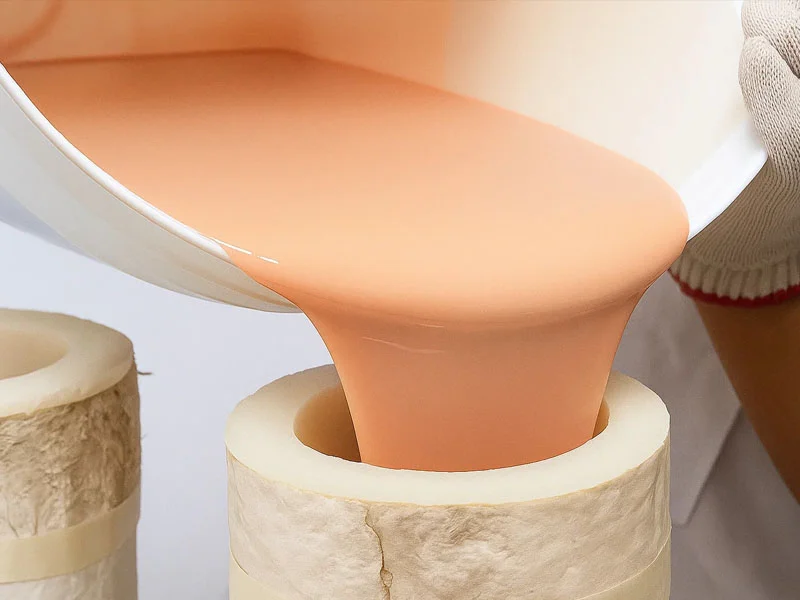 Life casting silicone
1. What Is Life Casting Silicone?
Life casting silicone is a two-part room-temperature vulcanizing silicone rubber (RTV-2) specially designed to reproduce the external contours and skin details of the human body. Its main difference from ordinary industrial mold making silicone lies in its formulation, which is developed to meet the requirements of skin contact, softness, and detailed reproduction of the human body's surface.
Life casting silicone intended for direct skin contact typically uses a platinum-catalyzed curing system. After the two components are mixed, the material undergoes a crosslinking reaction at room temperature and gradually forms a soft, highly elastic silicone rubber.
It is important to note that platinum-cured silicone is not automatically skin-safe. Only specific products explicitly designed for skin contact and supported by relevant safety assessments or test evidence are suitable for direct human body casting. The suitability of different silicone formulations for skin contact cannot be determined solely by their curing systems.
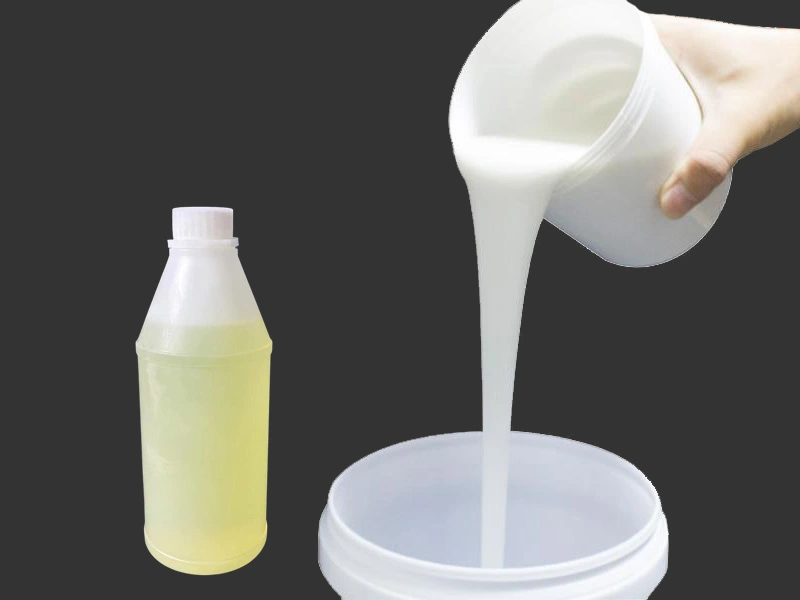
Life casting silicone typically consists of two components:
- Part A: The silicone base component, which participates in forming the final elastic silicone rubber structure.
- Part B: The corresponding curing component. When mixed with Part A at the specified ratio, it initiates the crosslinking and curing process.
After the two components are thoroughly mixed, the silicone can cure at room temperature. Different products may have different mix ratios, working times, cure times, hardness levels, and elongation properties. Always refer to the technical data sheet for the specific product.
Compared with traditional alginate molding materials, life casting silicone can generally produce more durable and reusable elastic molds when properly formulated and used under suitable conditions. It is suitable for projects that require multiple reproductions or long-term preservation of the original casting results.
2. Key Advantages
2.1 Suitable for Direct Skin Contact
During life casting, the silicone comes into direct contact with human skin. Therefore, skin-contact suitability is one of the most important factors when selecting the material.
Life casting silicone specially developed for this purpose is formulated for skin-contact applications and undergoes relevant safety assessments based on its intended conditions of use. Products that meet the applicable requirements can be used for external body casting of hands, faces, ears, and other body parts.
It is important to note that skin-safe life casting silicone is intended only for external skin contact under specified conditions. This does not mean it is suitable for internal body use, mucosal contact, or implantation. The actual scope of use should be determined by the technical documentation and safety instructions for the specific product.
Unlike ordinary industrial mold making silicone, suitability for direct skin contact cannot be determined simply by looking at the material's appearance or smell, or by confirming that it uses a platinum-catalyzed curing system. When selecting a product, check whether it is explicitly labeled Skin-Safe and review its relevant test reports, usage restrictions, and safety instructions.
In addition, skin sensitivity varies from person to person. Even when a product is labeled skin-safe, a small-area skin test is recommended before applying it to a larger area.
2.2 Soft Texture Similar to Human Skin
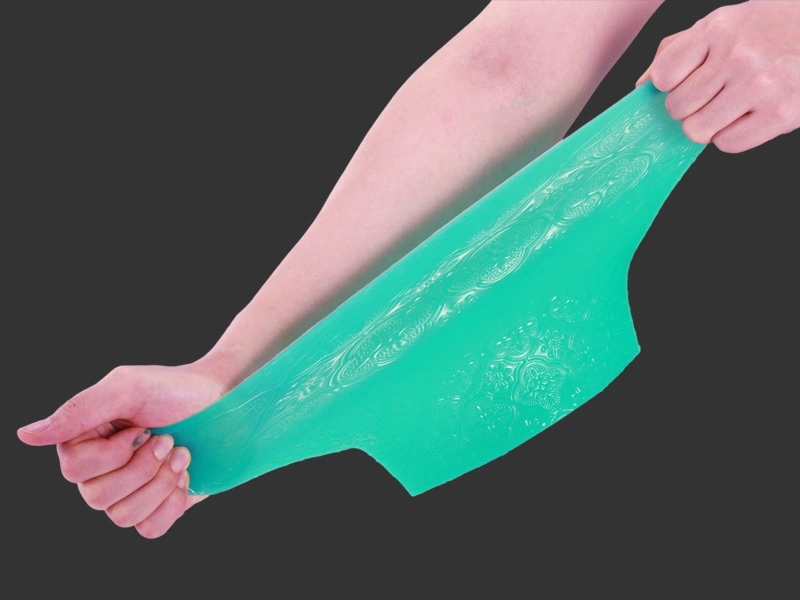
One important characteristic of life casting silicone is its very soft feel after curing.
Human skin is flexible and elastic. If a high-hardness regular mold making silicone is used, the resulting mold may not conform easily to complex body contours and may be more difficult to remove.
Life casting silicone typically uses a low-hardness formulation, allowing the cured material to adapt to the curves and contours of the human body and deform to a certain extent during demolding.
This soft material property not only helps reproduce the external contours of the human body but also makes it suitable for producing realistic human replicas, special effects makeup components, and other flexible products with a lifelike skin texture.
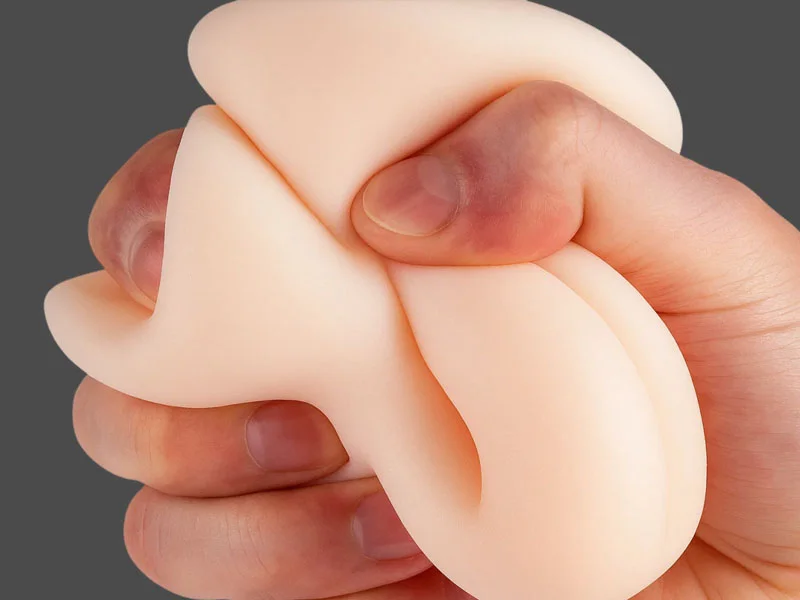 Soft life casting silicone
2.3 High Elongation and Excellent Elasticity
Life casting often involves reproducing complex structures such as fingers, ears, and facial contours. These areas may contain recesses, curves, and localized undercuts, placing high demands on the material's flexibility and elongation.
Life casting silicone typically offers high elongation at break and good elasticity. During demolding, the material can stretch and deform within a certain range, making the process easier and reducing the risk of complex body features becoming trapped in the mold.
At the same time, good elasticity helps the material recover its original shape after demolding, preserving the overall contours of the life cast.
It is important to note that elongation and tear strength are two different properties. High elongation does not mean that the material cannot tear. For weak areas such as gaps between fingers, ear edges, and other thin sections, tear strength and mold design must also be evaluated.
2.4 Excellent Surface Detail Reproduction
The human body has numerous fine surface details, including fingerprints, palm lines, skin textures, wrinkles, and subtle contours. Life casting silicone needs good flow properties and detail reproduction capabilities to capture these features as accurately as possible.
When the viscosity is suitable, liquid silicone can make close contact with the skin surface, flow into fine textures and contours, and reproduce these surface features after curing.
For life casting projects involving detailed areas such as hands, faces, and ears, material viscosity, air release properties, and application methods all affect the final results.
In addition, casting quality depends not only on silicone performance but also on skin preparation, material mixing, air bubble control, and the curing process. Proper handling helps reduce bubbles, missing details, and incomplete reproduction of local features.
2.5 Room-Temperature Curing for Flexible Processing
Life casting silicone is generally an RTV-2 room-temperature vulcanizing material. After Part A and Part B are mixed, it gradually cures under ambient conditions without requiring high-temperature heating.
This curing method is suitable for life casting applications because it reduces reliance on heating equipment and makes it easier to arrange the application process according to the body part and casting area.
Different products have different working times and cure times. For larger casting areas, an appropriate working time provides sufficient time for mixing, application, and detail work. For smaller casting projects, a product with a suitable curing speed can be selected according to the project requirements.
2.6 Durable and Reusable Molds
Compared with some traditional life casting materials, the elastic rubber formed by cured life casting silicone generally offers good durability. When the mold is properly designed, used, and stored, it can usually be used for multiple casting cycles.
For example, after making a hand or face mold with life casting silicone, you can cast plaster, resin, or other compatible materials into it to produce multiple identical replicas, depending on the intended application.
However, the actual number of uses depends on factors such as material hardness, tear strength, mold design, casting material, and demolding method. There is no fixed number of uses that applies to every product.
2.7 Easy Color Adjustment for Realistic Effects
Life casting silicone can be color-adjusted according to the product formulation and application requirements.
By using pigments specifically designed for the silicone system, the material can be adjusted to different skin tones or other target colors. This makes it suitable for producing realistic human replicas, special effects makeup components, and art reproductions.
For projects that require a realistic skin appearance, different color layers, surface textures, and subsequent finishing techniques can be combined to further enhance the visual effect of the finished product.
It is important to confirm that any pigments or other additives are compatible with the silicone system. For applications involving direct skin contact, also verify that the additives do not affect the material's original skin-contact suitability.
3. Applications
With its softness, elasticity, and excellent detail reproduction capabilities, life casting silicone is widely used in art, film and television special effects, realistic human replicas, and medical education.
3.1 Life Casting of Hands, Faces, and Other Body Parts
Life casting silicone can be used to reproduce the external shapes of different body parts, including palms, fingers, faces, ears, feet, and torsos.
For hand casting, it can reproduce fingerprints, palm lines, and finger contours. For face casting, it can capture details such as the nose, lips, facial contours, and skin texture.
The silicone molds produced through life casting can subsequently be used to make plaster models, resin models, and other artistic reproductions.
Face casting involves the eyes, nasal passages, and mouth and nose breathing pathways. Appropriate professional procedures must be followed to ensure that breathing remains unobstructed at all times and to prevent materials from entering the eyes, mouth, or other body cavities.
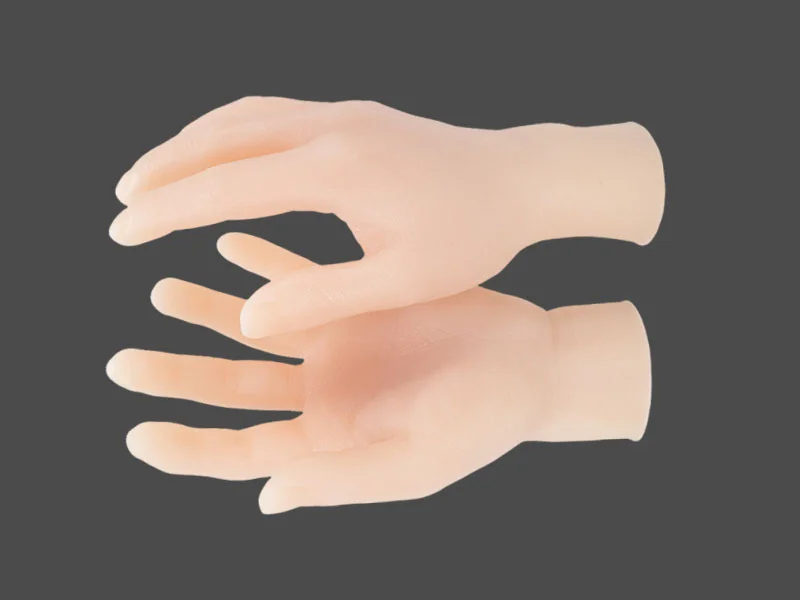 Realistic silicone hand models
3.2 Film and Television Special Effects and Makeup
In movies, television productions, stage performances, and special effects work, realistic human skin, wounds, facial features, and other specialized body parts often need to be created.
Life casting silicone can reproduce an actor's or model's body parts. The resulting molds can then be used to make special effects makeup components through casting, coloring, and surface finishing.
Examples include:
- Realistic full-face or partial facial skin models.
- Special effects wounds, scars, and skin tissue models.
- Realistic ears, noses, and other body parts.
- Special effects skin components requiring flexibility and natural movement.
The soft texture and excellent elongation properties of silicone help produce special effects components that can accommodate a certain degree of deformation.
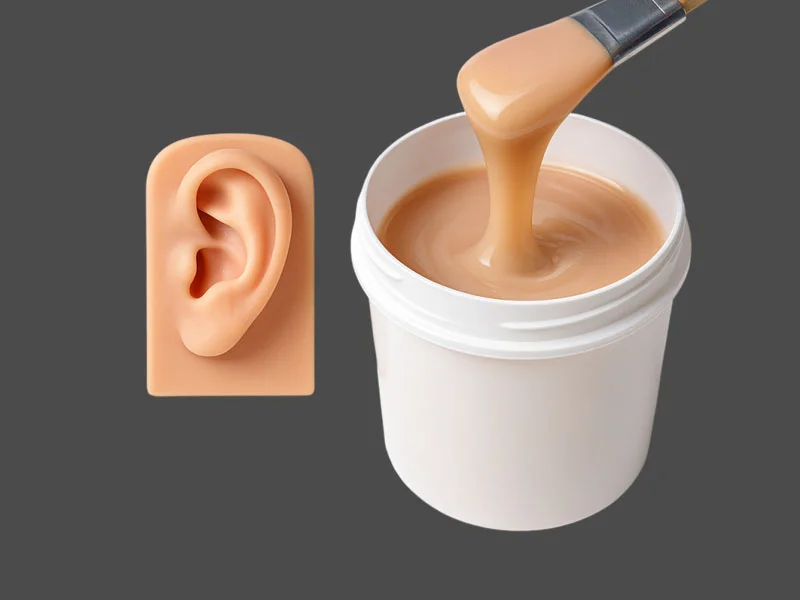 Realistic silicone ear prosthetic
3.3 Realistic Human Replicas and Art Reproduction
Life casting silicone is also suitable for creating realistic human replicas, figure sculptures, and art reproductions.
By reproducing the contours of a real person or a specific body part, a highly detailed original mold can be obtained. Suitable silicone or other casting materials can then be used to produce the final piece.
For products that need to simulate the realistic appearance and feel of the human body, material hardness, elongation, color, and surface finishing are all important factors.
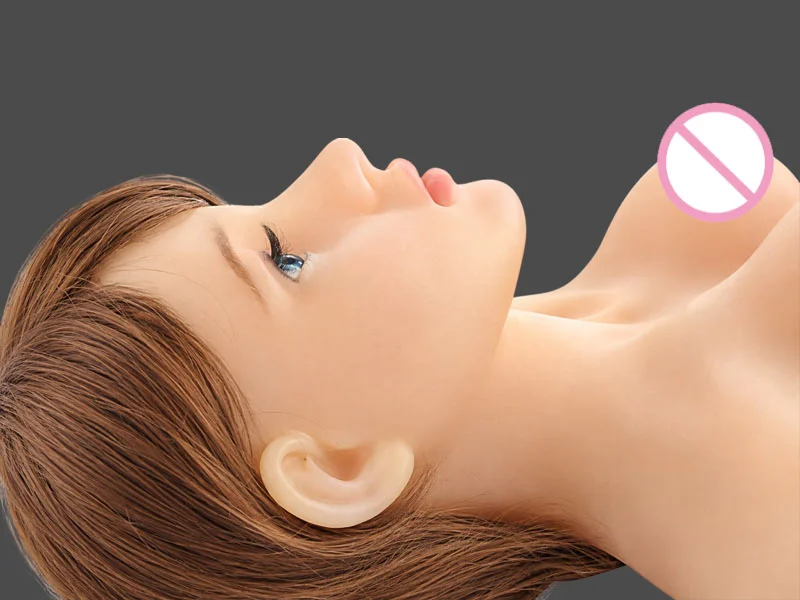 Lifelike silicone human body model
3.4 Medical Teaching and Training Models
In medical education and skills training, realistic human models can help learners understand human anatomy and simulate certain clinical procedures.
Life casting silicone can be used to make models of external body features, anatomical display models, and other teaching aids.
Examples include:
- Realistic models of human ears, noses, and lips.
- Simulated human skin and localized tissue models.
- Anatomical demonstration models.
- Realistic components for medical education and skills training.
For models that need to simulate the feel of human tissue, silicone hardness, softness, and color can be adjusted according to the intended application to make the finished model more closely resemble the appearance and feel of the target tissue.
It is important to distinguish between these applications: using skin-safe silicone to make a teaching model does not automatically mean that the finished model is a medical device or that it has completed the biocompatibility evaluations required for medical devices.
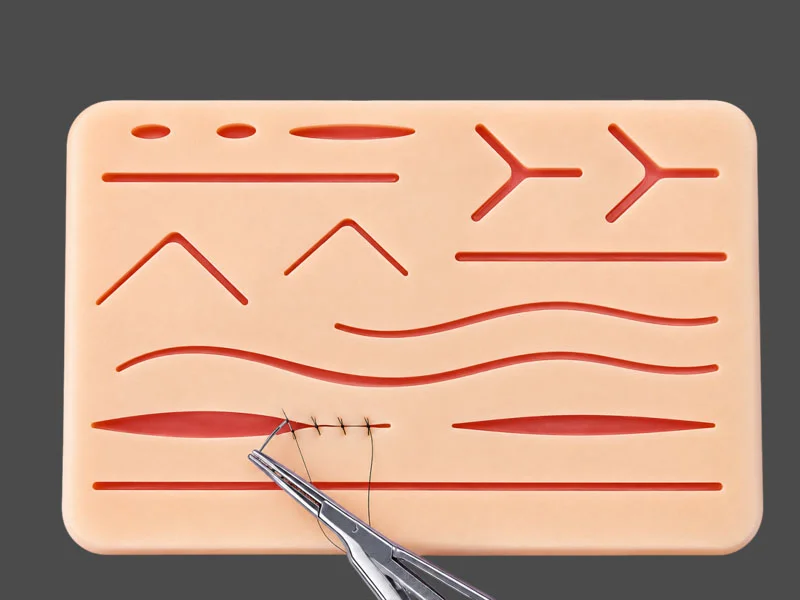 Silicone suture training pad
3.5 Prosthetic Appearance and Flexible Realistic Components
Life casting silicone can also be used in certain applications involving prosthetic appearance reproduction, flexible coverings, and realistic skin components.
These applications often require high levels of softness, elongation, tear strength, and color matching. By selecting a suitable silicone grade, flexible components with a certain degree of elasticity and a realistic appearance can be produced.
However, prosthetic components intended for wearing or prolonged contact with the human body have different safety requirements from materials used for short-term life casting. Material suitability and biocompatibility must be evaluated according to the final intended application.
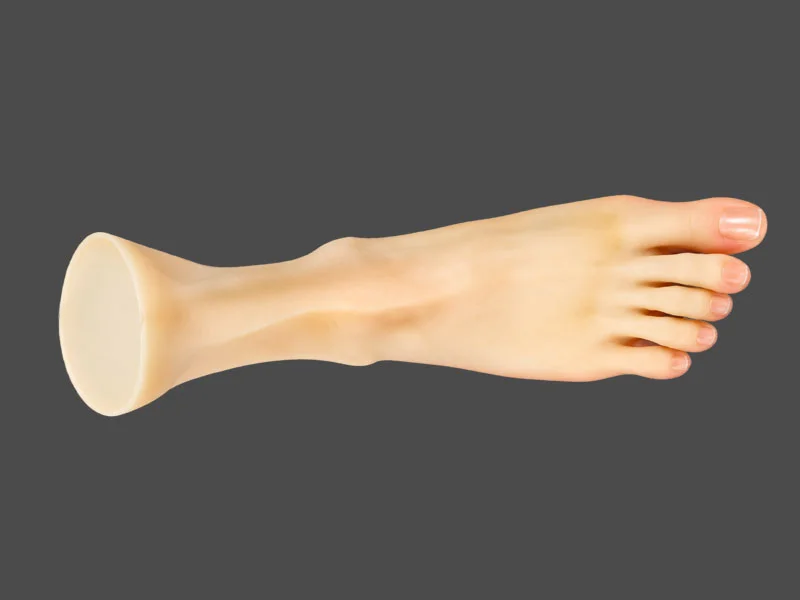 Realistic silicone prosthetic foot cover
4. How to Choose
Different life casting projects have different material performance requirements. In addition to skin-contact suitability, consider hardness, elongation, tear strength, viscosity, and curing time when selecting a product.
4.1 Prioritize Skin-Contact Suitability
Life casting silicone needs to come into direct contact with the skin. Therefore, the first step is to confirm whether the product is explicitly intended for skin-contact applications.
When selecting a product, pay attention to the following points:
- Whether the product is explicitly labeled Skin-Safe or suitable for direct human skin contact.
- Whether it has relevant skin safety test reports or assessment documentation.
- Whether the product specifies the permitted contact areas, conditions of use, and relevant restrictions.
- Whether the accompanying pigments, additives, and release products are compatible with skin-contact applications.
It is important to note that skin-safe materials are not the same as food-grade silicone, medical-grade silicone, or implant-grade silicone. The biocompatibility evaluation of medical devices must also be determined according to factors such as the contact site and duration of contact.
4.2 Select Hardness Based on the Body Part Being Cast
Silicone hardness directly affects material softness, deformation capability, and demolding performance.
For life casting, the main considerations are whether the material is sufficiently soft and whether it can accommodate complex body structures during demolding.
- Extra-low-hardness silicone: Offers a very soft feel and is suitable for applications that need to simulate skin texture or reproduce complex body contours.
- Low-hardness silicone: Provides good flexibility and is suitable for casting hands, faces, and other body parts with relatively complex structures.
- Higher-hardness silicone: Provides relatively better support, but demolding from areas with complex undercuts may require greater care.
Hardness should not be evaluated by its numerical value alone. It should also be considered alongside elongation, tear strength, and the actual structure of the body part being cast.
4.3 Consider Elongation and Tear Strength
Elongation and tear strength are two important physical properties of life casting silicone.
Elongation indicates how much a material can stretch under tension, while tear strength measures its resistance to the propagation of a tear.
Life casting often involves complex structures such as fingers, ears, and noses. These areas may be subjected to localized stretching during demolding.
Therefore, both properties should be considered when selecting a product rather than focusing only on achieving extremely high elongation. Good tear strength is particularly important for thin sections and complex undercut structures.
4.4 Select Viscosity Based on Application Requirements
Silicone viscosity affects the mixing, application, and air-release processes.
Lower-viscosity silicone generally offers better flow properties, helping the material make contact with the skin surface and reproduce fine details. It also allows air bubbles introduced during mixing to rise more easily.
For complex body parts or applications where material flow needs to be controlled, select a product with a viscosity suitable for the specific application method.
Lower-viscosity silicone helps air bubbles rise and escape naturally after mixing. However, for life casting projects with particularly high surface quality requirements where minimizing air bubbles is essential, vacuum degassing is still recommended in accordance with the product's technical documentation.
4.5 Choose Suitable Working and Curing Times
Life casting silicone generally needs to be mixed, applied, and finished within a limited working time.
If the working time is too short, it may affect material application and detail work. If it is too long, the entire life casting process may take more time.
When selecting a product, consider the casting area, number of operators, application method, and ambient temperature.
For example, life casting over a large area of the torso generally requires a longer working time, while hand or partial-body casting may allow the use of a product with a curing speed better suited to the application schedule.
Note that both ambient temperature and skin surface temperature may affect the actual curing speed. Always refer to the technical data sheet for the specific product and verify performance through practical testing.
5. Important Considerations
Life casting silicone is a specialized material. In addition to proper mixing and curing, particular attention must be paid to skin-contact safety and the actual working environment.
5.1 Perform a Small-Area Skin Test Before Use
Even when a product is explicitly labeled skin-safe, individual skin sensitivity may vary.
Before carrying out a full casting, it is recommended to perform a small-area test on the intended contact area according to the product instructions. Observe whether redness, itching, or other discomfort occurs. A small-area test cannot completely rule out individual allergic reactions or delayed skin reactions, so actual use must still follow the product's safety instructions.
If any discomfort occurs during testing, stop using the product immediately, remove the material, and wash the affected area with clean water and a mild cleanser. Seek medical assistance if symptoms persist or worsen.
5.2 Keep the Skin Clean and Dry
Before life casting, make sure the skin is clean and dry. Remove any remaining makeup, skincare creams, body lotions, oils, perfumes, and other contaminants.
These substances may affect contact between the silicone and the skin surface. They may also interfere with the normal reaction of platinum-cured silicone, potentially causing incomplete curing or a sticky surface in the affected areas.
Pay particular attention to the fact that platinum-cured silicone is sensitive to certain contaminants, including sulfur-containing substances (such as latex gloves, natural rubber, and some sulfur-containing modeling clays), tin compounds (such as residues from tin-cured silicone), and certain amine compounds. Before life casting, clean the skin according to the material supplier's instructions and make sure that the application tools, gloves, and auxiliary materials are compatible with the silicone system.
5.3 Prepare for Hair and Demolding
Body hair may become mechanically locked into the cured silicone, making the mold difficult to remove.
For example, areas with significant amounts of hair, such as the head, eyebrows, beard, and other hairy areas, require appropriate demolding preparation before casting.
According to the product instructions, a dedicated skin-contact-compatible barrier cream or hair release product can be used to reduce tangling and bonding between the silicone and hair.
Note that demolding aids must also meet the relevant skin-contact requirements. Do not use industrial release agents or unverified chemical products indiscriminately.
5.4 Mix the Components Strictly at the Specified Ratio
Life casting silicone typically consists of Part A and Part B, which must be thoroughly mixed at the ratio specified for the product.
Different products may have different mix ratios and measurement methods, so do not directly apply the mixing ratio of another product grade.
For reference, the technical data for MinghuiLink's current Life Casting Silicone product range specifies a Part A to Part B mixing ratio of 1:1 by weight. In actual use, always follow the technical data sheet for the specific product grade.
During mixing, use clean containers and mixing tools. Thoroughly scrape the bottom and sides of the container to ensure that both components are evenly mixed and to avoid localized incomplete curing caused by insufficient mixing.
5.5 Control the Working Environment and Curing Time
Life casting silicone generally cures at room temperature, but ambient temperature affects its working time and curing speed.
In general, higher ambient temperatures shorten the working time and cure time of some platinum-cured silicone products.
For large-area casting projects, confirm the material's working time in advance and arrange sufficient personnel and tools. Avoid leaving critical application work until the silicone has already started to thicken noticeably.
In addition, do not remove the mold before the material has reached the specified curing state. Premature demolding may cause deformation, tearing, or loss of surface details.
5.6 Ensure Breathing and Eye Safety During Face Casting
Face casting requires more attention to breathing passages and eye safety than hand or torso casting.
Throughout the casting process, the nostrils and mouth and nose breathing pathways must remain unobstructed. Prevent silicone or auxiliary materials from entering the nasal passages, mouth, or other body cavities.
Life casting silicone must not be used for internal oral casting or allowed to contact open eyes. During face casting, the nostrils must remain fully open at all times. Neither the material nor any auxiliary shell should obstruct the breathing passages. It is recommended that the procedure be carried out collaboratively by people familiar with the process, with a dedicated person continuously monitoring the model's condition.
The procedure should not be performed if unobstructed breathing cannot be ensured or if the material cannot be removed promptly when necessary.
5.7 Choose Compatible Pigments and Auxiliary Materials
Life casting silicone can be color-adjusted as needed. However, before adding pigments, thixotropic agents, diluents, or other additives, confirm that they are compatible with the silicone formulation.
For applications involving direct skin contact, do not assume that a pigment or additive is suitable for human contact simply because it can be used with ordinary silicone.
For life casting projects involving skin contact, prioritize accessories and additives specifically recommended by the supplier. Confirm that the modified material still meets the intended application requirements.
5.8 Provide Mold Support and Store the Silicone Mold Properly
Life casting silicone generally has low hardness and high flexibility. Although it can reproduce human body contours after curing, it may not provide sufficient structural support when used alone.
For large-area or structurally complex casts, an outer support shell (Mother Mold) is generally required. The shell should be designed according to the mold's size and shape to help the silicone retain its original form and reduce deformation during subsequent casting and storage.
After completing the life cast, avoid unnecessary stretching, compression, or prolonged direct sunlight exposure. Choose a suitable storage environment according to the product requirements.
6. FAQs
- Q1: What Is the Difference Between Life Casting Silicone and Regular Mold Making Silicone?
-
Although both life casting silicone and regular mold making silicone are liquid silicone rubbers, they differ in their formulation priorities and intended applications.
Life casting silicone places greater emphasis on skin-contact suitability, softness, high elongation, and the ability to reproduce fine details of the human body. It is specially designed for direct casting of the human body and individual body parts.
Regular mold making silicone, on the other hand, is mainly formulated according to the casting material, mold structure, hardness, and production requirements. It is not necessarily suitable for direct contact with human skin.
Therefore, regular mold making silicone should not be used as a direct substitute for life casting silicone.
- Q2: Is All Platinum-Cured Silicone Safe for Direct Skin Contact?
-
No. Platinum-cured silicone refers to a curing system, while skin-contact safety depends on the specific product formulation, safety assessment, and test results.
Only products explicitly designed for skin contact and supported by relevant test evidence are suitable for direct human body casting.
- Q3: Can Life Casting Silicone Be Used for Face Casting?
-
Some products specially designed for skin contact can be used for face casting, but the product instructions and safety requirements must be followed strictly.
Pay particular attention to eye protection and breathing passages throughout the process. Make sure the nostrils and mouth and nose breathing pathways remain unobstructed, and prevent the material from entering the eyes, nasal passages, or mouth.
Face casting should be performed collaboratively by people familiar with the procedure. It is not recommended for inexperienced individuals to carry it out alone.
- Q4: How Long Does Life Casting Silicone Take to Cure?
-
Cure time depends on the specific product formulation, mix ratio, ambient temperature, and actual application conditions.
For reference, the technical data sheet for MinghuiLink's current Life Casting Silicone product range specifies a pot life of 30–40 minutes and a cure time of 4–5 hours under test conditions of 25°C.
These figures are technical specifications for the corresponding product range and do not mean that all life casting silicone products have the same curing times. Always refer to the technical data sheet for the specific product grade.
- Q5: Can Molds Made with Life Casting Silicone Be Reused?
-
Yes. When the mold is properly designed, the material is fully cured, and the mold is used correctly, molds made with life casting silicone can generally be used for multiple reproductions.
Compared with some traditional one-time-use casting materials, silicone offers good elasticity and durability, making it suitable for projects that require repeated casting.
However, the actual number of uses depends on the silicone's tear strength, mold design, casting material, and demolding procedure. A single fixed number cannot be applied to all products.
- Q6: Can Life Casting Silicone Be Adjusted to Different Skin Tones?
-
Yes. Some life casting silicone products support color adjustment using compatible silicone pigments. Different skin tones and other specified colors can be created according to the project requirements.
However, use pigments specifically designed to be compatible with the silicone system and confirm that they are suitable for the intended skin-contact application.
- Q7: Is Skin-Safe Life Casting Silicone the Same as Medical-Grade Silicone?
-
No. Skin-safe silicone is primarily intended for skin contact under specific conditions, while silicone used in medical devices requires an appropriate biocompatibility evaluation based on the final product's contact site, type of contact, and duration of contact.
For example, materials that contact intact skin, mucous membranes, or implanted human tissue are subject to different biological safety evaluation requirements.
Therefore, a product labeled Skin-Safe should not be advertised as medical-grade, implant-grade, or suitable for all medical applications solely on that basis.
7. Conclusion
Life casting silicone is a specialized RTV-2 liquid silicone rubber designed for direct human body casting. Its main advantages include skin-contact suitability, a soft feel, high elongation, excellent detail reproduction, and the ability to produce reusable molds.
These characteristics make it suitable for casting hands, faces, and other body parts. It is also widely used in film and television special effects, realistic human replicas, medical teaching models, art reproduction, and flexible prosthetic components.
However, selecting life casting silicone requires more than considering softness or elongation. You should first confirm that the specific product is suitable for skin contact, then evaluate its hardness, tear strength, working time, curing conditions, and intended end use.
Choosing a silicone product specifically designed for direct human skin contact and following its technical documentation and safety requirements are essential for achieving high-quality life casting results.

We value your comments, but please refrain from posting meaningless or irrelevant content. Kindly review our Comment Policy before commenting.